
By Smart Chuks
Introduction: A Protest Ban That Has Reopened Old Democratic Wounds
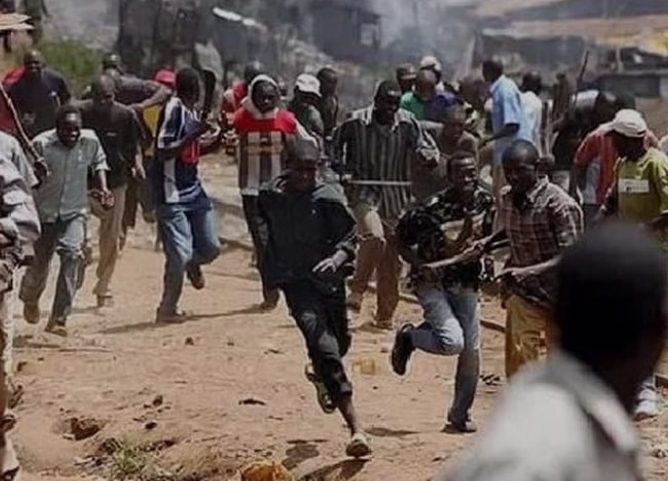
Nigeria’s fragile relationship with civil dissent has once again come under intense national scrutiny following claims by the Nigeria Police Force that it secured a court order restricting public demonstrations linked to the growing #FreeNnamdiKanu campaign.
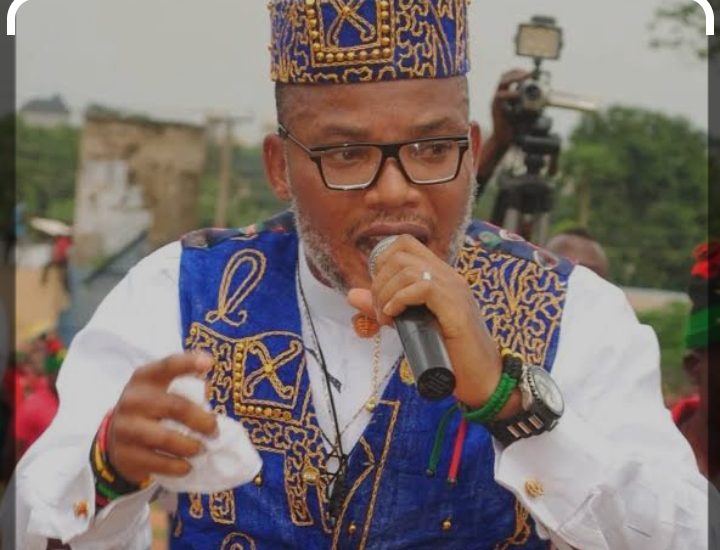
The development, which has rapidly generated strong reactions across political, legal, and civil society circles, has become far more than a dispute over a single protest movement. It now sits at the intersection of constitutional law, state authority, judicial interpretation, and the unresolved political tensions surrounding the continued detention of Nnamdi Kanu, leader of the Indigenous People of Biafra (IPOB).
As of the time of publication, SaharaNews247 could not independently verify the full scope, wording, or legal boundaries of the court order reportedly cited by police authorities. Preliminary reports suggest that law enforcement agencies may be relying on judicial instruments to justify restrictions on planned gatherings, but questions remain over jurisdiction, legality, enforceability, and constitutional compatibility.
That uncertainty is precisely why this story matters.
In Nigeria’s democratic system, the line between legitimate public security enforcement and unconstitutional suppression of civic rights has often been dangerously thin. When protest restrictions emerge around politically sensitive figures like Nnamdi Kanu, the implications stretch far beyond the immediate movement.
They affect the constitutional architecture itself.
They affect how citizens interpret justice.
They affect how regions perceive federal legitimacy.
And they affect whether democratic dissent remains protected or becomes criminalized.
What appears on the surface as a policing matter is, in reality, a test of Nigeria’s constitutional maturity.
The Immediate Trigger: What We Know About the Alleged Court Order
According to preliminary official statements and media reports, police authorities announced they had obtained legal backing to prevent public assemblies tied to agitation for Kanu’s release.
The police position, subject to verification, appears rooted in public order concerns, particularly in areas where previous pro-Biafra demonstrations have reportedly escalated into confrontation, arrests, and sporadic violence.
Police officials have framed the action as preventive rather than punitive.
That distinction is important.
Preventive policing is recognized under law where there is credible evidence of imminent public disorder. But constitutional scholars argue that preventive logic becomes problematic when it broadly restricts assembly before any unlawful conduct occurs.
This creates the first major constitutional contradiction.
Can the state lawfully suspend a constitutional right based on anticipated risk rather than actual violation?
That question remains unresolved.
Without full judicial disclosure of the order itself, public scrutiny becomes impossible.
And in constitutional democracies, opacity is often where abuse begins.
Why Nnamdi Kanu Remains One of Nigeria’s Most Explosive Political Questions
To understand the intensity of this latest development, one must revisit the deeper roots of the Kanu case.
Nnamdi Kanu emerged as the face of contemporary Biafra agitation through IPOB, a separatist organization advocating for an independent state for southeastern Nigeria.
His rise tapped into longstanding grievances in the region — political exclusion, uneven federal appointments, infrastructure neglect, security distrust, and economic complaints.
Those grievances are not new.
They date back to the aftermath of the Nigerian Civil War between 1967 and 1970, one of the darkest chapters in the country’s history.
For many in the South-East, Kanu became both a symbol and amplifier of unresolved historical pain.
For the Nigerian state, however, IPOB became increasingly viewed through a national security lens.
The group was proscribed as a terrorist organization in 2017 by a Federal High Court order — a designation that remains controversial among legal analysts.
Kanu’s arrest in 2021 after his extraordinary rendition from Kenya intensified domestic and international scrutiny.
His continued detention, despite legal disputes over jurisdiction and procedural legitimacy, has kept the issue politically alive.
This matters because every protest about Kanu is not merely about one detainee.
It is about regional identity.
It is about federal trust.
It is about historical memory.
The Constitutional Battlefield: Section 40 and the Right to Assemble
At the heart of the controversy lies Section 40 of Nigeria’s 1999 Constitution.
The provision guarantees citizens the right to assemble freely and associate for lawful purposes.
This right is reinforced by Nigeria’s obligations under the African Charter on Human and Peoples’ Rights, which has been domesticated into Nigerian law.
Yet constitutional rights are not absolute.
They can be limited under certain public safety conditions.
This is where legal battles often become interpretive wars.
The police may argue that assembly rights must be balanced against security intelligence.
Civil liberties groups argue that the burden of proof must be extraordinarily high before restrictions are imposed.
The danger here is precedent.
If broad court orders become normal tools for suspending protests linked to politically sensitive subjects, future governments may use the same logic against labour unions, student movements, journalists, or opposition campaigns.
This is how democratic shrinkage happens.
Not suddenly.
Incrementally.
Legally.
Quietly.
The Shadow of EndSARS and Why Nigerians Are Paying Attention
For many Nigerians, the present situation carries uncomfortable echoes of the 2020 EndSARS protests.
That movement began as a constitutional demand against police brutality and evolved into a nationwide civic uprising.
Its violent suppression, especially the still-disputed events at the Lekki Toll Gate, permanently altered public trust in security institutions.
The memory remains politically alive.
Every new restriction on protest rights is now interpreted through that historical trauma.
This matters for state legitimacy.
Public institutions do not operate in isolation from memory.
When citizens distrust police motives, even lawful security actions become politically combustible.
This is one of the hidden institutional vulnerabilities in the current #FreeNnamdiKanu situation.
The government may believe it is preventing unrest.
But public perception may interpret it as repeating a pattern of authoritarian reflex.
That perception gap is dangerous.
The Political Calculations Beneath the Surface
There is also an unmistakable political layer.
The South-East remains a strategically sensitive electoral bloc.
Although voter turnout in recent elections has fluctuated, the region retains symbolic and practical political weight.
Managing the Kanu question affects political calculations ahead of future national contests.
Several political actors benefit from keeping the issue alive.
Pro-Biafra activists use it to sustain regional mobilization.
Federal hardliners use it to project toughness on national unity.
Opposition politicians may leverage it to criticize federal overreach.
This creates incentive misalignment.
Resolution becomes politically expensive.
Deadlock becomes politically useful.
That may be the most troubling reality.
In Nigeria, unresolved crises often survive because they remain useful to powerful interests.
Security Agencies and the Expanding Logic of Preemptive Control
Nigeria’s security architecture has increasingly shifted toward preventive containment.
This approach has expanded beyond insurgency into civic space management.
The logic is simple:
Prevent possible instability before it begins.
But in democracies, this model carries risk.
When intelligence-based policing lacks transparency, citizens cannot assess whether restrictions are evidence-driven or politically motivated.
This weakens accountability.
It also strengthens executive influence over civic life.
The Kanu protest restriction, if broadly enforced, may signal a deeper normalization of preemptive civic control.
That would have long-term consequences for democratic participation.
Economic Costs: Why Protest Tensions Hurt More Than Politics
Often ignored in political coverage is the economic fallout.
In the South-East, repeated security scares linked to IPOB activities, sit-at-home orders, and state crackdowns have damaged local commerce.
Markets lose trading hours.
Transport costs rise.
Supply chains become unpredictable.
Investor confidence weakens.
Even rumors of unrest can trigger commercial caution.
If the latest protest restrictions trigger confrontation, local economies may absorb immediate shocks.
This is particularly severe in commercial hubs where mobility drives survival.
The economic consequences of political distrust are rarely abstract.
They are measured in lost income.
The Judiciary’s Reputation Is Also at Stake
Perhaps the most sensitive institutional question is judicial credibility.
If courts are increasingly perceived as instruments for legitimizing executive restrictions, public faith in judicial neutrality suffers.
This is not a minor issue.
Courts derive power from legitimacy.
Without public confidence, judicial orders may become legally enforceable but morally contested.
That weakens the rule of law.
The current controversy places pressure on the judiciary to clarify:
What exactly was ordered?
What legal threshold justified it?
How narrowly tailored is it?
And does it survive constitutional challenge?
These questions cannot remain unanswered.
International Human Rights Implications
Nigeria’s democratic reputation has global consequences.
Foreign investors, diplomatic partners, and international rights observers monitor civic freedoms closely.
Repeated controversies over protest suppression can affect Nigeria’s soft power, governance ratings, and diplomatic credibility.
International organizations have historically criticized restrictions on peaceful assembly in Nigeria.
If the #FreeNnamdiKanu restrictions escalate into mass arrests or excessive force, diplomatic pressure could intensify.
This is particularly relevant as Nigeria seeks stronger international partnerships and economic credibility.
Governance optics matter.
What Happens Next? Possible Scenarios
The best-case outcome would involve judicial clarification, peaceful negotiation, and de-escalation.
Authorities could transparently publish the legal basis of the restriction while opening communication channels with community stakeholders.
That would lower tension.
The most likely scenario, however, is continued legal ambiguity, sporadic attempts at protest, and selective enforcement.
This would prolong uncertainty.
The worst-case scenario involves confrontation.
Arrests.
Violence.
Regional unrest.
Political radicalization.
And further erosion of trust in federal institutions.
This would deepen Nigeria’s governance crisis.
The strategic uncertainty lies in whether both sides choose escalation or restraint.
That decision could define the next phase of the Kanu conflict.
Beyond Kanu: The Larger Democratic Test
Ultimately, this story is no longer just about Nnamdi Kanu.
It is about Nigeria’s constitutional future.
Can a democracy manage dissent without criminalizing it?
Can security concerns coexist with civil liberty?
Can judicial power remain independent under political pressure?
Can historical grievances be addressed without force becoming the default language?
These questions will outlive this protest cycle.
The answers will shape Nigeria’s democratic trajectory for years.
The state’s treatment of dissent today becomes the precedent of tomorrow.
And precedents, once established, rarely stay confined to one movement.
Conclusion: A Defining Moment for Law, Power, and Public Trust
The reported police-backed court restriction on #FreeNnamdiKanu protests has opened a critical national debate.
It exposes unresolved tensions between law enforcement authority and constitutional freedoms.
It highlights the unresolved political volatility surrounding Kanu’s detention.
It reveals how fragile public trust remains.
And it reminds Nigerians that democracy is tested most severely when the state faces uncomfortable dissent.
As of the time of publication, several legal and factual aspects of the reported court order remain subject to verification.
That uncertainty itself is part of the story.
Because in a constitutional democracy, rights cannot be restricted casually, quietly, or vaguely.
They must be justified clearly.
Examined publicly.
And challenged lawfully.
The coming days may determine whether Nigeria strengthens democratic accountability or deepens institutional distrust.
Either way, the consequences will extend far beyond the streets.
Author Bio:
Smart Chuks is a political affairs and investigative journalist at SaharaNews247 covering governance, elections, security, public policy, and institutional accountability across Nigeria.