A Political Earthquake in Washington
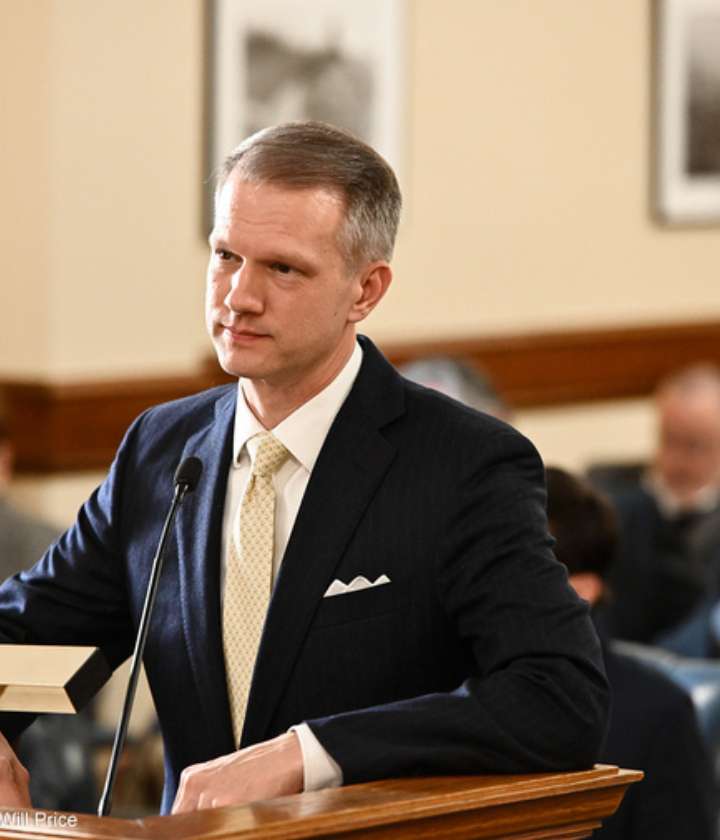
When Riley Moore, a Republican congressman from West Virginia, stood before reporters and accused senior officials of the United States Department of Justice of complicity in what he described as an “anti-Christian terror act,” the words cut through Washington like a thunderclap.
This was not routine partisan rhetoric. It was not a disagreement over budgets, foreign policy priorities or even civil liberties. Moore went further, demanding that unnamed DOJ officials face criminal prosecution and possible jail terms for what he framed as a betrayal of Christian communities both at home and abroad.
In a city long accustomed to aggressive political language, the statement still stood out for its severity. A sitting U.S. lawmaker was effectively accusing one of the most powerful institutions in the American state of religious persecution.
But beneath the surface of this explosive claim lies a deeper and more complex story. Moore’s campaign is not only about domestic politics or culture wars. It is anchored in a far more distant battlefield: Nigeria, Africa’s most populous nation and one of the world’s most religiously diverse societies.
What began as a speech in Washington has evolved into a transcontinental political movement, one that now sits at the intersection of U.S. foreign policy, global religious freedom advocacy and Nigeria’s long-running security crisis.
The Rise of Riley Moore as a Religious Freedom Warrior
Until recently, Riley Moore was a relatively low-profile figure on Capitol Hill. His political identity was shaped largely by conventional conservative priorities: fiscal restraint, limited government and opposition to progressive social policies.
Over the past two years, however, Moore has reinvented himself as a central figure in America’s international religious freedom movement. He now speaks less about domestic taxation and more about what he describes as the “global war on Christianity.”
In congressional hearings, interviews and social media campaigns, Moore has painted a grim picture of Christian communities under siege. He regularly references attacks on churches in Africa, the Middle East and parts of Asia, arguing that Western governments, including his own, have failed to respond with sufficient urgency.
For Moore, religious freedom is no longer a diplomatic talking point. It is a moral emergency. And Nigeria, in his narrative, represents the clearest and most tragic example of that failure.
The “Anti-Christian Terror Act” Claim: Rhetoric or Legal Reality?
Moore’s accusation against the Department of Justice remains legally vague. He has not released documents or formal legal filings to substantiate the claim of criminal wrongdoing. The DOJ, for its part, has categorically rejected any suggestion that it has engaged in religious discrimination or supported anti-Christian policies.
Yet Moore’s statement must be understood within the broader context of American evangelical politics. Among conservative Christian groups, there is growing suspicion that state institutions have become hostile to religious expression. This perception has been fuelled by court cases on school prayer, LGBTQ rights, religious exemptions and the role of faith-based organisations in public life.
Moore has tapped into this sentiment, framing the DOJ not as a neutral legal body but as part of what he calls an “ideological machine” that undermines Christian values.
Legal experts in Washington say the prospect of criminal charges against DOJ officials is extremely remote. In the absence of concrete evidence, Moore’s demand appears symbolic rather than procedural. But symbolism, in modern politics, often matters more than legality.
By using the language of crime and punishment, Moore has transformed a policy disagreement into a moral indictment. And in doing so, he has shifted the religious freedom debate from diplomatic corridors into the arena of political confrontation.
Nigeria’s Place in the Global Religious Freedom Debate
At the heart of Moore’s campaign lies Nigeria, a country of more than 220 million people, split almost evenly between Christians and Muslims, and struggling with one of the most complex security crises in the world.
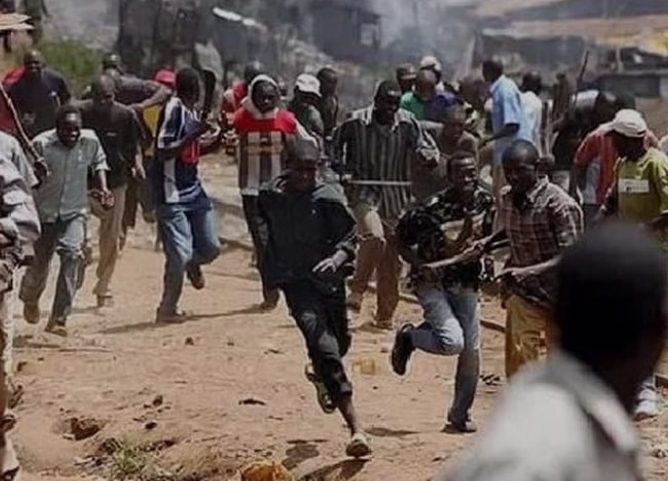
For over a decade, Nigeria has faced simultaneous conflicts across multiple regions. In the North-East, Boko Haram and the Islamic State West Africa Province have waged an insurgency marked by mass killings, kidnappings and the destruction of entire communities. In the North-West, armed bandit groups operate with near impunity, abducting villagers, students and clergy for ransom. In the Middle Belt, clashes between farmers and herders have displaced hundreds of thousands.
Religion is deeply entangled in these conflicts, but not always in straightforward ways. While extremist groups often frame their violence in Islamic terms, many attacks are driven by economic desperation, land disputes, climate stress and the collapse of rural governance.
Christians and Muslims have both been victims. Yet in certain regions, particularly in parts of Kaduna, Plateau, Benue and Adamawa states, Christian communities have experienced repeated targeted attacks, including church burnings and village massacres.
It is this pattern that Moore and other U.S. lawmakers point to as evidence of systematic religious persecution.
The Sunday Jackson Case and the Politics of Justice
No single case has shaped Moore’s activism more than that of Sunday Jackson, a Christian farmer from Adamawa State who was sentenced to death after killing a man during what he described as a violent confrontation.
Jackson claimed self-defence, stating that he had been attacked while working on his farm. His trial and conviction became a rallying point for Christian advocacy groups, both in Nigeria and abroad, who argued that the justice system had failed to account for the realities of rural insecurity.
Moore publicly adopted Jackson’s case, raising it in congressional discussions and international forums. He described the death sentence as evidence of a judiciary biased against Christian victims of violence.
When Governor Ahmadu Fintiri eventually issued a pardon, Moore celebrated the decision as a victory for international pressure and moral accountability. But he also warned that Jackson’s release did not address what he sees as structural injustice within Nigeria’s legal and security institutions.
To Nigerian legal scholars, the case was more complex. They noted procedural weaknesses in rural policing, limited access to legal representation and the broader dysfunction of the criminal justice system. While religion played a role in public perception, they argued that the deeper issue was institutional fragility rather than sectarian conspiracy.
The Country of Particular Concern Controversy
Moore’s most consequential policy demand concerns Nigeria’s international status under U.S. law.
He has repeatedly called for Nigeria to be redesignated as a Country of Particular Concern under the International Religious Freedom Act, a classification reserved for states that engage in or tolerate severe violations of religious freedom.
The CPC label carries serious implications. It can trigger economic sanctions, restrictions on military assistance and heightened diplomatic scrutiny.
Nigeria was previously placed on the CPC list but was removed following negotiations with the U.S. government and assurances of reform. Moore now wants that decision reversed, arguing that conditions on the ground have deteriorated.
For Nigeria, the stakes are enormous. The country relies heavily on U.S. security cooperation, particularly in counterterrorism training, intelligence sharing and arms procurement. A renewed CPC designation could complicate these partnerships and weaken Nigeria’s capacity to confront insurgent groups.
Nigerian officials have pushed back against Moore’s campaign, insisting that the crisis is not religious but structural. They argue that portraying Nigeria as a theatre of religious war risks inflaming tensions and undermining delicate efforts at national cohesion.
Competing Interpretations of Nigeria’s Violence
The debate over Nigeria reflects a broader global struggle over how violence is interpreted.
To Moore and his allies, Nigeria represents a textbook case of Christian persecution. They cite statistics from advocacy groups claiming that Nigeria accounts for a disproportionate share of global Christian deaths related to violence.
To many African security analysts, however, the picture is more complicated. They point to poverty, unemployment, arms proliferation, climate change and the collapse of traditional authority structures as the primary drivers of conflict.
Religion, in this view, becomes a lens through which violence is understood, rather than its root cause.
This tension between moral narrative and structural analysis lies at the core of the controversy. Moore’s framing is emotionally powerful and politically effective. But critics warn that it risks oversimplifying one of the most intricate security challenges in the world.
A New Precedent in American Political Culture
Moore’s call for jail terms for DOJ officials represents a significant departure from traditional political norms in Washington.
Historically, disputes over religious freedom have been handled through legislation, court cases and diplomatic engagement. Criminalising policy disagreements sets a dangerous precedent, according to constitutional scholars.
They argue that such rhetoric undermines the principle of institutional independence and fuels public distrust in democratic governance.
Supporters, however, see Moore as a truth-teller willing to confront what they perceive as systemic hypocrisy. To them, his language reflects moral urgency rather than legal recklessness.
Either way, Moore has succeeded in transforming religious freedom into a frontline political issue. What was once the domain of diplomats and human rights advocates is now part of America’s internal ideological battlefield.
Nigeria’s Diplomatic Dilemma
For Nigeria, Moore’s campaign presents a profound diplomatic challenge.
On one hand, the country must maintain strategic partnerships with the United States and other Western powers. On the other, it must resist narratives that reduce its internal crises to religious persecution alone.
Nigerian diplomats now find themselves defending not just policies but national identity. They argue that Nigeria’s diversity is its strength, not its weakness, and that sectarian framing undermines decades of coexistence.
At the same time, the Nigerian government faces legitimate criticism for failing to protect vulnerable communities, regardless of religion. The scale of violence, displacement and insecurity remains staggering.
Moore’s activism has internationalised Nigeria’s crisis in a way that few Nigerian leaders anticipated.
A Global Reckoning on Faith and Power
Beyond Nigeria and the United States, this controversy reflects a deeper global shift.
Religious freedom is no longer a peripheral human rights issue. It has become a central axis of international politics, intersecting with security, migration, diplomacy and identity.
What Riley Moore represents is not simply one politician’s crusade, but a broader transformation in how faith is mobilised in global power struggles.
His language resonates with millions who feel culturally displaced, politically marginalised or spiritually threatened. Whether those feelings are rooted in reality or perception, they now shape policy debates at the highest levels.
The Real Stakes
At its core, this story is about more than one congressman or one country.
It is about how suffering is interpreted, how narratives are constructed and how power is exercised in the name of moral certainty.
Nigeria’s crisis is real. The deaths are real. The trauma is real. But the way those realities are framed will determine whether solutions are inclusive or divisive, structural or symbolic.
Riley Moore has ensured that religious freedom will remain at the centre of global political discourse for years to come. The unresolved question is whether his approach will lead to meaningful protection for vulnerable communities or deepen the very fractures it claims to oppose.
In a world increasingly defined by identity politics, Nigeria has become more than a country in crisis. It has become a mirror, reflecting the fears, hopes and ideological battles of a global age.
Author Bio
Smart Chuks is a senior investigative journalist and geopolitical analyst with SaharaNews247, specialising in religion, security, and U.S.–Africa relations. With over a decade of experience covering conflict, diplomacy, and human rights across West Africa and the United States, he has reported extensively on insurgency, religious extremism, and international power politics. His work focuses on how global policy decisions intersect with local realities, particularly in fragile states facing security and governance crises. He is known for delivering deeply contextual, evidence-driven reporting that bridges on-the-ground African perspectives with international policy debates.