By Smart Chuks – SaharaNews247
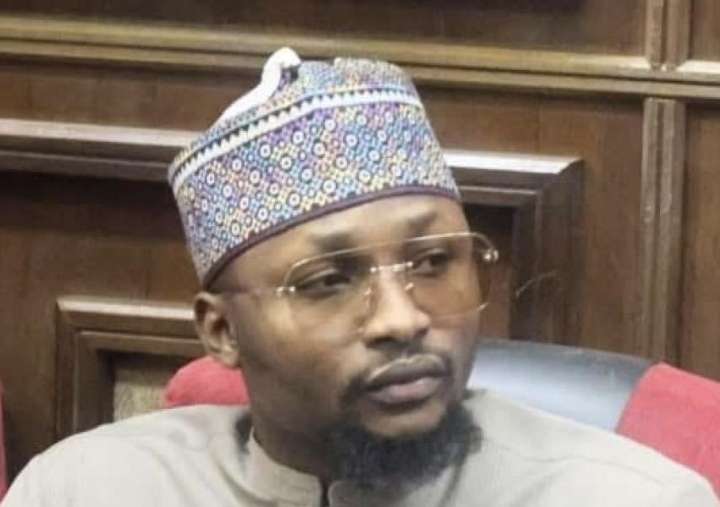
The sudden illness of Abubakar Abdulaziz Malami inside Kuje Correctional Centre has injected a new emotional layer into one of Nigeria’s most explosive corruption cases in recent years. Detained alongside his father, former Attorney-General of the Federation Abubakar Malami, SAN, and a family associate, Abdulaziz was rushed to the prison clinic after reportedly collapsing during detention.
The incident occurred barely days after the family was arraigned before a Federal High Court in Abuja on charges linked to the alleged laundering of over N8.7 billion. For many Nigerians, the image of the son of a former chief law officer lying on a prison clinic bed captures the human cost behind a legal drama that has shaken the political establishment.
This report goes beyond the headlines to examine what happened, what the charges contain, why this case matters to Nigeria and the wider world, and what lies ahead.
A Health Scare Behind Bars
Officials at the Kuje Correctional Centre confirmed that Abdulaziz Malami complained of severe discomfort and was promptly taken to the prison clinic for medical attention. Although the specific ailment has not been officially disclosed, prison sources say he is currently under observation.
For inmates, especially those facing high-pressure legal battles, stress and anxiety are common triggers of sudden illness. However, the incident has once again drawn attention to the state of healthcare in Nigerian custodial centres, where facilities are often overstretched and access to specialist treatment remains limited.
Human rights advocates insist that detainees retain the right to proper medical care regardless of the crimes they are accused of. They warn that failure to guarantee adequate treatment not only violates international standards but risks turning legal custody into a humanitarian issue.
The Case That Shook the Political Elite
Abubakar Malami was Nigeria’s Attorney-General and Minister of Justice from 2015 to 2023. As the nation’s chief law officer, he was at the heart of major legal and anti-corruption initiatives under the previous administration.
His arrest, along with his son and an associate, marked a stunning reversal of roles. The same man who once defended the authority of the state now finds himself in the dock, answering to the very institutions he once led.
The Economic and Financial Crimes Commission has filed a 16-count charge against the family, accusing them of conspiracy, money laundering, and disguising the proceeds of crime amounting to over N8.7 billion.
What the EFCC Is Alleging
According to court documents, investigators allege that between 2020 and 2025, the defendants used a network of companies and bank accounts to conceal large sums of money believed to be illicit.
The prosecution claims that more than one billion naira was hidden through the account of a firm known as Metropolitan Auto Tech Limited. Another six hundred million naira is said to have been used as collateral to secure a loan for a hotel business, even though the funds were allegedly of questionable origin.
Investigators also allege that several high-value properties in Abuja and other cities were purchased with the disputed funds. These include luxury homes in upscale districts such as Maitama, Asokoro, Gwarimpa, and Jabi. The prosecution maintains that these assets were deliberately acquired through corporate fronts to disguise ownership.
If proven, the allegations point to a sophisticated system designed to blur the trail of funds and convert cash into real estate and business assets.
Inside the Courtroom
At their arraignment, all three defendants pleaded not guilty. Their lawyers requested bail, arguing that the charges are bailable offences and that their clients pose no flight risk.
Justice Emeka Nwite declined to grant bail immediately, insisting that the prosecution must first file a formal response to the application. He ordered the defendants to be remanded in Kuje Correctional Centre pending a bail hearing scheduled for early January 2026.
It was during this period of detention that Abdulaziz reportedly fell ill.
Detention, Dignity and Human Rights
Nigeria’s prisons have long struggled with overcrowding, limited medical facilities, and insufficient staffing. Kuje Correctional Centre, although considered one of the better facilities, is not immune to these challenges.
The sudden illness of Malami’s son has reignited debate about how the country treats detainees, especially in high-profile cases. While many Nigerians insist that the powerful should not receive preferential treatment, rights groups stress that equality before the law also means equal access to healthcare.
The fear among activists is that prolonged detention without proper medical support could lead to avoidable tragedies.
Why This Case Matters Beyond the Malami Family
This trial is more than a personal ordeal for one influential family. It is a stress test for Nigeria’s justice system.
For years, Nigerians have accused the political elite of being untouchable. Bringing a former Attorney-General to court sends a powerful signal that the tide may be turning.
At the same time, critics caution that high-profile prosecutions must be handled with transparency to avoid the perception of political vendetta. They argue that the EFCC must prove its case with solid evidence, not public spectacle.
International observers are also watching closely. Nigeria’s reputation in the global fight against money laundering and corruption depends on the credibility of such trials.
The Business of Laundering Money
The details emerging from the Malami case reflect a familiar pattern in financial crime.
Illicit funds are rarely kept in cash for long. They are often moved through corporate accounts, converted into loans, or invested in property. Real estate, in particular, remains a favourite vehicle for laundering money due to weak regulation and poor tracking of beneficial ownership.
Experts say the case highlights the urgent need for stronger financial oversight, improved corporate transparency, and better cooperation between banks and regulators.
Public Reaction Across Nigeria
From social media to radio phone-ins, the Malami case has dominated national conversation.
Some Nigerians see the prosecution as long overdue justice. Others believe it is a reminder that political power can evaporate overnight.
There is also sympathy for Abdulaziz, whose illness has humanised a case that had previously felt remote. For many, it is a sobering reminder that behind every corruption headline are families, children, and lives upended.
What Happens Next
The next major milestone will be the bail hearing scheduled for January 2026. The court will consider medical reports, arguments from both sides, and the weight of the evidence.
If bail is granted, the defendants will return home under strict conditions. If denied, they could remain in custody for months as the trial unfolds.
The EFCC is expected to call multiple witnesses, including bankers, investigators, and property dealers, to establish how the funds moved and where they ended up.
Legal analysts predict that the case could run for a year or more, given its complexity.
A Defining Moment for Nigeria
The image of a former Attorney-General sitting in a prison cell while his son lies ill in the clinic is powerful. It captures both the promise and the peril of Nigeria’s anti-corruption struggle.
Promise, because it suggests that no one is truly above the law. Peril, because it exposes the weaknesses in the system tasked with enforcing justice humanely and fairly.
How this case is handled will shape public trust in the judiciary for years to come.
Conclusion
The Malami case has moved beyond court filings and legal jargon. It has become a national reckoning with power, accountability, and the fragile line between justice and humanity.
As SaharaNews247 continues to monitor developments, one truth remains clear. This is not just a trial. It is a moment that will define Nigeria’s commitment to the rule of law.
About the Author
Smart Chuks is an investigative journalist and political affairs analyst based in Nigeria. He has spent over a decade covering corruption, governance, and legal reforms, with bylines across several national news platforms. His reporting focuses on accountability, institutional integrity, and the real-life impact of public policy on ordinary citizens.