
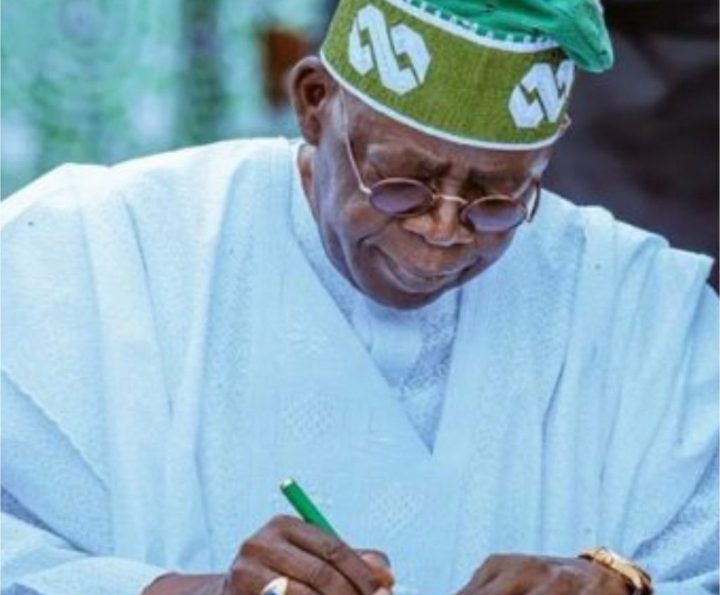
A Nation Reforming Under Pressure
When announced the removal of petrol subsidies and the unification of Nigeria’s exchange rate system in May 2023, the decision marked one of the most consequential economic policy shifts in the country’s post-democratic history.
The reforms, long advocated by institutions such as the and the , were designed to eliminate fiscal distortions, restore investor confidence, and reposition Africa’s largest economy for sustainable growth.
But nearly two years into the transition, Nigeria is confronting a far harsher reality: a deepening cost-of-living crisis, persistent currency instability, and widening public frustration over reforms that have yet to deliver visible relief.
Across markets, households, and boardrooms, the economic narrative has shifted from cautious optimism to daily survival.
Inflation at Multi-Decade Highs as Purchasing Power Erodes
Data released by the shows that Nigeria’s headline inflation rate climbed to approximately 33.7 percent year-on-year in early 2025, up from 28.9 percent in late 2024, representing the fastest pace of price increases in over two decades.
Food inflation, a more immediate indicator of household distress, has remained significantly higher—hovering above 37 percent in the same period—driven by rising transport costs, supply disruptions, and currency depreciation.
The impact is deeply felt across income levels.
In Lagos, traders report a marked shift in consumer behavior, with buyers increasingly opting for smaller portions of staple goods such as rice and garri. In northern markets, volatility in food prices has disrupted planning cycles for both wholesalers and retailers, further compounding uncertainty.
“The problem is not just inflation—it is the speed at which prices are rising relative to incomes,” said Dr. Muda Yusuf, a Nigerian economist and policy analyst. “When wages remain stagnant while costs surge, households are effectively experiencing a continuous decline in real income.”
This erosion of purchasing power has become one of the defining features of Nigeria’s current economic phase.
Exchange Rate Unification and the Naira’s Volatile Path
The decision to collapse Nigeria’s multiple exchange rate windows into a unified, market-driven system was intended to enhance transparency and attract foreign capital. Prior to the reform, arbitrage opportunities between official and parallel markets distorted investment flows and undermined confidence.
However, the transition has been marked by sharp depreciation of the naira.
Following the policy shift, the currency weakened significantly against the US dollar, at times trading above ₦1,500/$ in the parallel market before experiencing intermittent recoveries driven by policy interventions from the .
The volatility reflects deeper structural imbalances, including limited foreign exchange inflows, high import dependency, and sustained demand for dollars.
For businesses, the consequences have been immediate.
Manufacturers reliant on imported inputs face escalating production costs. Pharmaceutical firms report difficulties maintaining supply chains due to the rising cost of imported medicines. Small businesses engaged in cross-border trade are struggling to price goods in an environment where exchange rates can shift dramatically within short periods.
A senior financial analyst at a Lagos-based investment firm noted that “exchange rate unification was necessary, but without sufficient dollar liquidity, the market naturally adjusts through depreciation. Stability requires consistent inflows, not just policy alignment.”
Fuel Subsidy Removal: Fiscal Reform with Immediate Social Impact
Nigeria’s fuel subsidy regime had long been criticized as fiscally unsustainable, consuming trillions of naira annually while disproportionately benefiting intermediaries rather than the most vulnerable populations.
Its removal in 2023 was therefore widely regarded as inevitable.
Yet the immediate consequences have been severe.
Petrol prices surged from under ₦200 per litre before the reform to over ₦600 in many parts of the country within months, triggering a cascade of cost increases across transportation, logistics, and production.
In major cities such as Lagos and Abuja, commuting costs have more than doubled on key routes, forcing workers to reallocate already constrained incomes. In rural communities, higher transport costs have translated directly into increased food prices, reinforcing inflationary pressures.
The federal government has maintained that savings from subsidy removal are being redirected toward infrastructure and targeted social interventions. However, the limited visibility of these benefits has fueled public skepticism.
An official within the Ministry of Finance, who spoke on condition of anonymity, defended the policy, stating that “subsidy removal was necessary to prevent fiscal collapse. The challenge now is ensuring that savings are efficiently deployed and that citizens begin to see tangible outcomes.”
Structural Constraints Undermining Reform Outcomes
Nigeria’s economic difficulties cannot be understood solely through recent policy changes. They are deeply rooted in longstanding structural weaknesses that continue to limit the effectiveness of reforms.
Import dependency remains one of the most critical vulnerabilities. Despite its resource wealth, Nigeria relies heavily on imported refined petroleum, industrial inputs, and consumer goods. This dependence amplifies the impact of currency depreciation and exposes the economy to external shocks.
The power sector presents another major constraint. With unreliable electricity supply, businesses depend on diesel generators, significantly increasing operational costs. As fuel prices rise, these costs are passed on to consumers, further fueling inflation.
Infrastructure deficits, particularly in transportation and logistics, compound the problem. Congestion at ports, poor road networks, and inefficient supply chains increase the cost of moving goods across the country.
These structural limitations mean that reforms, while necessary, operate within an environment that is not yet fully equipped to absorb economic shocks.
Insecurity Disrupts Agriculture and Worsens Food Inflation
Agriculture, often viewed as a buffer against economic instability, is under growing strain.
Insecurity across key farming regions—including banditry and communal conflict—has forced many farmers to abandon their land, reducing output and disrupting supply chains. The decline in agricultural production has had a direct impact on food availability and pricing.
The result is a feedback loop: reduced supply drives up prices, which in turn intensifies inflation and deepens household hardship.
Analysts warn that without meaningful improvements in security, efforts to stabilize food prices are likely to remain limited in impact.
Public Trust and the Perception of Unequal Burden
Economic reform requires public confidence to succeed. In Nigeria’s case, that confidence remains fragile.
Many citizens perceive the current adjustment period as disproportionately affecting ordinary households, while the benefits of reform remain uncertain or delayed. Government palliative measures, including cash transfers, have struggled with issues of scale, targeting, and transparency.
“The success of reform is not just about policy design—it is about public perception,” said a governance analyst based in Abuja. “If people do not see or feel improvement, trust erodes, and resistance grows.”
This trust deficit represents a significant risk to both economic stability and policy continuity.
Investor Sentiment: Progress Tempered by Risk
From an international perspective, Nigeria’s reform agenda has sent mixed signals.
The removal of subsidies and the move toward exchange rate unification are widely viewed as positive steps toward fiscal discipline and economic transparency. However, persistent inflation, currency instability, and structural constraints continue to weigh on investor confidence.
Foreign direct investment inflows remain below expectations, as investors adopt a cautious stance amid uncertainty.
Without sustained improvements in macroeconomic stability and policy consistency, analysts warn that Nigeria may struggle to attract the level of capital required to drive long-term growth.
Households and Businesses Navigate an Uncertain Economy
At the ground level, the impact of Nigeria’s economic transition is evident in daily life.
Households are cutting back on consumption, delaying major purchases, and seeking alternative income streams. Informal sector workers face increased vulnerability as demand fluctuates.
Small businesses, already operating on thin margins, are under significant strain. Rising costs and declining consumer purchasing power have forced some to scale back operations, reduce staff, or shut down entirely.
For millions of Nigerians, the economic debate is not theoretical—it is a daily negotiation between income and survival.
Execution Will Determine the Outcome of Reform
Ultimately, the success of Nigeria’s economic reforms will depend not only on policy direction but on execution.
Coordinated efforts to strengthen local production, improve infrastructure, enhance security, and expand social safety nets are essential to translating reform into tangible benefits.
Equally important is policy clarity. Inconsistent messaging or abrupt changes can undermine both investor confidence and domestic economic stability.
Nigeria’s current trajectory suggests that reform alone is not enough; it must be supported by sustained, credible implementation.
A Critical Turning Point for Africa’s Largest Economy
Nigeria now stands at a defining economic crossroads.
The reforms initiated under the Tinubu administration have the potential to correct longstanding inefficiencies and reposition the economy for sustainable growth. However, their success is far from assured.
The coming years will determine whether Nigeria can navigate this transition effectively—or whether structural constraints and policy execution challenges will continue to limit progress.
Conclusion: Reform Without Immediate Relief
Nigeria’s economic crisis reflects the complex interaction of necessary reform and deep structural weakness.
While the policy direction signals a shift toward long-term stability, the short-term reality remains one of hardship for millions of citizens. Without visible improvements, restored public trust, and consistent policy execution, the benefits of reform may remain out of reach.
For now, the country finds itself in a difficult position: reform is underway, but relief has yet to arrive.
About the Author
Smart Chuks is a Nigerian investigative journalist and policy analyst specializing in governance, economic reform, and institutional accountability. Writing for SaharaNews247, he delivers in-depth, data-driven reports that examine the intersection of public policy and real-world impact, maintaining the highest standards of accuracy, credibility, and editorial excellence.