
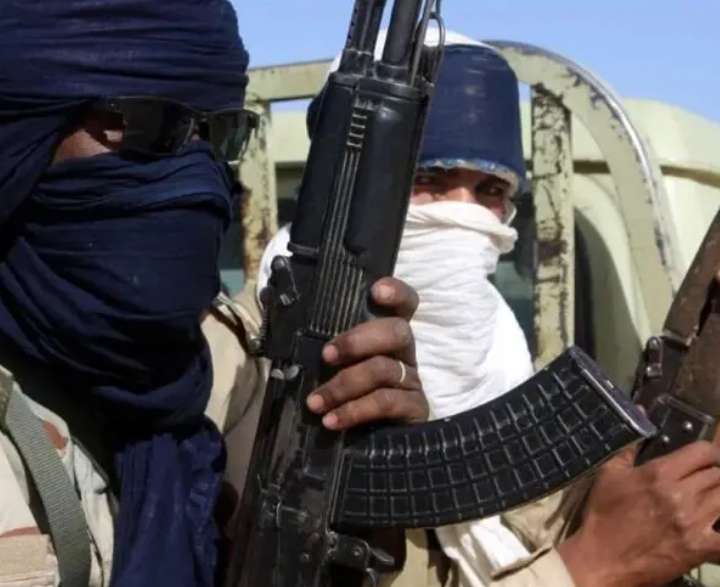
Across large stretches of northern Nigeria, the sound of motorcycles approaching a rural settlement has become a signal of dread. In communities scattered across forests and farmlands in the north-west, residents have learned to interpret the noise of engines cutting through the quiet countryside as a warning that armed men may be arriving—sometimes to demand ransom, sometimes to raid villages, and sometimes to abduct entire groups of civilians.
For more than a decade, this pattern of violence has shaped daily life in parts of Nigeria’s northern states. The armed groups responsible for these attacks—widely referred to as bandits—have killed thousands, displaced rural populations and turned kidnapping for ransom into a lucrative criminal enterprise.
Against this backdrop of persistent insecurity, remarks by , Director-General of the , have reignited one of Nigeria’s most sensitive national debates: whether negotiating with armed bandits can ever be justified as part of a strategy to save lives.
Speaking during a televised discussion on , Omotayo suggested that governments facing immediate threats to civilian lives may sometimes have to consider multiple approaches—including dialogue—if doing so could prevent bloodshed or secure the release of abducted victims.
His remarks were cautious and conditional, yet they immediately triggered widespread reactions across Nigeria’s political and security landscape. To supporters of a pragmatic approach to crisis management, the statement reflected the difficult choices governments face when civilians are in danger. To critics, however, even discussing negotiations with criminals responsible for mass kidnappings risks legitimising violence and encouraging further attacks.
The controversy surrounding Omotayo’s comments illustrates a deeper challenge confronting Nigeria: how to end a cycle of violence that has resisted conventional security responses while preserving the authority of the state and protecting the lives of vulnerable citizens.
The Expanding Geography of Banditry
Nigeria’s banditry crisis has evolved significantly over the past decade. What initially appeared as sporadic criminal activity linked to cattle rustling and rural disputes has gradually developed into an organised network of armed groups operating across multiple states.
Regions in the north-west—including Zamfara, Katsina, Kaduna, Sokoto and parts of Niger State—have experienced repeated waves of attacks on villages, markets, schools and highways. Armed groups often travel in large numbers on motorcycles, moving quickly through forest corridors and poorly policed rural routes.
These fighters typically retreat into remote forest areas that span state boundaries, creating safe havens where security forces face logistical challenges in sustaining operations. Forest belts such as the Rugu and Kamuku areas have become widely associated with bandit activity, serving as operational bases from which raids are launched.
In many rural communities, the consequences have been severe. Entire villages have been abandoned after repeated attacks, forcing residents to flee to nearby towns or internally displaced persons camps. Farmers who once cultivated vast fields now avoid travelling far from settlements for fear of being kidnapped.
This displacement has had ripple effects on local economies and food production, particularly in regions that traditionally served as major agricultural centres.
Kidnapping and the Economics of Violence
Among the most troubling developments in Nigeria’s banditry crisis is the transformation of kidnapping into a highly profitable criminal enterprise.
Armed groups increasingly target travellers along highways, farmers working in fields and even schoolchildren in rural educational institutions. Victims are transported to remote camps where kidnappers demand ransom payments from families or community leaders.
Security analysts note that these ransom payments have become a critical source of revenue for armed groups. Funds collected through kidnappings are often used to purchase firearms, ammunition, motorcycles and communication devices that help sustain criminal operations.
In effect, the ransom economy has created a cycle in which each successful abduction strengthens the operational capacity of the groups responsible.
For victims’ families, the consequences are devastating. Many households sell land, livestock or personal belongings to raise ransom funds. In some communities, residents contribute collectively to secure the release of abducted neighbours.
These informal negotiations—often conducted quietly through intermediaries—have become a grim reality in many parts of northern Nigeria, even as the federal government maintains that banditry must be confronted primarily through security operations.
The Remarks That Sparked Debate
It was within this complex security environment that Omotayo’s remarks drew national attention.
During the televised discussion, he emphasised that the central responsibility of government is the protection of citizens’ lives. When civilians are in immediate danger, he suggested, policymakers may sometimes need to consider pragmatic responses rather than rigid adherence to theoretical principles.
His argument did not advocate legitimising banditry or abandoning security operations. Instead, he framed negotiation as one of several tools that might be considered in exceptional circumstances, particularly when hostages’ lives are at stake.
However, once excerpts of the interview circulated widely online, headlines summarising the comments as support for negotiating with bandits quickly spread across social media platforms and news outlets.
The simplified framing intensified reactions and revived longstanding disagreements about how Nigeria should address violent criminal networks.
Previous Attempts at Dialogue
Nigeria’s experience with negotiations involving armed groups is not without precedent.
Perhaps the most widely known example occurred during the administration of former President , when the federal government launched an amnesty programme aimed at militants operating in the Niger Delta.
At the time, armed groups had been sabotaging oil pipelines and attacking energy infrastructure, disrupting Nigeria’s petroleum production. The amnesty initiative offered militants the opportunity to surrender weapons in exchange for rehabilitation programmes and economic reintegration.
While controversial, the programme contributed to a reduction in large-scale attacks on oil facilities.
However, security experts caution that the dynamics of Niger Delta militancy differ significantly from those of banditry in northern Nigeria. Niger Delta militants articulated political grievances related to resource control and environmental damage, whereas many bandit groups appear primarily motivated by financial gain through criminal activity.
This distinction complicates the prospect of negotiation as a solution to the current crisis.
Controversial Mediation Efforts
In recent years, the Islamic cleric has been among the most visible figures advocating dialogue with bandit groups.
Gumi has visited camps in northern forests and held discussions with some fighters, urging them to abandon criminal activities and accept peaceful reintegration into society.
Supporters of his approach argue that dialogue can build trust and reduce violence in areas where government presence is weak. Critics, however, contend that such engagements risk legitimising armed groups and undermining the rule of law.
Several attempts by state governments to negotiate ceasefires with bandit leaders have produced mixed results. Some agreements temporarily reduced attacks, but others collapsed when armed groups resumed violence.
These experiences have contributed to widespread scepticism about whether negotiations can deliver lasting peace.
Federal Government’s Security Strategy
Nigeria’s federal government has generally maintained a policy centred on security operations aimed at dismantling bandit networks.
Under the administration of , military and security agencies have continued operations targeting bandit camps across forested regions in the north-west.
Air strikes, ground offensives and intelligence-driven raids have been used to disrupt criminal networks and eliminate key commanders.
Authorities have also designated several bandit groups as terrorist organisations under Nigerian law, allowing security agencies to apply stronger counter-terrorism measures against individuals involved in the violence.
Despite these efforts, the persistence of attacks highlights the challenges of restoring security across vast rural territories where infrastructure is limited and state presence is weak.
Divided Opinions Among Security Experts
Within Nigeria’s security community, opinions about negotiating with bandits remain sharply divided.
Some analysts argue that maintaining absolute refusal to engage with kidnappers may limit the government’s ability to respond flexibly during hostage crises. In situations where abducted civilians face immediate danger, they suggest that communication channels could provide opportunities to secure releases.
Others strongly reject the idea, warning that negotiations or ransom payments can strengthen criminal networks by providing financial incentives for further kidnappings.
These critics argue that the long-term cost of legitimising criminal groups may outweigh the short-term benefits of securing individual hostage releases.
The Human Reality Behind the Debate
For residents of communities affected by banditry, the debate unfolding in national media is deeply personal.
Farmers who once cultivated fields far from their villages now travel cautiously in groups, aware that isolated individuals are easy targets for kidnappers. Parents worry about the safety of children travelling to school along rural roads.
Markets in some areas close earlier than usual as traders attempt to avoid travelling after dark.
Local leaders often face difficult choices when armed groups threaten attacks. In some cases, community representatives have quietly engaged in negotiations to prevent raids or secure the release of abducted residents.
These informal arrangements highlight the gap between official government policy and the survival strategies adopted by communities living under persistent threat.
Searching for a Sustainable Path Forward
The controversy sparked by Omotayo’s remarks ultimately reflects the broader challenge Nigeria faces in addressing one of its most complex security crises.
Military operations have disrupted some bandit networks, yet the underlying drivers of violence—including poverty, weak rural governance and the availability of weapons—remain significant obstacles to long-term stability.
Security experts increasingly argue that resolving the crisis will require a combination of approaches, including improved intelligence gathering, economic development in vulnerable regions and stronger local governance structures.
Restoring trust between communities and security institutions may also be essential in preventing armed groups from recruiting new members among marginalised populations.
A Difficult National Conversation
The debate over negotiating with bandits is unlikely to disappear soon. As long as kidnappings continue and communities remain under threat, Nigerians will continue to question which strategies offer the best chance of restoring peace.
Omotayo’s remarks have therefore reopened a difficult but necessary national conversation about how the country should confront violent criminal networks.
For policymakers in Abuja, the challenge is not simply choosing between negotiation and force. It is designing a comprehensive strategy capable of protecting lives today while dismantling the conditions that allow banditry to flourish.
Until that balance is achieved, the question of whether dialogue should ever play a role in resolving Nigeria’s security crisis will remain one of the country’s most contentious and consequential policy debates.
Author: Smart Chuks
Smart Chuks writes on national security, governance and public policy for SaharaNews247.