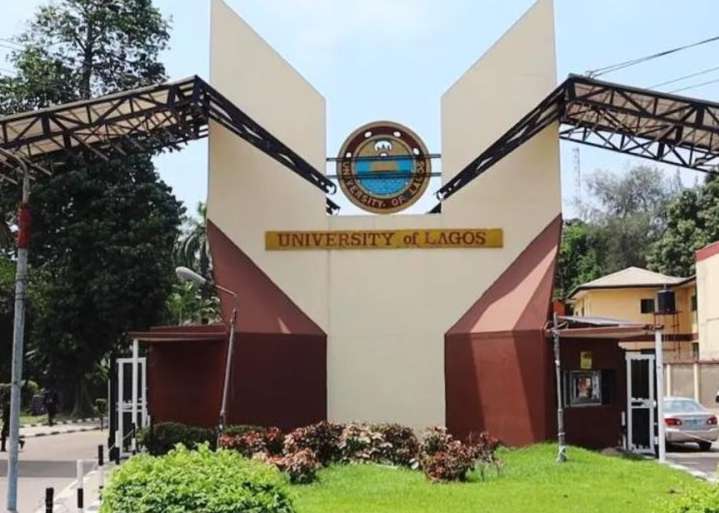
Academic activities at the University of Lagos have been thrown into uncertainty after the institution’s branch of the Academic Staff Union of Universities declared an indefinite strike over unresolved salary and allowance disputes involving academic staff.
The industrial action, announced after an emergency congress of the union, followed complaints from lecturers who said their salary payments for January and February 2026 were incomplete. The lecturers argued that critical components of their remuneration, including key academic allowances, were not reflected in the payments received, prompting the union to direct members to withdraw their services until the issue is addressed.
The decision effectively halts lectures, research supervision, and other academic responsibilities performed by union members at one of Nigeria’s most prominent federal universities. The strike has immediately raised concerns among students, university administrators, and education stakeholders about the potential impact on the institution’s academic calendar.
A Salary Dispute That Escalated Into Industrial Action
The crisis began when academic staff at the University of Lagos noticed discrepancies in their salary payments for the first two months of the year. According to union representatives, lecturers received what they described as incomplete salaries that excluded certain allowances traditionally attached to academic work within Nigeria’s federal university system.
ASUU members said the payments did not include the Earned Academic Allowances and the Consolidated Academic Tools Allowance. These allowances form part of the compensation structure negotiated over time between academic unions and government authorities.
Union leaders told members during the congress meeting that the absence of these allowances had significantly affected lecturers’ earnings. They argued that the payments represented a departure from established remuneration arrangements and required immediate correction.
Following deliberations, the union resolved that lecturers would suspend their academic duties until the matter is resolved.
Academic Work Suspended Across Faculties
The strike has resulted in the suspension of lectures, research supervision, project assessments, and other academic services performed by lecturers affiliated with the union.
The University of Lagos hosts one of the largest student populations among federal universities in Nigeria. The institution offers programmes across disciplines including engineering, medicine, law, arts, sciences, and management studies.
With academic staff withdrawing their services, students engaged in coursework, examinations, research projects, and postgraduate supervision now face uncertainty about how long the disruption could last.
University administrators are expected to evaluate the implications for the institution’s academic calendar while exploring possible avenues for resolving the dispute.
Understanding the Role of Academic Allowances
Earned Academic Allowances were introduced to recognise the additional responsibilities carried by university lecturers. Academic staff in Nigerian universities often supervise large numbers of undergraduate projects, postgraduate dissertations, and doctoral research programmes.
Beyond classroom teaching, lecturers participate in research activities, departmental committees, academic assessments, and the development of scholarly publications. The allowance structure was designed to compensate lecturers for these additional duties, which extend far beyond routine classroom instruction.
The Consolidated Academic Tools Allowance is intended to support lecturers in maintaining the professional tools required for academic work. These tools may include books, journals, digital research resources, and specialised software necessary for teaching and research.
In many Nigerian universities where institutional research funding remains limited, lecturers often depend on such allowances to sustain academic productivity.
When these allowances are delayed or omitted from salary structures, it frequently becomes a source of tension between academic staff and university authorities.
The Local Nature of the Strike
Although the development has attracted attention within Nigeria’s education sector, the strike currently affects only the University of Lagos branch of the Academic Staff Union of Universities.
ASUU operates through branch structures across universities, allowing individual chapters to take industrial action when disputes arise within their institutions. The national leadership of the union has not declared a nationwide strike in connection with the current dispute.
However, localised industrial actions within major universities often draw national attention because they highlight broader structural challenges affecting Nigeria’s higher education system.
The University of Lagos is widely regarded as one of the country’s leading academic institutions. Its influence within Nigeria’s educational landscape means that labour disputes within the institution often resonate beyond its campus.
A Long History of Labour Disputes in Nigeria’s Universities
Industrial disputes between academic unions and government authorities have been a recurring feature of Nigeria’s university system for decades.
Many of these disputes revolve around funding for universities, the welfare of academic staff, and the implementation of agreements negotiated between the government and academic unions.
Over the years, ASUU has repeatedly advocated for increased investment in public universities, arguing that inadequate funding undermines research capacity and the quality of teaching within higher education institutions.
Negotiations between the union and government representatives have resulted in various agreements addressing salary structures, infrastructure funding, and research support. However, disagreements over the implementation of these agreements have often triggered strikes.
Such strikes have historically disrupted academic calendars across Nigerian universities, sometimes extending the duration of degree programmes and affecting the progression of students.
Funding Pressures Within the University System
Nigeria’s public universities operate within a funding framework that education analysts say is often insufficient to meet the demands of a rapidly expanding student population.
Federal universities depend largely on government budget allocations to cover staff salaries, infrastructure development, research support, and operational costs.
Education policy experts have frequently noted that the gap between available funding and institutional needs has widened over time. Universities must manage increasing enrolment levels while maintaining facilities, laboratories, libraries, and academic programmes.
These financial pressures can occasionally create administrative complications that affect payroll systems, research funding, and academic allowances.
When such issues arise, academic unions often respond with demands for the implementation of previously agreed financial arrangements.
Consequences for Students and Research
The immediate impact of the strike will be felt by students who rely on academic staff for lectures, mentorship, and research supervision.
Students preparing for examinations, final-year projects, and postgraduate thesis submissions may face delays if academic activities remain suspended for an extended period.
Research initiatives within the university may also slow down, particularly in laboratories and departments where academic supervision plays a central role in ongoing projects.
Beyond the campus community, disruptions to academic activities can affect Nigeria’s broader research ecosystem. Universities serve as important centres for knowledge production, innovation, and policy research.
Interruptions to research programmes can delay publications, collaborative projects, and academic partnerships with institutions outside Nigeria.
Institutional Dialogue and Possible Resolution
Historically, disputes involving academic staff unions in Nigeria have been resolved through negotiations involving university authorities, government agencies, and union representatives.
Such discussions often focus on verifying the concerns raised by lecturers and identifying the administrative or financial factors responsible for payment discrepancies.
In the case of the University of Lagos, discussions are expected to examine the payroll processes that resulted in the incomplete salary payments cited by ASUU.
The outcome of these discussions will likely determine how quickly academic activities can resume.
University administrators and union representatives are expected to engage in dialogue aimed at resolving the dispute while preventing prolonged disruption to academic programmes.
The Strategic Importance of the University of Lagos
The University of Lagos occupies a central place within Nigeria’s higher education landscape. Established in 1962, the institution has produced generations of graduates who have contributed to national development in sectors such as law, medicine, engineering, governance, media, and business.
Its location in Lagos, Nigeria’s economic centre, places it at the intersection of academic scholarship and national economic activity.
Because of its prominence, developments within the university often attract national attention, particularly when they affect academic stability.
The strike by the institution’s academic staff union therefore carries significance not only for students and staff within the university but also for policymakers and education stakeholders monitoring the state of Nigeria’s university system.
Students Await Clarity
Within the university community, students are awaiting official communication from university authorities regarding the implications of the strike.
Campus organisations and student representatives are expected to monitor developments closely as negotiations unfold between lecturers and university management.
Many students hope that discussions between the parties involved will lead to a swift resolution that allows academic activities to resume without prolonged disruption.
For now, however, the academic calendar remains uncertain as lecturers maintain their position that the strike will continue until their salary concerns are addressed.
A Reflection of Broader Systemic Challenges
The situation at the University of Lagos reflects broader challenges confronting Nigeria’s higher education system.
Universities must balance expanding student enrolment, research expectations, and staff welfare within a financial environment that education analysts say remains strained.
When disputes arise within such a system, they often highlight deeper structural issues involving funding, administrative processes, and institutional governance.
The strike by academic staff at the University of Lagos therefore represents more than a single institutional dispute. It also underscores the continuing debate about how Nigeria can sustain a stable and globally competitive university system.
As discussions continue between lecturers and university authorities, the outcome of the negotiations will determine how quickly academic activities can resume at one of Nigeria’s most influential universities.
For students, lecturers, and policymakers alike, the resolution of the dispute will be closely watched as another chapter in the ongoing effort to strengthen Nigeria’s higher education sector.
Author Bio
Smart Chuks is an investigative journalist and editorial writer with SaharaNews247, covering governance, education policy, and national development issues across Nigeria.