Abuja, Nigeria — A widely circulated media interview in the past 24 hours has resurfaced one of the most contentious issues in Nigeria’s security policy: the government’s capacity to identify and track armed actors responsible for violence across multiple regions of the country. In the interview, Kaduna‑based Islamic cleric Sheikh Ahmad Gumi, long known for his self‑appointed role as intermediary between security forces and armed groups, stated that the Federal Government knows “every terrorist by name and location.”
Mr. Gumi also emphasized that he never visits or attempts negotiations with these armed individuals alone — but always in the company of officers from the Nigerian Police Force, the Nigerian Army, and other security agencies. His comments have reignited public debate about intelligence capabilities, the role of negotiation in counter‑terrorism, and the transparency — or opacity — of the government’s security strategy.
This article examines Gumi’s statement in detail, assesses the verifiable evidence supporting or contradicting it, places the claim within the broader context of Nigeria’s ongoing security challenges, and explores what this debate means for public confidence in the state’s capacity to protect its citizens.
The Claim in Context: What Gumi Said
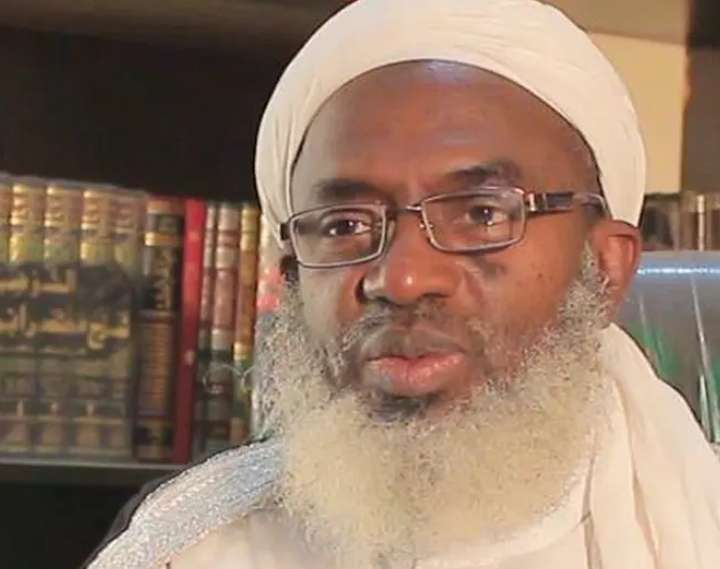
In an interview broadcast on DR TV that has since been shared widely on social networks and news platforms, Sheikh Ahmad Gumi asserted that senior Nigerian authorities have precise intelligence on the identities and locations of all armed militants he labels “terrorists.” According to transcripts of the program, he said, “The government knows every terrorist by name and location.”
Gumi explained that when he visits forest enclaves or remote hideouts where armed groups are believed to operate, he does not do so independently. Instead, he said that such visits are carried out with security personnel — police and military — who according to him, have detailed records of the individuals he is meeting.
He further described previous engagements that involved traditional rulers and community leaders, suggesting that these meetings were aimed at creating space for dialogue and reducing the incidence of violence. He also reiterated his belief that individuals involved in armed violence could be persuaded — through negotiation and rehabilitation — to abandon violent activities if properly engaged.
Crucially, however, his narrative went beyond his role as an intermediary, stepping into assertions about the state’s intelligence apparatus and what it purportedly knows.
What Is Not Established as Fact
While multiple Nigerian media organisations have reported Gumi’s comments verbatim, there has been no official confirmation from the Presidency, the Office of the National Security Adviser, the Department of State Services (DSS), the Nigerian Army, or the Nigeria Police Force corroborating his specific claim that “every terrorist” is known by name and location.
Senior security officials rarely disclose comprehensive lists of individuals suspected of involvement in armed violence, both for operational security and legal considerations. Publishing names and locations of suspects — even when such intelligence exists — can compromise ongoing operations, endanger informants, and provide adversaries with tactical advantage.
A spokesperson for the Nigerian Army who was contacted for this article declined to comment directly on Gumi’s assertion, stating instead that discussions about intelligence capabilities are “handled through official channels and within appropriate forums.” A representative of the Department of State Services similarly noted that “intelligence collection is dynamic and complex, and must remain safeguarded to be effective.”
What is verifiable is that Nigeria’s security agencies have in recent years collaborated with international partners, employed technological and human intelligence methods, and conducted military operations in various theatres. But there is no publicly available evidence that a comprehensive, catalogue‑style inventory of all individuals engaged in violent extremism exists with precise geographic tagging accessible to all relevant agencies.
Decades of Armed Violence in Nigeria: A Brief Background
To understand why Gumi’s statement has provoked such attention, it is necessary to appreciate the scale and complexity of armed violence in Nigeria over the past two decades.
The northeast of the country has endured a prolonged insurgency. What began as localized dissent evolved into a decade‑long campaign by groups responsible for mass killings, kidnappings, and the displacement of millions. Entire towns were overrun, schools were attacked, and regional economies were decimated.
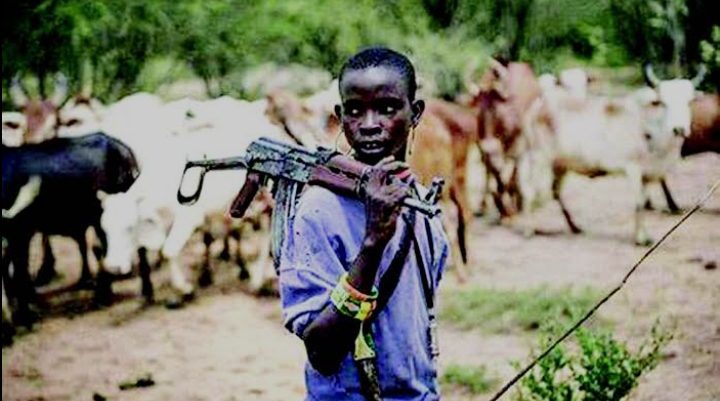
In the northwest and central regions, the security challenge has taken a different form. Here, loosely organised bandit networks — heavily armed and highly mobile — have carried out mass kidnappings for ransom, attacked villages, and penetrated rural areas that are difficult to access by road, let alone monitored by satellite.
These separate yet overlapping challenges have required distinct strategies from government and security forces. Military operations have been deployed, state governments have instituted local security arrangements, and federal authorities have at times negotiated with local leaders to establish ceasefires or surrenders.
Yet, the evolution of these conflicts has made it difficult to map a clear roster of individuals responsible for violence, partly because many of the armed actors are not part of formal, hierarchical organisations with easily identifiable leadership structures. Instead, they operate in fluid networks that shift alliances, relocate bases quickly, and embed themselves within communities.
Nigeria’s Intelligence Architecture: Strengths and Limits
Nigeria’s intelligence apparatus comprises multiple agencies, each with distinct mandates. The DSS is responsible for domestic intelligence and counter‑intelligence, while the Defence Intelligence Agency (DIA) handles military intelligence. The Nigeria Security and Civil Defence Corps (NSCDC) and other paramilitary organisations contribute additional capacity.
These agencies collect data through human intelligence (HUMINT), signals intelligence (SIGINT), open‑source intelligence (OSINT), and cooperation with state and local authorities. They also maintain liaison relationships with foreign intelligence services.
Still, intelligence collection in environments characterised by remote terrain, porous borders, and asymmetric warfare is inherently challenging. Armed groups adapt quickly, often dispersing into smaller cells when under pressure. In addition, ethical and legal constraints around surveillance and detention limit how far security agencies can publicise the identities and locations of suspects without risking civil liberties violations.
This does not mean that security agencies are unaware of individuals suspected of involvement in violent acts. Intelligence collection is ongoing, and some level of identification undoubtedly exists. But asserting that the government knows every armed actor by name and location implies a level of certainty and completeness that would be unprecedented given the dynamic nature of the conflicts.
Security analysts caution against equating intelligence identification with actionable tracking. A known name may not correspond to a fixed, verifiable location, especially if suspects are constantly on the move or shielded by local networks. Moreover, naming an individual publicly without formal charge could undermine the rule of law and expose agencies to legal liabilities.
Sheikh Gumi’s History of Engagement
Sheikh Ahmed Gumi is a polarising figure in Nigeria’s security conversation. A cleric with influence in parts of northern Nigeria, he has for years advocated for negotiations and amnesty programmes for armed actors willing to lay down their arms.
Gumi’s supporters argue that his interventions have at times helped secure the release of kidnapped victims and reduced violence in specific communities. They point to his ability to traverse conflict zones and engage directly with non‑state armed groups — something that government forces, due to operational constraints, may not be able to do as readily.
Critics, however, contend that his interventions risk normalising criminality and could undermine the authority of state institutions. They argue that negotiating with armed actors who have perpetrated killings and kidnappings may send a message that violence yields access to dialogue.
Gumi’s role, and his framing of his interactions as being carried out with security forces rather than in spite of them, raises important questions about how informal mediators are integrated into Nigeria’s broader counter‑violence strategy. Do such intermediaries supplement formal mechanisms, or do they operate on the margins, creating parallel channels of engagement outside official oversight?
Public Reaction: Confidence and Criticism
The public reaction to Gumi’s statement has been mixed. On social media platforms, many Nigerians responded with scepticism, asking why violence persists if the government ostensibly knows the locations of all perpetrators. Others expressed frustration with what they perceive as a lack of transparency from security agencies, arguing that citizens deserve clearer accounts of how threats are identified and addressed.
Some commentators have cautioned against conflating intelligence awareness with operational success. They argue that even when security agencies know the identities of suspects, logistical, tactical, and political constraints can limit the ability to apprehend or neutralise those individuals immediately.
Civil society organisations dealing with victims of kidnappings and raids have called for greater accountability, emphasising that security strategy must prioritise protection of the vulnerable and compensation for loss. These voices highlight the human toll of insecurity — a toll that statistics and abstract debates often fail to capture.
Why This Debate Matters for Governance
At its core, the debate triggered by Gumi’s claim touches on fundamental issues of governance, accountability, and the social contract. Citizens look to the state to provide security, uphold justice, and communicate honestly about its capabilities and limitations. When statements — whether by intermediaries or officials — suggest that the government possesses near‑complete knowledge of threats, expectations are inevitably shaped by that narrative.
If such claims are later shown to be overstated or unsupported by corroborated evidence, public trust may erode further. Conversely, if the government has intelligence that it has not disclosed, questions arise about why that intelligence is not being translated into more effective action or communicated in a way that strengthens confidence.
This tension between knowing and acting is not unique to Nigeria, but in a context where violence has disrupted lives for years, every claim about security capability resonates deeply with ordinary Nigerians.
Conclusion: Distinguishing Assertion from Verified Capability
Sheikh Ahmad Gumi’s assertion that the Federal Government knows every terrorist by name and location is a powerful statement, and one that demands scrutiny. His framing of his own role as an intermediary operating with security escorts adds another layer to the story.
However, there is currently no independent, public verification of the claim that the state possesses a comprehensive catalogue of all armed actors with precisely mapped identities and locations. Nigeria’s intelligence architecture is active, complex, and continuously evolving, but the nature of the security challenges — fluid, geographically dispersed, and adaptive — limits the possibility of such definitive knowledge.
What this debate ultimately highlights is the need for transparent communication from government about both its capabilities and its limitations, and for citizens to have access to information that clarifies the difference between asserted knowledge and operationally verified fact. As Nigeria seeks to build a more stable and secure future, navigating this distinction with honesty — rather than hyperbole — will be essential.
Author Bio
Smart Chuks is senior investigative editor at SaharaNews247.com, specialising in deep national security analysis, political economy, and governance reporting. His work combines rigorous fact‑checking, contextual depth, and grounded insight into Nigeria’s most complex policy challenges.