
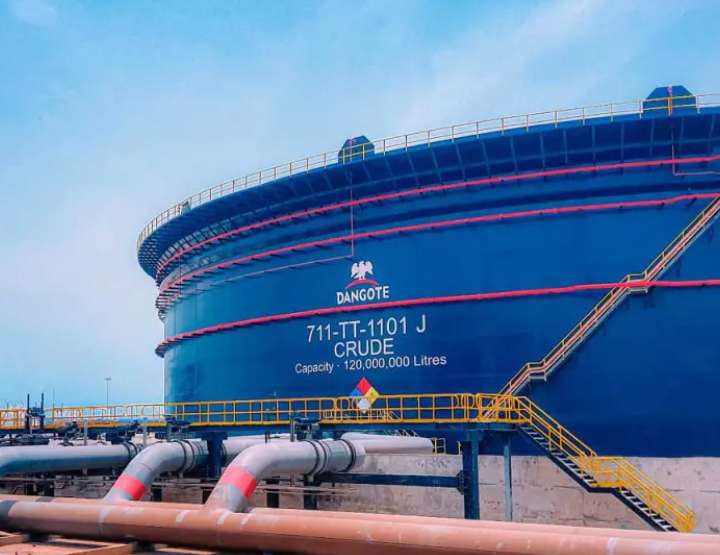
Nigeria’s downstream petroleum sector is once again confronting fresh uncertainty after the privately owned increased the ex-depot price of petrol to ₦1,175 per litre and diesel to ₦1,620 per litre, triggering concerns about another possible rise in pump prices across the country.
Industry sources within the petroleum distribution network confirmed that the revised prices were communicated to fuel marketers purchasing products directly from the refinery’s gantry. The development marks the latest adjustment in Nigeria’s rapidly evolving fuel market, which has experienced significant volatility since the federal government removed petrol subsidies and allowed market forces to determine pricing.
The price review comes only days after marketers reported that petrol was selling at around ₦995 per litre at the depot level, highlighting the speed at which prices have been adjusting within Nigeria’s liberalised petroleum market.
For a country where petrol remains a central driver of transportation, electricity generation and commercial activity, the latest adjustment raises important questions about the future trajectory of fuel prices and their wider implications for Nigeria’s economy.
Understanding the Latest Price Adjustment
The figures announced by the Dangote refinery refer to the ex-depot or gantry price, which is the cost at which petroleum marketers purchase fuel directly from the refinery before transporting it to depots and retail outlets.
This means the ₦1,175 price does not represent the final amount motorists will pay at filling stations. Once transportation costs, depot handling charges, distribution margins and retail profit are added, the pump price at petrol stations typically becomes higher.
Industry analysts say that when depot prices increase significantly, retail pump prices often follow quickly, especially in major urban centres where fuel demand is high and distribution costs are substantial.
In Nigeria’s deregulated fuel market, retail prices are determined largely by market dynamics rather than government intervention, meaning marketers adjust pump prices in response to changes in supply costs.
A Pattern of Rapid Price Changes
The latest adjustment by the Dangote refinery forms part of a pattern of rapid pricing revisions that have characterised Nigeria’s petroleum sector in recent months.
Market data from petroleum traders indicates that the refinery’s petrol price has moved through several levels within a relatively short period, rising from approximately ₦774 per litre earlier in the year to about ₦995 before reaching the new ₦1,175 price level.
Such swift adjustments illustrate the volatility that has emerged in Nigeria’s fuel market since the removal of subsidies ended decades of government-controlled pricing.
Under the previous system, the federal government paid the difference between international fuel prices and the regulated domestic price, effectively stabilising pump prices for consumers. However, the cost of maintaining the subsidy became increasingly unsustainable for public finances, prompting the government to adopt a market-based approach to fuel pricing.
The Strategic Role of the Dangote Refinery
The , located in the Lekki Free Trade Zone in Lagos State, represents one of the most ambitious industrial investments in Africa.
Designed with an estimated refining capacity of about 650,000 barrels of crude oil per day, the facility is widely regarded as the largest single-train refinery in the world and has the potential to transform Nigeria’s energy landscape.
For decades, Nigeria faced the paradox of being one of Africa’s largest crude oil producers while importing the majority of its refined petroleum products due to underperforming state-owned refineries.
The establishment of the Dangote refinery was widely viewed as a strategic effort to reduce the country’s dependence on imported fuel, conserve foreign exchange and strengthen domestic supply security.
The refinery produces multiple petroleum products including petrol, diesel, aviation fuel, liquefied petroleum gas and petrochemical feedstocks. At full operational capacity, it is expected to meet a significant portion of Nigeria’s domestic fuel demand while also supplying export markets across West Africa.
Despite these advantages, the economics of refining remain closely linked to global energy markets, meaning domestic fuel prices can still fluctuate based on international trends.
Why Fuel Prices Continue to Rise
Energy analysts say the latest price increase reflects a combination of global and domestic economic pressures.
One major factor is the international price of crude oil, which determines the base cost of producing refined petroleum products. When global crude prices rise, refining costs also increase, pushing up the price of petrol and diesel.
Another factor is the cost of crude oil supplied to domestic refineries. Although Nigeria produces crude oil, the price of crude supplied to refineries often reflects international benchmarks, meaning refiners operate within global market conditions rather than purely local pricing structures.
Exchange rate movements also play a critical role. Because many aspects of petroleum refining—including equipment procurement, shipping logistics and certain operational inputs—are denominated in foreign currency, fluctuations in the naira exchange rate can significantly affect production costs.
In addition, Nigeria’s complex fuel distribution network contributes to the final retail price. Transporting fuel from refineries and depots to thousands of filling stations across the country involves significant logistical costs that are ultimately reflected in pump prices.
The Role of Regulatory Institutions
Nigeria’s downstream petroleum sector is regulated by the , which oversees the licensing, distribution and pricing framework governing petroleum products.
While the sector has largely moved toward deregulation, the regulatory authority continues to monitor market activities to ensure transparency, safety compliance and fair competition among industry participants.
The state-owned also remains a major player in Nigeria’s petroleum sector, operating both upstream oil production activities and downstream fuel distribution networks.
Industry associations such as the and the represent marketers and fuel distributors who purchase products from refineries and depots before supplying retail stations nationwide.
These organisations frequently play an important role in communicating market conditions and policy concerns to both regulators and government authorities.
Economic Implications for Businesses and Households
Fuel prices occupy a central position in Nigeria’s economic structure because petrol and diesel serve as critical energy sources across multiple sectors.
Transportation, which forms the backbone of Nigeria’s supply chain for food and essential commodities, is particularly sensitive to changes in petrol prices. When fuel costs rise, transport operators often increase fares, leading to higher distribution costs for agricultural produce and consumer goods.
Diesel prices also have major implications for industrial productivity. Many Nigerian businesses rely on diesel-powered generators to compensate for inconsistent electricity supply, making the cost of diesel a significant component of operational expenses.
Manufacturers, telecommunications companies, hospitals and commercial establishments frequently depend on diesel generators to maintain operations. Any sustained increase in diesel prices can therefore lead to higher operating costs and, in some cases, increased prices for goods and services.
For small businesses and informal sector operators, who make up a substantial portion of Nigeria’s workforce, fuel price increases can directly affect daily income and profitability.
Inflationary Pressures and Cost of Living
Nigeria’s broader economic environment has been heavily influenced by rising inflation in recent years, and fuel prices play a major role in shaping the overall cost of living.
When petrol prices increase, the cost of transporting goods typically rises as well. This can lead to higher prices for food items, building materials and other everyday commodities in markets across the country.
Urban households, which depend heavily on public transportation and commercial goods supply chains, are particularly vulnerable to fluctuations in fuel prices.
Economists note that sustained increases in fuel prices can create ripple effects throughout the economy, influencing sectors ranging from agriculture and manufacturing to retail and logistics.
The Legacy of Petrol Subsidies
The current market dynamics are closely tied to Nigeria’s decision to remove petrol subsidies, a policy shift that fundamentally altered the country’s fuel pricing structure.
For decades, the federal government subsidised petrol consumption by covering the difference between international market prices and regulated domestic pump prices.
Although the policy helped keep fuel relatively affordable for consumers, it also placed enormous financial pressure on government budgets. Subsidy payments often consumed trillions of naira annually and were widely criticised for inefficiency and lack of transparency.
The transition to a deregulated market has shifted the responsibility for pricing decisions from government authorities to industry participants. While this approach is intended to create a more sustainable and transparent system, it also exposes consumers to the full volatility of global energy markets.
The Future of Nigeria’s Fuel Market
Despite the current volatility, many energy experts believe Nigeria’s long-term outlook for fuel supply could improve as domestic refining capacity expands.
The Dangote refinery represents a major step toward reducing dependence on imported petroleum products, and additional reforms are expected to strengthen the sector over time.
The federal government has also initiated efforts to rehabilitate state-owned refineries in Port Harcourt, Warri and Kaduna in an attempt to restore domestic refining capacity.
If these facilities operate efficiently alongside private refineries, analysts say Nigeria could eventually achieve greater stability in fuel supply and potentially create a more competitive downstream market.
However, achieving price stability will depend on several factors including reliable crude oil supply to refineries, stable foreign exchange markets, improved infrastructure and effective regulatory oversight.
A Market Still Adjusting to Reform
The latest price adjustment by the Dangote refinery highlights the complexity of Nigeria’s transition from a heavily subsidised fuel market to a deregulated system driven by market forces.
While domestic refining has the potential to reshape the country’s energy sector, the economics of petroleum production remain deeply intertwined with global oil prices, exchange rates and supply chain costs.
As Nigeria navigates this transformation, policymakers face the challenge of balancing economic reforms with the realities faced by millions of citizens who rely on affordable fuel for daily activities.
For now, the immediate question for consumers remains how the latest depot price increase will translate into pump prices at filling stations across the country—and how those changes will affect the already rising cost of living.
Author: Smart Chuks
Smart Chuks is an investigative journalist and editorial writer focusing on governance, economic policy, security and public accountability in Nigeria and across Africa.

