By Chinedu Okeke – SaharaNews247
Introduction
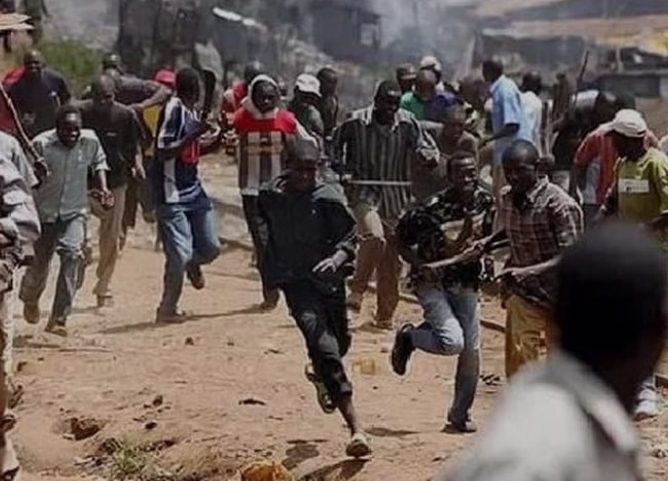
The demand for the release of the detained leader of the Indigenous People of Biafra (IPOB), Nnamdi Kanu, took a dramatic turn this week as hundreds of protesters stormed Nigeria House in New York City. The demonstrators, mostly Nigerians in the diaspora, chanted solidarity songs and carried placards with bold inscriptions reading “Free Nnamdi Kanu Now,” “Justice for the Southeast,” and “Biafra or Nothing.”
The protest, which was part of the global #FreeNnamdiKanuNow movement, coincided with parallel demonstrations across several Nigerian cities where security operatives used tear gas and made arrests to disperse crowds. The growing agitation shows that the controversy surrounding Kanu’s prolonged detention has transcended Nigeria’s borders, evolving into an international human-rights issue.
The New York Demonstration
The protesters gathered at Nigeria House, located at 888 Second Avenue in Manhattan, New York, waving both Biafran and American flags. They called on the Nigerian government to comply with existing court orders demanding Kanu’s release and to respect international human-rights conventions.
Chanting freedom songs, the crowd accused the government of suppressing dissent and weaponizing the judiciary. They also urged the United Nations, the U.S. Congress, and the British government to intervene and ensure justice is served.
According to eyewitnesses, the protest remained peaceful under the watch of New York police officers, who cordoned off the entrance to Nigeria House to prevent obstruction of diplomatic activities. Speakers at the rally described the demonstration as a symbolic message to the world that the Nigerian government must obey the rule of law and free Kanu immediately.
Social media videos from the protest went viral, showing demonstrators waving placards with inscriptions such as “Obey Court Orders,” “End Political Detention,” and “Freedom for Biafra.”
Simultaneous Protests in Nigeria
While the diaspora protest played out in New York, coordinated demonstrations also erupted across major Nigerian cities including Abuja, Enugu, Onitsha, Aba, and Port Harcourt.
In Abuja, security forces reportedly fired tear gas to disperse protesters who gathered near the Federal Secretariat. Several arrests were made after protesters defied police warnings against mass gatherings around sensitive areas.
The Nigerian Police had earlier cited a court order restricting protest routes, insisting that while citizens are free to assemble peacefully, no demonstrations should threaten public order. Despite this warning, hundreds of people flooded the streets, accusing the government of contempt of court and political persecution.
Civil rights organizations, including Amnesty International Nigeria and the Socio-Economic Rights and Accountability Project (SERAP), condemned the heavy-handed response, stressing that the right to peaceful protest is a fundamental democratic principle.
Who Is Nnamdi Kanu?
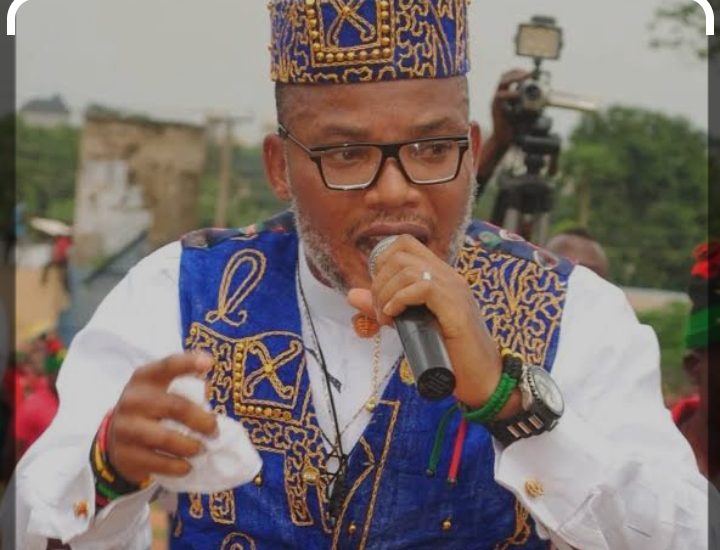
Nnamdi Kanu, born in 1967 in Abia State, is a British-Nigerian political activist and the founder of the Indigenous People of Biafra (IPOB). Through Radio Biafra, a London-based broadcast platform he founded, Kanu gained popularity for his passionate advocacy for the independence of Nigeria’s South-East region.
He was first arrested in Lagos in 2015 and charged with treason, terrorism, and incitement. His detention triggered mass protests across southeastern Nigeria and among diaspora communities. After two years in custody, he was granted bail in 2017 but fled the country following a military raid on his home.
In June 2021, Kanu was reportedly abducted in Kenya and repatriated to Nigeria under controversial circumstances. The United Nations Working Group on Arbitrary Detention later described his rendition as a “violation of international law” and called for his release and compensation.
Despite a 2022 Court of Appeal ruling ordering his unconditional release, the Nigerian government refused to comply, arguing that Kanu still faces serious charges relating to national security and public peace.
Why the Diaspora Protest Matters
Internationalization of the Kanu Case
The New York protest is not merely symbolic—it marks a strategic attempt to internationalize Nnamdi Kanu’s case. By targeting Nigeria’s diplomatic mission in one of the world’s most influential cities, protesters aimed to draw the attention of the United Nations, U.S. government, and global media to what they perceive as Nigeria’s growing disregard for judicial authority.
Growing Diaspora Influence
The Nigerian diaspora, estimated at over half a million people in the United States alone, is increasingly becoming a political force. Through remittances, advocacy, and organized protests, they have successfully influenced discussions on governance, human rights, and accountability back home.
The #FreeNnamdiKanuNow campaign showcases the power of diaspora activism to transform a domestic issue into a global movement.
Diplomatic Implications
Sustained protests at embassies and consulates can generate diplomatic friction. Such actions often attract the attention of host governments and international organizations, putting pressure on Nigerian officials abroad to explain or justify the government’s position.
This type of global spotlight could affect Nigeria’s image in the international community, especially regarding its human-rights record and adherence to the rule of law.
Legal and Political Context
Court Orders and Controversy
Nnamdi Kanu’s detention remains one of the most controversial legal sagas in Nigeria’s recent history. The Court of Appeal in Abuja ruled that his extradition was illegal, ordering his immediate release. However, the federal government appealed the judgment at the Supreme Court, maintaining that Kanu must face trial for alleged terrorism and treasonable felony.
Despite repeated court rulings, Kanu has remained in the custody of the Department of State Services (DSS) for over four years. Legal experts, including senior advocates and human-rights lawyers, have accused the government of contempt of court and undermining judicial independence.
Political Implications
In the South-East region, Kanu’s detention has fueled anger, deepened mistrust in government, and escalated insecurity. IPOB’s stay-at-home directives every Monday have crippled economic activities and discouraged investment.
Political observers warn that continuing to ignore the legal and emotional weight of this issue could entrench regional alienation and weaken national unity.
Some have called on President Tinubu to consider a political solution—possibly through negotiation or conditional release—to restore peace and build bridges of reconciliation.
Historical Roots of the Agitation
The renewed call for Biafran independence has its roots in the tragic events of the 1967–1970 Nigerian Civil War, which left over a million people dead. The war began when the South-Eastern region, led by Lt. Col. Chukwuemeka Odumegwu Ojukwu, declared the Republic of Biafra.
Although the war ended over five decades ago, many in the region believe that the same issues that triggered the conflict—economic marginalization, political exclusion, and ethnic discrimination—still persist today.
Nnamdi Kanu’s movement is seen by many as a continuation of that historical struggle for justice and equality. While the Nigerian government has labeled IPOB a terrorist organization, the group insists it seeks a peaceful referendum and self-determination under international law.
International Response and Global Attention
United Nations and Western Governments
The United Nations Working Group on Arbitrary Detention has repeatedly called for Kanu’s immediate release, declaring his continued detention illegal. The U.S. Department of State, Human Rights Watch, and Amnesty International have also expressed concerns about due process and the Nigerian government’s disregard for judicial orders.
In the United Kingdom, several Members of Parliament have debated Kanu’s case, urging the British government to intervene, given his citizenship status. Advocacy groups like Global Igbo Alliance and Free Kanu Movement UK have maintained pressure through petitions and protests in London.
Diplomatic Watch
International observers note that prolonged defiance of court orders could damage Nigeria’s credibility in diplomatic circles. A reputation for judicial non-compliance could also deter foreign investors, development partners, and multilateral organizations concerned with governance standards.
Critical Analysis and Implications
Rule of Law and Democratic Integrity
At its core, Kanu’s case represents a fundamental test of Nigeria’s democracy. When the executive arm of government refuses to obey valid court orders, it weakens public trust in the judiciary and undermines democratic principles.
For a nation striving to attract investment and strengthen its institutions, respect for the rule of law remains non-negotiable.
Security and National Integration
While government officials argue that Kanu’s release could reignite secessionist activities, many analysts believe that prolonged detention fuels further instability. Addressing legitimate grievances through dialogue could ease regional tension and reduce violent agitation.
The Power of Diaspora Advocacy
The #FreeNnamdiKanuNow protests illustrate how global advocacy networks can hold governments accountable. With social media amplifying their voices, Nigerian activists abroad are influencing public opinion and shaping diplomatic narratives.
Diplomatic Balancing Act
Nigeria faces a delicate balancing act between safeguarding national security and respecting human rights. How the Tinubu administration navigates this challenge will determine whether the nation is seen as a credible democracy or one sliding toward authoritarian tendencies.
What to Expect Next
More protests are expected in Washington D.C., London, and Toronto as diaspora groups coordinate global demonstrations. In Nigeria, Kanu’s lawyers continue to file motions demanding compliance with court rulings, while human-rights organizations intensify pressure for his release.
Sources within Abuja suggest that the government may consider a negotiated political resolution—possibly a conditional release—to restore calm in the South-East and ease diplomatic tensions abroad.
The coming months will reveal whether this conflict moves toward reconciliation or deepens into another prolonged political standoff.
Conclusion
The #FreeNnamdiKanuNow protests in New York mark a critical moment in Nigeria’s ongoing political and human-rights conversation. For Kanu’s supporters, his continued detention represents a symbol of systemic injustice and the long fight for freedom. For the Nigerian government, it is a test of sovereignty, national unity, and adherence to the rule of law.
As diaspora voices grow louder and international attention intensifies, one thing is clear: the demand for justice in the Nnamdi Kanu case has become global. The world is watching how Nigeria responds—whether through defiance or dialogue.
About the Author
Chinedu Okeke is a Lagos-based political correspondent for SaharaNews247 with over seven years of experience reporting on governance, human rights, and diaspora activism in West Africa. His work focuses on the intersection of law, politics, and national development.
Email: chinedu.okeke@saharanews247.com