
Nigeria’s deepening insecurity crisis has again entered the center of international scrutiny after recent comments attributed to United States politician Michael Waltz reignited debate over whether persistent attacks affecting Christian communities in parts of the country could meet the threshold of genocide under international law.
As of the time of publication, SaharaNews247 could not independently verify the full official transcript, procedural context, or institutional status of the remarks widely circulated across advocacy networks and sections of international media. However, the controversy surrounding the reported comments has already reopened longstanding global concerns about religious violence, state capacity, accountability failures, and the widening humanitarian consequences of Nigeria’s protracted security emergency.
The renewed international attention comes at a particularly delicate moment for Nigeria. The country continues to battle overlapping insurgencies, rural armed violence, mass displacement crises, economic instability, farmer-herder conflicts, separatist tensions, organized banditry, and growing public distrust in state security institutions. Against that backdrop, any suggestion by influential foreign officials that parts of Nigeria’s security crisis could constitute genocide carries major diplomatic, legal, and geopolitical implications far beyond the immediate controversy.
At the heart of the debate lies a difficult and politically explosive question: when does chronic mass violence evolve from generalized insecurity into internationally recognized systematic persecution against a protected religious or ethnic group?
That question has haunted successive Nigerian administrations for more than a decade.
Why the Alleged U.S. Position Has Triggered International Attention
The significance of the controversy is tied less to the personality of any single diplomat and more to what such language could represent institutionally if formally adopted within U.S. foreign policy structures.
Under international diplomatic practice, genocide is among the gravest legal and moral classifications available to governments and multilateral institutions. Even preliminary discussion of the term by senior foreign policy actors can influence congressional hearings, foreign assistance debates, military cooperation reviews, sanctions frameworks, refugee considerations, and broader international human rights monitoring mechanisms.
Reports circulating online suggested that Waltz referenced patterns of killings, displacement, attacks on churches, kidnappings, and destruction of predominantly Christian communities in parts of Nigeria while discussing global religious persecution concerns. Some advocacy groups interpreted the remarks as one of the strongest condemnations yet from a U.S.-linked official voice regarding Nigeria’s worsening violence.
However, multiple unresolved verification questions remain important.
As of publication, it remains unclear whether the alleged remarks represent a formal United States government determination, an institutional policy recommendation, a diplomatic warning, a political interpretation, or commentary made within a broader religious freedom discussion. SaharaNews247 has not independently verified whether the statement constitutes an official U.S. State Department position or whether any formal genocide review process concerning Nigeria is currently underway within international legal bodies.
That distinction matters enormously.
Under international law, genocide determinations are typically made through highly structured investigative, judicial, or multilateral processes involving evidence thresholds, intent analysis, conflict mapping, demographic targeting patterns, command responsibility investigations, and legal scrutiny extending over long periods.
Political rhetoric alone does not automatically create legal genocide recognition.
Yet even without formal designation, the controversy itself has amplified international pressure on Nigeria’s government to explain why large-scale killings and mass displacement in several regions continue with limited prosecutions and persistent allegations of state failure.
The Long Shadow of Violence Across Nigeria’s Middle Belt and Northern Regions
The genocide debate did not emerge suddenly.
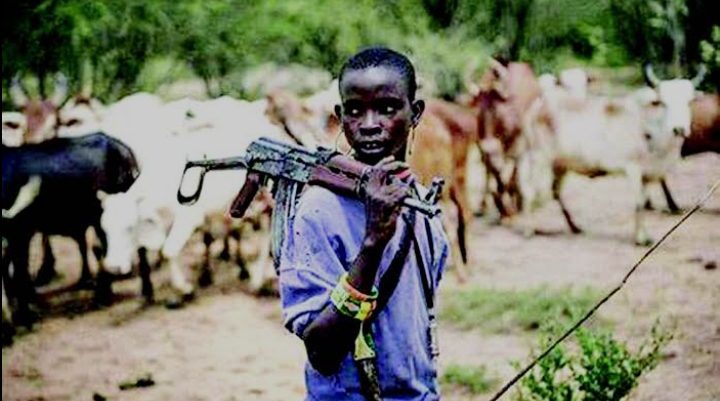
For years, Christian associations, civil society organizations, humanitarian agencies, and international advocacy networks have documented recurring attacks across states including Plateau, Benue, Kaduna, Niger, Taraba, and parts of southern Kaduna in particular. Numerous communities in these areas have experienced cycles of deadly raids, village destruction, kidnappings, displacement, and retaliatory violence.
What has made the issue especially controversial is the persistent disagreement over how the violence should be interpreted.
Some observers describe the attacks primarily as religious persecution targeting Christian populations. Others argue the crisis reflects a more complicated combination of land competition, environmental stress, weak governance, organized criminality, ethnic tensions, state failure, rural militarization, insurgent infiltration, and retaliatory communal violence affecting both Muslims and Christians.
Nigeria’s federal government has repeatedly rejected suggestions that the crisis represents systematic religious extermination. Officials have frequently maintained that insecurity affects multiple demographic groups across the country and should not be reduced to a single religious narrative.
Yet critics argue that official framing has often failed to address why certain communities repeatedly experience devastating attacks with limited deterrence or accountability afterward.
That accountability gap has become central to growing international concern.
Human rights organizations, church leaders, local advocacy networks, and displaced survivors have for years alleged that many attacks follow disturbingly repetitive patterns: armed invasions of rural settlements, destruction of churches and homes, nighttime assaults, mass killings, forced displacement, and prolonged occupation fears among survivors returning to affected areas.
In many documented incidents, survivors and local leaders have also complained of delayed security responses or inadequate post-attack investigations.
Those concerns have fueled allegations — strongly denied by authorities — that Nigeria’s security architecture has struggled to establish credible deterrence in vulnerable rural regions.
Why the Word “Genocide” Carries Extraordinary Legal Consequences
The international sensitivity surrounding the controversy stems from the legal gravity attached to genocide allegations.
The 1948 United Nations Convention on the Prevention and Punishment of the Crime of Genocide defines genocide as specific acts committed with intent to destroy, wholly or partially, a national, ethnic, racial, or religious group.
That definition extends beyond mass killings alone.
It may include serious bodily or mental harm, deliberately inflicting destructive living conditions, measures intended to prevent births, or forcibly transferring children under qualifying conditions. However, legal scholars consistently note that the most difficult element to establish is specific intent.
Large-scale violence, even when horrific, does not automatically qualify as genocide under international law unless investigators can demonstrate deliberate targeting aimed at destroying a protected group because of its identity.
This is where the Nigeria debate becomes exceptionally complex.
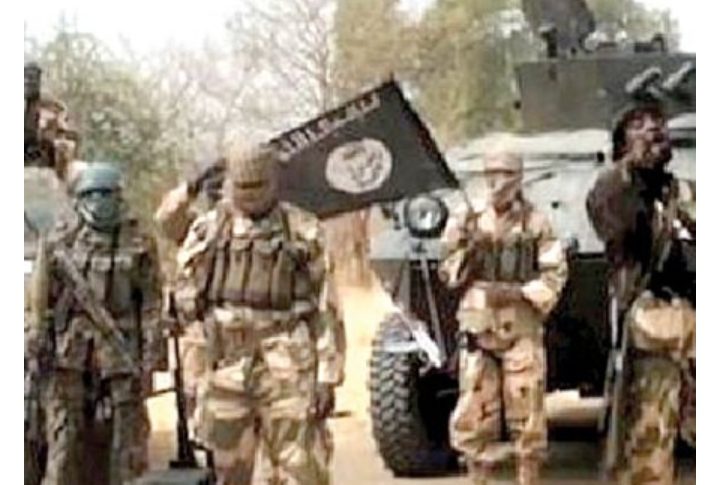
Nigeria’s insecurity crisis involves multiple overlapping armed actors with differing motivations, including insurgents, bandits, criminal gangs, extremist factions, communal militias, separatist cells, and politically connected violence networks operating across different regions simultaneously.
Analysts caution that oversimplifying such a fragmented security environment risks distorting both the causes of violence and possible policy responses.
At the same time, advocates pushing for stronger international action argue that complexity should not become an excuse for paralysis or denial when vulnerable civilian populations continue suffering repeated attacks.
The Political Risks Facing the Nigerian Government
The controversy arrives at a politically sensitive moment for President Bola Ahmed Tinubu’s administration, which has repeatedly pledged to improve national security while also confronting severe economic pressures, inflation, debt burdens, subsidy backlash, currency instability, and growing public frustration.
International narratives portraying Nigeria as a country facing potential religious cleansing could create serious diplomatic complications.
Nigeria remains one of Africa’s most strategically important states. It is a major oil producer, a regional military actor, a key Western counterterrorism partner, and a central economic force within West Africa. Any deterioration in its international human rights standing could affect foreign investment confidence, defense cooperation, security partnerships, development financing, and geopolitical perceptions of stability.
There are also domestic political sensitivities.
Nigeria’s delicate religious and ethnic balance has historically required careful political management. Public framing of insecurity through explicitly sectarian lenses risks deepening polarization within an already fragile national environment.
Government officials and some analysts therefore argue that external narratives focused solely on Christian victimhood may unintentionally inflame tensions or obscure attacks affecting Muslim populations in other conflict zones.
However, critics counter that refusing to directly acknowledge patterns of religious targeting where they exist undermines public trust and weakens accountability.
This tension between national unity concerns and demands for explicit recognition of victimized communities remains one of the most politically explosive dimensions of the debate.
The International Pressure Campaign Around Nigeria’s Security Crisis
The current controversy also reflects years of lobbying by international religious freedom advocates seeking stronger U.S. action regarding Nigeria.
Several American lawmakers, Christian advocacy organizations, and international watchdog groups have repeatedly urged Washington to adopt more aggressive positions concerning violence affecting Christian communities in Nigeria.
During previous U.S. administrations, Nigeria’s placement and removal from religious freedom watchlists generated significant diplomatic debate. Advocacy groups accused Western governments of inconsistency, arguing that strategic security and economic interests sometimes overshadowed human rights concerns.
At different moments, reports by organizations such as Open Doors International, Christian Solidarity Worldwide, Aid to the Church in Need, and Genocide Watch have described escalating threats facing Christian populations in parts of Nigeria.
Yet other conflict researchers have cautioned against simplistic narratives that frame all violence exclusively through religion while ignoring climate pressures, migration patterns, governance collapse, organized criminal economies, arms proliferation, and localized ethnic rivalries.
This disagreement within the international policy community remains unresolved.
What appears increasingly clear, however, is that patience among some foreign advocacy networks is eroding as attacks continue without visible long-term stabilization.
Security Architecture Under Renewed Scrutiny
Beyond the legal debate itself, the controversy exposes broader questions about the effectiveness of Nigeria’s security institutions.
Despite enormous defense expenditures over multiple administrations, large rural areas across several states remain vulnerable to repeated attacks. Communities frequently complain about inadequate intelligence coverage, poor emergency response capability, insufficient rural policing, overstretched military deployments, and weak prosecution systems.
Nigeria’s security crisis has also evolved into a test of state legitimacy.
In many conflict-prone communities, local trust in formal institutions has deteriorated significantly. Residents increasingly rely on vigilante groups, ethnic militias, informal security structures, and self-defense networks where official protection is perceived as unreliable.
That trend creates dangerous long-term consequences.
As non-state armed actors become normalized, state monopoly over force weakens further. Localized retaliatory violence becomes more likely. Ethnic distrust deepens. Political actors may begin exploiting insecurity narratives for electoral mobilization. And already fragile communities become more susceptible to radicalization or recruitment by extremist groups.
International observers monitoring Nigeria’s instability increasingly warn that prolonged institutional weakness could eventually produce broader regional security consequences extending into neighboring West African states.
The Humanitarian Crisis Beneath the Political Debate
Lost beneath the legal terminology and diplomatic controversy is the humanitarian reality confronting displaced communities across multiple Nigerian states.
Millions of Nigerians remain internally displaced by violence nationwide. Camps and informal settlements continue housing families uprooted from farming communities destroyed during repeated attacks. Economic survival has become increasingly difficult for displaced populations already facing inflation, food insecurity, and limited state support.
Entire generations of children in conflict-affected regions have experienced interrupted education, psychological trauma, and long-term instability.
Humanitarian organizations working in some affected areas have repeatedly warned that prolonged displacement risks creating enduring cycles of poverty, resentment, social fragmentation, and future instability.
For survivors, debates about terminology often feel disconnected from daily realities.
Whether attacks are classified as terrorism, communal violence, insurgency, banditry, persecution, or potential genocide, affected communities continue demanding the same basic outcomes: security, justice, accountability, reconstruction, and acknowledgement.
That gap between elite geopolitical discourse and lived civilian experience remains one of the defining moral tensions surrounding Nigeria’s security crisis.
Could International Legal Mechanisms Become Involved?
As of publication, there is no publicly confirmed international genocide case against Nigeria before any major international tribunal.
However, international legal scrutiny could still intensify if pressure campaigns continue expanding.
Potential future pathways — though currently speculative — could include expanded human rights investigations, congressional hearings in foreign legislatures, international sanctions debates, independent fact-finding initiatives, United Nations reporting procedures, or increased International Criminal Court interest concerning specific atrocities.
The ICC has previously examined broader conflict-related allegations connected to Nigeria, including insurgency-related abuses and alleged violations involving multiple actors.
Still, legal experts caution that formal genocide prosecutions are exceptionally difficult and politically sensitive. They typically require overwhelming evidentiary standards, sustained international consensus, and years of investigative work.
For now, the immediate significance of the controversy may lie less in imminent legal action and more in its reputational impact.
Repeated international framing of Nigeria as a country potentially facing religious cleansing risks damaging diplomatic credibility and reinforcing narratives of institutional fragility abroad.
Why Verification Discipline Matters in Reporting This Crisis
The emotionally charged nature of the debate also underscores why careful reporting standards remain essential.
Nigeria’s insecurity landscape is extraordinarily complex, and misinformation has frequently worsened tensions. Unverified casualty figures, manipulated videos, sectarian propaganda, politically motivated narratives, and inflammatory social media claims have repeatedly circulated during major attacks.
Responsible reporting therefore requires distinguishing clearly between verified facts, advocacy claims, institutional allegations, legal determinations, and political interpretations.
It is particularly important not to present disputed claims as established judicial conclusions where no formal legal ruling exists.
Similarly, attributing direct quotations, diplomatic declarations, or official policy positions without independently verifiable sourcing creates avoidable legal and ethical risks.
In conflicts involving religion and ethnicity, careless amplification can intensify public fear, inflame communal hostility, or undermine already fragile peace efforts.
That is why verification language matters.
Phrases such as “according to preliminary reports,” “subject to independent confirmation,” and “as of the time of publication” are not mere editorial formalities. They are safeguards against misinformation, legal exposure, and irresponsible escalation.
The Strategic Calculations Behind Competing Narratives
The dispute over terminology also reflects competing political incentives among multiple actors.
For international advocacy groups, stronger language may help attract diplomatic pressure, humanitarian funding, media visibility, and policy attention to communities they believe have been neglected.
For Nigerian authorities, resisting genocide framing may be viewed as essential to preserving international confidence, national cohesion, and diplomatic stability.
For foreign governments, public pressure on Nigeria may intersect with broader geopolitical calculations involving counterterrorism, regional influence, migration concerns, and strategic partnerships across West Africa.
Domestic political actors may also attempt to weaponize insecurity narratives for electoral advantage, identity mobilization, or institutional bargaining.
These overlapping incentives complicate efforts to build objective consensus around the crisis.
Yet beneath the politics remains an undeniable reality: Nigeria continues experiencing severe levels of violence that large portions of the population increasingly view as existential threats.
What Happens Next?
Several possible trajectories now appear plausible.
In a best-case scenario, renewed international scrutiny could pressure Nigerian authorities into strengthening rural security coordination, accelerating prosecutions, improving intelligence systems, expanding humanitarian rehabilitation, and rebuilding trust with affected communities.
Such pressure could also encourage more transparent investigations into mass casualty incidents while reducing perceptions of impunity.
A more likely scenario may involve continued diplomatic tension without formal genocide designation. Under this outcome, advocacy campaigns would intensify, international monitoring would expand, and Nigeria would face growing reputational pressure while attempting to balance security operations with diplomatic damage control.
The worst-case scenario would involve escalating violence combined with deepening sectarian polarization, increasing international isolation concerns, worsening displacement crises, and broader erosion of confidence in Nigeria’s institutional capacity to protect vulnerable populations.
Such an outcome could have profound consequences for national cohesion, investment confidence, democratic stability, and regional security architecture across West Africa.
Nigeria’s Defining Institutional Test
Ultimately, the controversy surrounding the reported remarks attributed to Michael Waltz reflects a much larger issue confronting the Nigerian state.
The central challenge is not simply whether international actors adopt the word genocide.
The deeper question is whether Nigeria can build sufficient institutional credibility to convince both citizens and the international community that vulnerable populations — regardless of religion, ethnicity, or region — can be protected consistently under the authority of the state.
That requires more than military deployments.
It requires transparent accountability systems, credible investigations, functional prosecution mechanisms, intelligence reform, rural stabilization strategies, community reconciliation efforts, humanitarian reconstruction, and political leadership capable of rebuilding public trust across deeply fractured communities.
Without those reforms, international concern will likely continue intensifying.
And regardless of terminology, the perception that mass violence can persist without meaningful accountability may become one of the most damaging legacies of Nigeria’s modern democratic era.
Author Bio:
Smart Chuks is a political affairs and investigative journalist at SaharaNews247 covering governance, elections, security, public policy, and institutional accountability across Nigeria.