
A Rescue Declared, A Narrative Challenged
When Nigerian authorities announced in late November 2025 that abducted schoolgirls from Government Girls Comprehensive Secondary School (GGCSS) in Maga, Kebbi State, had been freed, the message was clear and emphatic. It was, officials said, the result of a coordinated security operation—another demonstration that the state retained the capacity to respond decisively to mass abductions.
But within hours of that declaration, a competing version of events began to circulate—one that cast doubt on the official narrative and reopened long-standing questions about how Nigeria actually handles kidnapping crises.
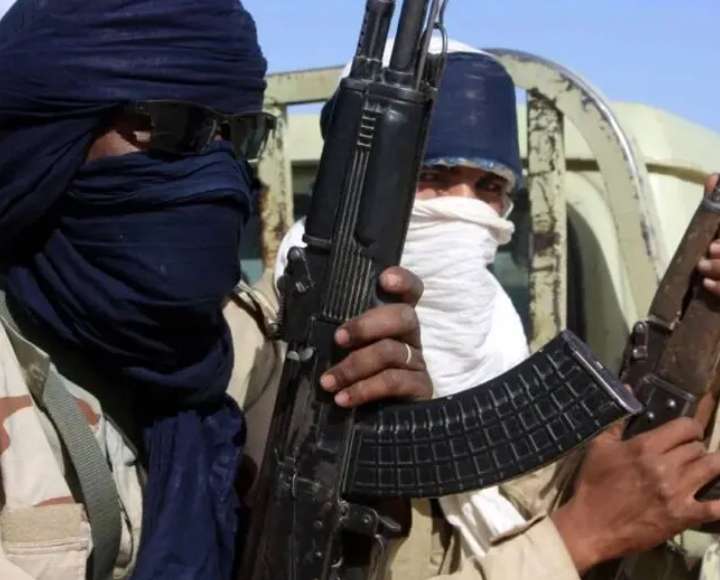
A video surfaced online showing armed men who claimed responsibility for the abduction. In the footage, they dismissed the idea of a military rescue and insisted instead that the government had relied on negotiations, using intermediaries to secure the girls’ release. The tone was defiant, even mocking. The message was unmistakable: the state, they suggested, had not prevailed through force, but through compromise.
The contradiction has since evolved into a national controversy, exposing the fragile boundary between official communication and ground reality in Nigeria’s fight against mass kidnappings.
The Night of the Abduction
The controversy traces back to the night of November 17, 2025, when heavily armed assailants attacked Government Girls Comprehensive Secondary School (GGCSS) in Maga, Danko/Wasagu Local Government Area of Kebbi State. According to official statements and contemporaneous media reports, the attackers overwhelmed the limited security presence at the school, forced their way onto the premises, and abducted dozens of students while residents fled amid sustained gunfire. The attack was the latest in a series of assaults on educational institutions in northern Nigeria, where schools have increasingly become targets for armed criminal groups seeking leverage through mass kidnappings.
Residents described a sudden and overwhelming assault. According to multiple Nigerian media reports, the attackers arrived in significant numbers, firing shots and creating panic as they moved through the school premises. By the time the operation ended, at least 24 students had been taken.
The human toll extended beyond the abduction itself. The school’s vice principal was reportedly killed during the raid, a detail later confirmed in early situation reports, while several students sustained injuries in the chaos. For families, the incident marked the beginning of days defined by uncertainty, fear, and desperate hope.
As news spread, the abduction quickly gained national attention, drawing parallels with previous high-profile cases that have shaped Nigeria’s security discourse over the past decade.
Official Response: A Carefully Managed Narrative
While officials presented the release as evidence that coordinated security operations were producing results, they disclosed few operational details. Authorities cited security considerations as the reason for withholding information, leaving unanswered questions about the precise sequence of events, the location where the students were recovered, and whether community intermediaries played any role before the girls regained their freedom.
In the days that followed, security agencies intensified efforts to locate and recover the abducted students. Public communication from the government remained measured but firm.
Defence Headquarters, in statements reported by multiple national media organizations, said the operation resulted from sustained intelligence gathering involving the Armed Forces, the Department of State Services (DSS), and the Office of the National Security Adviser. Officials maintained that continuous operational pressure forced the abductors to release the students and reiterated that no ransom was paid and no formal negotiations took place.
Presidential remarks reinforced this position. In a statement acknowledging the release, President Bola Tinubu commended the professionalism of security forces and reaffirmed the administration’s commitment to combating insecurity without capitulating to criminal demands.
The messaging followed a familiar pattern. In previous cases, authorities have consistently framed successful outcomes as rescue operations, even when public speculation suggested more complex dynamics behind the scenes.
The Video That Disrupted the Narrative
Public debate intensified after a video began circulating on social media shortly after the students’ release. The footage, which was subsequently referenced by several Nigerian news organizations, purportedly showed armed men claiming responsibility for the abduction. In the recording, they rejected the government’s account of a military-led rescue and instead alleged that discussions involving intermediaries had secured the students’ release.
In the footage, armed men are seen interacting with the abducted students, questioning them about the presence of military aircraft and disputing the government’s account of how they regained their freedom.
At one point, the armed men claim that local intermediaries played a decisive role in securing the students’ release—an assertion that implies negotiations rather than a military rescue.
Security analysts caution that such videos are rarely neutral. They are often crafted to serve strategic objectives, including projecting power, undermining state authority, and shaping public perception. The Kebbi footage fits that pattern, presenting the abductors not as fugitives under pressure, but as actors in control of the outcome.
Yet the existence of propaganda does not automatically invalidate all claims within it. The video’s timing—released shortly after the girls regained freedom—suggests a deliberate attempt to influence the narrative at a critical moment.
As of the time of publication, Nigerian authorities had not publicly released a forensic assessment confirming the authenticity of the footage or identifying the individuals shown in it. Likewise, no independently verifiable evidence had emerged to conclusively support either the government’s account or the abductors’ competing narrative. The absence of publicly available verification has contributed to continued public debate.
Between Two Versions of Truth
What emerges from the Kebbi case is not a clear-cut answer, but a layered and contested reality.
The competing narratives illustrate a recurring challenge in conflict reporting: official statements, eyewitness accounts, community testimony, and material circulated by armed groups often present overlapping yet conflicting versions of the same event. Responsible reporting requires distinguishing between verified facts, official claims, and allegations that remain unconfirmed.
Bridging these competing narratives is difficult without transparent, detailed reporting on what occurred behind closed doors. As of the time of publication, no comprehensive after-action report had been made public, and there had been no independent forensic verification confirming either the identities of the individuals shown in the video or the competing claims surrounding the students’ release.
Experts in conflict reporting often describe such situations as a “fog of information,” where competing actors shape narratives to serve strategic ends. Governments seek to maintain credibility and deterrence. Armed groups seek visibility and influence. In the absence of independently verifiable evidence, definitive conclusions remain difficult. The competing narratives instead illustrate how information itself becomes part of the conflict during modern security crises.
A Familiar Pattern in Nigeria’s Security Crisis
The Kebbi abduction is part of a broader trajectory that has defined Nigeria’s security landscape for more than a decade.
From the mass kidnapping of schoolgirls in Chibok in 2014 to the Dapchi abduction in 2018, and the wave of attacks across Zamfara and Niger states in subsequent years, a consistent pattern has emerged. Armed groups target schools in vulnerable communities, exploit delayed response times, and use hostages as leverage.
In several of these cases, questions have lingered about the role of negotiations. While official statements have often emphasized rescue operations, investigative reporting and community accounts have sometimes pointed to the involvement of intermediaries or financial settlements.
This tension between official policy and operational reality remains one of the most sensitive aspects of Nigeria’s security strategy.
The Politics of Denial and Strategic Messaging
Why does the government maintain a strict stance against negotiation, even in the face of persistent speculation?
Security experts argue that the answer lies in deterrence. Publicly acknowledging negotiations or ransom payments could encourage further kidnappings by reinforcing the perception that hostage-taking can produce financial, political, or operational concessions. For that reason, governments often maintain a public policy against negotiations, even when speculation persists about what may occur behind the scenes during complex hostage situations.
At the same time, complete denial carries its own risks. When alternative narratives gain traction—especially those supported by visual evidence—it can erode public trust and raise questions about transparency.
The Kebbi case illustrates this dilemma with unusual clarity.
The Role of Intermediaries: An Open Secret
Although governments rarely acknowledge them publicly, intermediaries have featured in several previous kidnapping incidents across northern Nigeria. Traditional rulers, community leaders, local clerics, and respected negotiators sometimes facilitate communication between authorities and armed groups. Their involvement does not necessarily imply ransom payments; in some situations they simply help establish contact, reduce tensions, or secure humanitarian releases.
Reports from previous incidents suggest that such actors can facilitate communication, de-escalate tensions, and, in some cases, broker agreements that lead to the release of hostages.
If similar mechanisms were at play in Kebbi, it would not be unprecedented. What remains unclear is whether such involvement occurred—and if so, to what extent.
Human Impact: Beyond the Headlines
Amid the focus on narratives and strategy, the human dimension of the Kebbi incident remains central.
Beyond the immediate trauma, education experts warn that mass school abductions can permanently alter learning outcomes. Some students never return to formal education, while others struggle with anxiety, post-traumatic stress, and fear of future attacks. Communities may also lose confidence in the safety of public schools, leading parents to withdraw their children or relocate altogether.
For the abducted schoolgirls, the experience represents a profound disruption to their lives. The psychological effects of such trauma can be long-lasting, affecting education, mental health, and social reintegration.
Families, too, bear the weight of these events. Days of uncertainty, compounded by conflicting information, can leave lasting scars even after physical safety is restored.
Experts in trauma recovery emphasize the importance of structured support systems, including counseling and educational reintegration programs. Without these, the long-term consequences of abduction can extend far beyond the immediate crisis.
Structural Weaknesses and Persistent Vulnerabilities
The recurrence of school kidnappings in Nigeria points to deeper structural challenges that extend beyond any single incident or state.
Many educational institutions, particularly in rural communities, continue to operate without adequate security infrastructure. Perimeter fencing, surveillance systems, trained security personnel, and effective emergency response mechanisms are often insufficient, leaving schools vulnerable to well-organized attacks.
These vulnerabilities are compounded by broader socioeconomic conditions. High unemployment, poverty, weak governance structures, and limited state presence in remote communities create an environment in which armed criminal networks can recruit, operate, and evade security operations with relative ease.
Security specialists have repeatedly argued that reactive deployments alone cannot eliminate the threat. Sustainable progress depends on improving intelligence gathering, strengthening local policing structures, expanding community-based early-warning systems, and ensuring that vulnerable schools receive adequate protection before attacks occur rather than responding only after lives have already been disrupted.
Addressing these underlying challenges will require sustained investment, stronger institutional coordination, and long-term policy reforms rather than relying solely on reactive security operations after major incidents.
The Case for Transparency and Accountability
The controversy surrounding the Kebbi schoolgirls’ release underscores the need for greater transparency in how such incidents are handled.
Greater transparency following major security incidents could strengthen public confidence without compromising ongoing operations. While certain operational details may legitimately remain classified, clearer explanations of the sequence of events, the legal framework guiding hostage situations, and the lessons learned could help reduce misinformation and reinforce institutional credibility.
Clear policy guidelines on negotiation, if they exist, should also be articulated. Ambiguity in this area not only fuels speculation but also complicates decision-making in future crises.
What Nigerians Are Watching Closely
In the aftermath of the Kebbi incident, several developments will shape public perception in the coming months.
Observers are looking for more detailed statements from Defence Headquarters and the Office of the National Security Adviser. Independent verification of the video’s claims, if pursued, could either reinforce or challenge the abductors’ narrative.
Equally important are the voices of local communities and intermediaries, whose accounts often provide critical insights into what happens beyond official channels.
Until these elements are clarified, the Kebbi case will remain an open question—one that reflects broader uncertainties within Nigeria’s security framework.
Lessons Beyond Kebbi
Whether the Kebbi schoolgirls were freed solely through military pressure, informal mediation, or a combination of multiple strategies, the incident highlights the complexity of responding to mass kidnappings in Nigeria. It also demonstrates the importance of credible public communication during security crises. Competing narratives can shape public perception as much as events on the ground, making transparency and careful verification essential components of effective crisis management.
Conclusion: A Test of Credibility in a Time of Crisis
The safe return of the Kebbi schoolgirls is, without question, a positive outcome. It represents the end of a traumatic ordeal for the victims and their families.
But the circumstances surrounding that outcome have raised complex and uncomfortable questions.
Was it a decisive rescue operation, as the government maintains? Or was it the result of negotiation, as the abductors claim? Or, more plausibly, was it a combination of both—an interplay of pressure, communication, and compromise that defies simple categorization?
The answers matter, not only for historical accuracy but for future policy.
In a country where mass abductions have become a recurring crisis, credibility is a critical resource. How the government communicates, how transparently it operates, and how effectively it addresses underlying vulnerabilities will shape public trust and, ultimately, the success of its security strategy.
The Kebbi incident is more than a single event. It is a reflection of a system under strain—and a reminder that resolving Nigeria’s kidnapping crisis will require not just tactical victories, but sustained, credible, and transparent action.
Ultimately, the Kebbi case serves as a reminder that success in combating mass abductions cannot be measured solely by the safe return of victims. It must also be judged by the state’s ability to prevent future attacks, communicate transparently with the public, support survivors after their release, and strengthen confidence in the institutions responsible for protecting citizens. Until those broader objectives are consistently achieved, future kidnapping incidents are likely to continue generating not only security concerns but also competing narratives about how justice and safety are ultimately secured.
Author Bio
Smart Chuks is a senior investigative journalist and editor at SaharaNews247, specializing in national security, governance, public policy, and accountability reporting. His work focuses on producing deeply researched, evidence-based journalism that examines Nigeria’s evolving security landscape, public institutions, and the real-world impact of government policy on citizens.