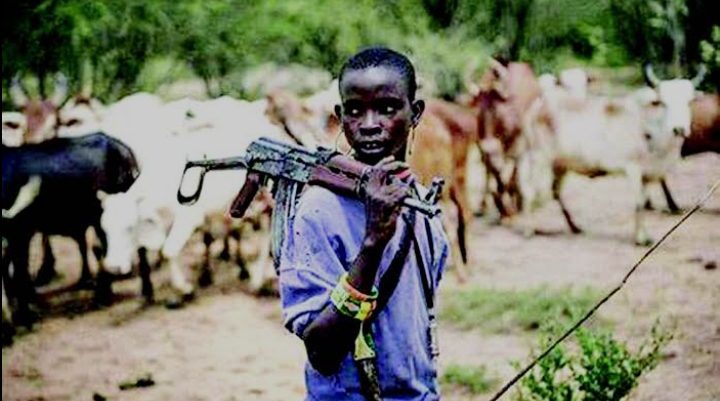

Makurdi, Nigeria – Benue State, long known as Nigeria’s “Food Basket of the Nation,” is facing one of the most profound security challenges in its history, as escalating cases of banditry, kidnapping and communal violence continue to reshape daily life across rural and urban communities. What was once a largely agrarian state defined by fertile land and thriving farming communities has gradually become a landscape marked by fear, displacement and economic uncertainty.
Across local government areas such as Katsina-Ala, Logo, Guma, Agatu, Ukum and parts of Makurdi, residents now navigate a reality in which travelling on major highways carries significant risk, farmlands are increasingly abandoned, and entire communities live under the constant threat of armed attacks. The insecurity crisis in Benue is no longer a series of isolated incidents but a systemic problem rooted in long-standing social, economic and institutional weaknesses.
For many citizens, insecurity has become part of everyday life. Farmers plan their movements based on perceived safety. Traders restrict travel to certain hours or routes. Families make collective decisions about where children can attend school or whether they should relocate entirely. The state’s rural population, once sustained by agriculture and local commerce, is now confronted with a fragile existence shaped by uncertainty.
From Communal Clashes to Organised Criminal Networks
The evolution of Benue’s security crisis can be traced back to multiple overlapping factors. Historically, violence in the state was largely associated with conflicts between farming communities and pastoral groups over land use and grazing rights. These disputes, though serious, were often localised and driven by competition for natural resources.
Over time, however, the nature of insecurity has expanded beyond communal disputes into organised criminal activity. Armed groups now operate as structured networks involved in kidnapping for ransom, cattle rustling, highway robberies and coordinated village raids. The motivations have shifted from territorial disputes to profit-driven crime.
These groups exploit the state’s extensive forest reserves, porous boundaries and limited security presence to establish operational bases and evade law enforcement. Areas with difficult terrain and weak infrastructure have become strategic hideouts, allowing criminals to move quickly between communities and across state borders. The absence of permanent security outposts in many rural settlements has further compounded the problem, leaving communities exposed and reliant on delayed emergency responses.
The Rise of the Kidnapping Economy
Kidnapping has emerged as one of the most visible and destructive manifestations of insecurity in Benue. What initially targeted wealthy individuals and prominent figures has evolved into a widespread practice affecting farmers, traders, students, religious leaders and entire families.
Victims are often abducted from farmlands, highways, markets and even their homes, and held for days or weeks while ransom negotiations take place. In some cases, armed groups invade villages and take multiple residents at once, turning entire communities into bargaining units.
The economic implications of kidnapping are severe. Families frequently sell assets, farmland and livestock to raise ransom payments. Communities sometimes pool resources to secure the release of abducted members, deepening collective financial strain. In cases where ransoms cannot be paid, victims remain in captivity for prolonged periods, intensifying trauma and social distress.
Beyond the immediate financial burden, kidnapping has contributed to a broader climate of economic stagnation. Farmers reduce cultivation or abandon agriculture altogether. Traders avoid rural markets. Transport operators increase fares or withdraw from high-risk routes. These trends have led to reduced agricultural output, rising food prices and declining household incomes, particularly in communities that depend almost entirely on subsistence farming.
How Insecurity Is Undermining Nigeria’s Food Basket
The contradiction at the heart of Benue’s crisis lies in its role as a major food-producing state. Benue supplies significant quantities of yam, rice, cassava, maize and soybeans to markets across Nigeria. Yet insecurity has progressively undermined this role, threatening national food security and economic stability.
Many farmers now cultivate only small plots close to their homes, leaving large expanses of fertile land unused due to fear of attacks. Others have relocated entirely to urban centres or neighbouring states, abandoning farming as a livelihood.
This decline in agricultural activity has produced a chain reaction. Reduced food production contributes to inflation. Inflation worsens poverty. Poverty, in turn, creates conditions that facilitate recruitment into criminal networks. As rural livelihoods collapse, young people face limited employment opportunities, making them vulnerable to involvement in illicit activities.
The July 2025 Arrests and Their Significance
In July 2025, Nigerian troops arrested 25 suspected bandits and kidnappers along the Katsina-Ala–Takum Federal Highway, following intelligence-led operations. Security sources confirmed the recovery of locally made firearms, ammunition, motorcycles and charms believed to be associated with criminal activities.
The arrests were widely interpreted as a positive step in disrupting organised networks operating along one of the state’s most dangerous corridors. For residents of affected communities, the operation offered temporary relief and a renewed sense of security. Transporters reported improved confidence in using the route, while community leaders commended the security agencies for their coordinated efforts.
However, the broader public response was cautious, shaped by years of experience in which similar operations failed to produce lasting change. Past security interventions in Benue have often been reactive, responding to major incidents or public pressure rather than following sustained preventive strategies. While raids and arrests generate media attention, they rarely translate into long-term stability.
Criminal networks frequently adapt by relocating, recruiting new members or exploiting gaps in enforcement. This pattern has made many residents sceptical of high-profile operations that are not followed by permanent security structures.
Why Security Operations Often Fall Short
One of the central challenges facing security agencies is manpower. The scale of rural Benue far exceeds the capacity of available police and military personnel. Many communities have no permanent security presence, relying instead on patrols from distant towns. Response times are often slow, particularly in remote areas with poor road infrastructure.
Intelligence gathering remains another critical weakness. Local residents possess valuable information about criminal movements and hideouts, but fear of retaliation and distrust of authorities discourage cooperation. In some cases, communities accuse security operatives of collusion or corruption, further eroding confidence in law enforcement.
Judicial processes also contribute to the persistence of insecurity. Arrests frequently do not result in convictions due to inadequate investigations, missing evidence, prolonged trials and systemic inefficiencies. The perception that criminals can evade punishment undermines deterrence and emboldens further criminal activity.
The Human Cost of Insecurity in Benue
The human cost of insecurity in Benue is profound. Families displaced by violence struggle with loss of income, psychological trauma and social dislocation. Children withdraw from school due to fear of attacks. Women restrict participation in economic activities. Elderly farmers abandon ancestral land cultivated over generations.
Internally displaced persons face overcrowded living conditions, unemployment and limited access to healthcare and education. Many express a sense of abandonment,https://saharanews247.com/tackling-insecurity-in-nigeria-a-call-for-unity-and-responsibility-an-in-depth-analysis/ believing that state institutions have failed to protect their basic rights to safety and livelihood.
Psychologically, communities live with chronic anxiety. Social trust erodes as people become suspicious of strangers and even neighbours. Traditional conflict resolution structures weaken under the pressure of persistent violence.
Government Promises and Public Distrust
Successive Benue governments have pledged to tackle insecurity through improved security coordination, logistics support and community engagement. Public statements consistently emphasise commitment to protecting lives and property.
However, public trust remains fragile. Residents have grown sceptical of political assurances, demanding tangible results rather than repeated declarations. Community leaders increasingly advocate for permanent rural security structures, youth empowerment programmes and participatory governance.
They argue that sustainable peace requires collaboration between government, security agencies and local populations, rather than reliance on episodic military deployments.
Experts Call for a Multi-Layered Security Strategy
Security analysts increasingly agree that Benue’s crisis cannot be resolved through force alone. While military operations are necessary to disrupt active threats, they must be complemented by structural reforms.
These include strengthening community policing, improving rural infrastructure, investing in education and job creation, and reforming land governance systems to reduce communal tensions. Socio-economic interventions are particularly crucial because high unemployment, rural poverty and limited access to social services create conditions that sustain criminal networks.
Analysts also highlight the regional dimension of Benue’s crisis. Criminal groups operate across state boundaries, exploiting porous borders between Benue, Taraba, Nasarawa and neighbouring regions. This necessitates coordinated inter-state security strategies and intelligence sharing at the regional and national levels.
A Crisis with National Implications
The implications of Benue’s insecurity extend beyond the state. As one of Nigeria’s major agricultural hubs, disruptions in Benue directly affect food supply chains, market prices and national economic stability.
Rising food costs disproportionately impact low-income households across the country, deepening inequality and social tension. In this sense, Benue’s crisis reflects a broader national challenge. Similar patterns of rural insecurity, banditry and displacement are evident in other parts of Nigeria, highlighting systemic governance failures rather than isolated regional problems.
Where state presence is weak, criminal networks flourish.
The Road Ahead for Benue
The arrest of suspected bandits along the Katsina-Ala–Takum corridor demonstrated that targeted security operations can yield results. However, the long-term resolution of Benue’s insecurity requires sustained institutional reform, economic investment and social rebuilding.
For Benue to reclaim its identity as Nigeria’s food basket, security must become predictable, inclusive and community-driven. Residents must experience protection not as sporadic interventions but as a permanent feature of everyday life.
Until then, insecurity will continue to shape social behaviour, economic choices and political expectations. The struggle for safety in Benue is not only a battle against armed groups but a test of Nigeria’s ability to build resilient institutions, restore public trust and protect its most vulnerable citizens.
This article serves as SaharaNews247’s central authority hub on insecurity in Benue State and functions as the primary internal linking reference for all related reports, investigations and analyses on banditry, kidnapping, rural violence and security operations across the state.
Author Bio
Smart Chuks is a Nigerian investigative journalist and digital newsroom editor with SaharaNews247. He covers national security, governance, socio-economic issues and conflict reporting across Nigeria, with a focus on long-form explanatory journalism and public interest investigations. His work centres on insecurity, development and the human impact of policy failures in emerging democracies.