
By Amaka Nwosu – SaharaNews247
Introduction
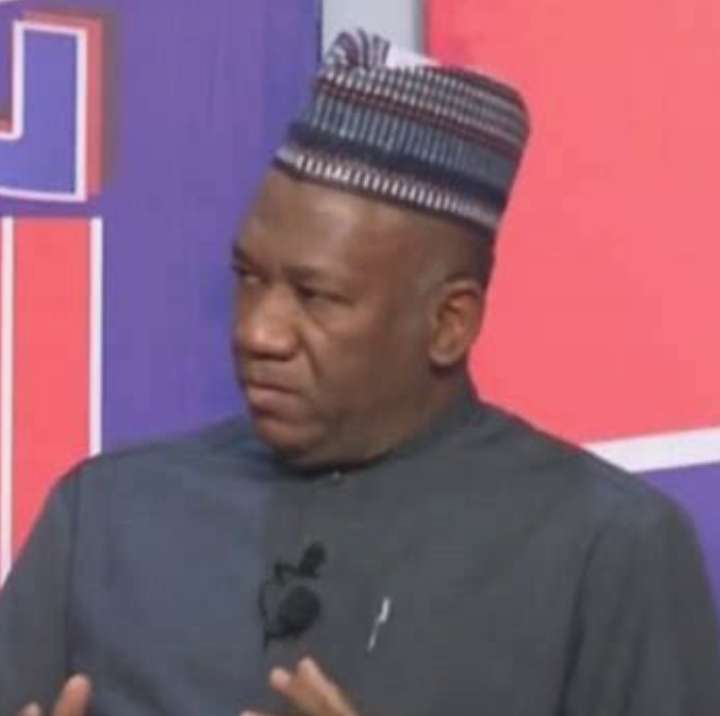
Nigeria’s insecurity crisis has once again taken center stage following bold remarks by Yusuf Datti Baba-Ahmed, the Labour Party’s former vice-presidential candidate.
In a recent interview on Channels Television’s Politics Today, Baba-Ahmed claimed that the desperation to unseat former President Goodluck Jonathan in 2015 played a role in fueling today’s violence.
The statement has sparked debate nationwide. But how accurate is it? And what does the evidence say?
What Datti Baba-Ahmed Actually Said
During the interview, Baba-Ahmed argued that insecurity was not just accidental — he claimed it was politically engineered and later exploited to remove Jonathan from power.
He went further to accuse the ruling All Progressives Congress (APC) of “using insecurity as a tool to seize and retain power.”
While powerful, these words raise important questions:
Did insecurity truly begin with the 2015 elections?
Or is it the product of deeper, older problems?
A Longer History of Insecurity
To properly analyze Baba-Ahmed’s claim, we need to look back.
Before 2010: Nigeria already faced militancy in the Niger Delta, farmer–herder clashes, and local communal conflicts.
2009–2014: Boko Haram escalated from a fringe extremist group into a deadly insurgency, spreading terror across the North-East.
2014–2015: The insurgency reached its peak, with mass bombings, killings, and the infamous Chibok girls’ abduction.
This timeline shows insecurity was already raging before the 2015 elections.
Did Politics Worsen the Crisis?
Baba-Ahmed suggested that foreign fighters and mercenaries were imported to destabilize Jonathan’s government.
However, no credible investigations or reports confirm this claim. Independent research instead points to domestic drivers — poverty, unemployment, corruption, and weak security institutions — as the main causes of terrorism and violence.
What many analysts agree on, though, is that insecurity has often been politically exploited. Politicians across party lines have been accused of manipulating or exaggerating violence to discredit rivals or gain electoral advantage.
This does not prove insecurity was created for politics — but it does show that politics has shaped how insecurity is handled.
The Post-2015 Shift
After Jonathan’s exit in 2015, Nigeria’s security threats became even more complicated.
Banditry and mass kidnappings exploded in the North-West.
Farmer–herder clashes intensified in the Middle Belt.
Communal and ethnic violence spread into new regions.
Splinter armed groups filled gaps left by weakened but surviving Boko Haram factions.
This evolution shows that insecurity is not tied to a single election — it is a systemic problem that has grown over decades.
Breaking Down Baba-Ahmed’s Claim
There are three possible ways to interpret his statement:
1. Strong Causal Claim: Insecurity was deliberately created in 2015 to unseat Jonathan. (No hard evidence yet.)
2. Political Exploitation Claim: Politicians used insecurity as a tool for political gain. (Plausible and widely discussed.)
3. Narrative Framing: His comments are a political interpretation of Nigeria’s woes. (Most likely.)
Why Oversimplifying Is Dangerous
Blaming today’s insecurity solely on 2015 risks ignoring the real, long-term causes:
Weak governance and corruption.
High youth unemployment and poverty.
Poor policing, weak intelligence, and human rights abuses.
Deepening social and ethnic divisions.
If leaders treat insecurity as just a political tool, they risk missing the bigger picture — and Nigeria will continue to suffer.
What Experts and Data Show
Conflict trackers and independent research confirm that:
Boko Haram’s peak violence occurred around 2014–2015, before Jonathan left office.
After 2015, insecurity diversified — kidnappings, banditry, and communal clashes spread beyond the North-East.
Structural issues — not just politics — remain at the core of Nigeria’s insecurity.
Experts consistently warn that unless Nigeria tackles governance failure, poverty, and exclusion, violence will persist no matter who is in power.
The Way Forward
Whether or not politics worsened insecurity in 2015, Nigeria needs serious solutions today:
1. Strengthen local policing and justice systems.
2. Invest in youth employment and education.
3. Improve intelligence gathering and accountability.
4. Support community peacebuilding and reconciliation.
5. Build bipartisan security strategies that survive beyond elections.
These steps address the root causes — not just the political narratives.
Conclusion
Yes, Yusuf Datti Baba-Ahmed did publicly claim that insecurity was traced to the desperation to unseat Jonathan.
But the evidence shows that insecurity did not start in 2015. It has deep, structural roots stretching back over a decade — from Boko Haram’s rise to widespread banditry and communal violence.
At best, politics may have exploited existing insecurity, but the crisis itself is much bigger and older than a single election.
For Nigeria to overcome this challenge, leaders must look beyond political blame games and invest in real reforms that restore security and hope to the people.
Author Bio
Amaka Nwosu is an investigative journalist with SaharaNews247. She specializes in governance, conflict reporting, and fact-checking. With over a decade of experience, she brings clarity and depth to some of Nigeria’s most pressing national debates.