Published: September 3, 2025
Tags / SEO keywords: Abia ₦54bn school renovation, Alex Otti EFCC petition, Abia schools renovation scandal, Abia education funds, Nigerian school renovation funds, EFCC ICPC petitions 2025, school renovation transparency in Nigeria
Introduction
In Nigeria, few issues provoke as much public outrage as the alleged misuse of funds meant for education. When billions of naira are allocated for the renovation of schools, citizens expect to see new classrooms, functional libraries, upgraded laboratories, and better environments for learning.
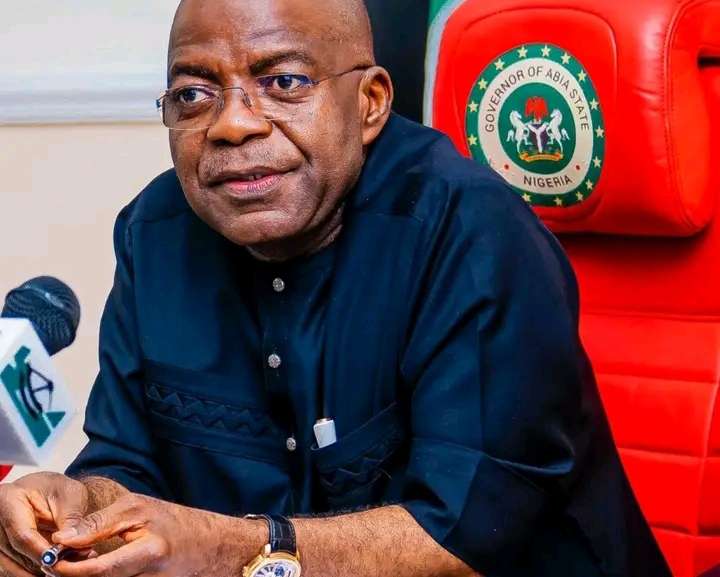
But in Abia State, a storm has erupted over a staggering ₦54 billion that was reportedly earmarked for school rehabilitation. Opposition leaders claim the funds cannot be traced to tangible projects, while Governor Alex Otti’s administration insists the allegations are politically motivated and based on misinformation.
This report by SaharaNews247 dives deep into the facts, allegations, responses, and the wider implications for transparency, governance, and education in Nigeria.
The Petition that Sparked the Debate
On September 2, 2025, a group under the umbrella of the Abia Best Interest Association (ABIA), led by APC chieftain Eze Chikamnayo, announced at a press conference in Abuja that it had submitted petitions to Nigeria’s top anti-graft agencies—the Economic and Financial Crimes Commission (EFCC) and the Independent Corrupt Practices and Other Related Offences Commission (ICPC).
The petitions were also addressed to the National Assembly, the Federal Ministries of Education and Finance, and global watchdogs such as UNESCO, the World Bank, Transparency International, and Amnesty International.
The group accused the Otti-led administration of failing to account for about ₦54 billion allegedly allocated for the renovation of 51 schools in the 2024 budget.
The Allegations in Detail
The petitioners argue that:
Between January and December 2024, Abia’s official budget reports recorded ₦54 billion under “rehabilitation/retrofitting of schools.”
Despite this, fact-finding visits to schools revealed that 95 percent of public schools remain in poor condition, with dilapidated classrooms, leaky roofs, broken furniture, and lack of toilets.
No evidence has been provided by the government to show which schools benefited, which contractors handled the projects, and how much was actually spent.
Transparency demands that the government publish full details, including a list of the renovated schools, procurement records, and photographic evidence.
The petitioners concluded that unless the government can provide documentation, Nigerians are right to suspect possible diversion or mismanagement of funds.
The Government’s Counter-Position
Governor Alex Otti’s administration has described the allegations as baseless and politically motivated.
Officials argue that:
The ₦54 billion figure represents budgetary allocations, not actual cash expenditures.
Much of the amount is spread across multi-year projects and different components of the education sector, not only classroom renovations.
Only a fraction of the ₦54 billion was disbursed in 2024, and these funds were directed to specific schools currently under rehabilitation.
The opposition is deliberately twisting budget figures to mislead the public and score political points.
According to the Otti government, claims of “non-existent renovations” ignore ongoing projects that are yet to be completed and audited.
Why the Issue Matters
1. Education at Stake
Public schools in Abia—and across Nigeria—are in dire need of rehabilitation. Poor infrastructure contributes directly to low learning outcomes, high dropout rates, and an exodus of students to private schools.
If ₦54 billion was indeed allocated but not properly used, the direct victims are the children who continue to study in broken classrooms without access to basic learning facilities.
2. Governance and Transparency
This controversy highlights Nigeria’s recurring challenge with public finance transparency. Allocations in state budgets often do not match what is physically implemented on the ground. Without published records, citizens remain in the dark.
3. Political Credibility
For Governor Otti, who campaigned on transparency and reform, this controversy represents a test of leadership. His credibility depends on how quickly and openly his government can respond with verifiable facts.
Key Questions That Must Be Answered
1. Was ₦54 billion really spent?
Was the money actually disbursed from the state treasury, or was it simply an allocation entry in the budget that has not been fully released?
2. Which schools benefited?
The government should provide a complete list of the 51 schools allegedly renovated, including their locations.
3. Who were the contractors?
Transparency requires publishing the names of contractors, the tendering process, and amounts paid.
4. Where is the evidence?
Independent before-and-after photos, monitoring reports, and third-party audits are essential to prove that taxpayers’ money was well spent.
Analysis: Budget Allocation vs. Expenditure
One of the biggest confusions in Nigerian public finance debates is the difference between budgeted amounts and actual spending.
For example, if ₦54 billion is allocated in the budget for school renovation, that does not automatically mean ₦54 billion was spent. Actual releases from the Ministry of Finance, along with certified payment vouchers, are what matter.
However, if a government repeatedly reports large allocations without publishing actual expenditure records or providing evidence of projects, suspicion naturally grows.
In this case, the Otti administration insists that only a fraction of the ₦54 billion has been spent, while the petitioners claim no visible renovations match even that smaller amount.
Possible Scenarios
1. Allegations are Exaggerated
The opposition may have taken a raw budget figure and presented it as though the money was fully spent, when in fact it was not.
2. Partial Mismanagement
Some funds may have been released, but the projects executed are far fewer or of much lower quality than what was budgeted.
3. Full Transparency Gap
The money may be properly utilized, but the government has failed to publish sufficient documentation and evidence, leaving room for suspicion.
What Should Happen Next
For Nigerians to trust either side, the following steps are necessary:
EFCC and ICPC Investigations: Anti-graft agencies must collect financial records from the Abia State Ministry of Finance and Ministry of Education, including procurement contracts and payment schedules.
Government Disclosure: The Otti administration should publish a detailed project list, contractor information, and verifiable photos of renovations.
Independent Verification: Civil society organizations, journalists, and parent-teacher associations should conduct spot checks in schools across Abia.
Legislative Oversight: The Abia State House of Assembly should summon the Commissioners for Finance and Education to publicly clarify how much has been spent and where.
Broader Implications for Nigeria
This case is not just about Abia. Across Nigeria, similar controversies emerge when billions are allocated for roads, health centers, or schools, yet little evidence of progress can be seen.
The Abia ₦54 billion saga could become a landmark case in showing whether Nigerian institutions—EFCC, ICPC, legislature, and civil society—are capable of demanding and enforcing accountability at the state level.
If resolved transparently, it could strengthen public confidence. If left unaddressed, it risks deepening cynicism and further eroding trust in government.
Conclusion
The ₦54 billion school renovation controversy in Abia State is real in terms of the petitions and public outcry. But the allegations of misappropriation remain unproven until official investigations produce hard evidence.
The truth lies in the documents: budget releases, procurement contracts, and physical inspection of schools. Governor Alex Otti’s government must act quickly to publish these records, while anti-graft agencies must ensure an impartial investigation.
At stake are not just political reputations but the education of thousands of children and the integrity of Nigeria’s public finance system.
Author Bio
Chinedu Okafor is a senior correspondent with SaharaNews247, specializing in public finance, governance, and education policy. With over a decade of investigative journalism experience, he is committed to exposing gaps in accountability and promoting transparency in Nigeria’s democratic space. Contact: chinedu.okafor@saharanews247.com