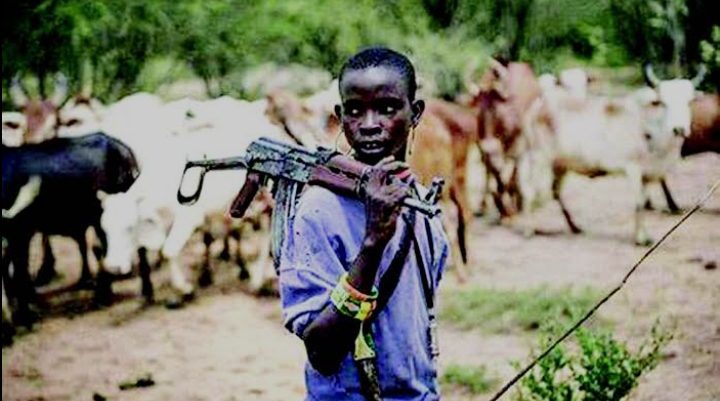

Benue State, Nigeria — Fresh fears have gripped communities across parts of Benue State following a deadly attack by unidentified gunmen suspected to be Fulani herdsmen along the Oweto-Apa-Adoka-Otukpo road, one of the key transport corridors linking several agrarian settlements in the state. The attack, which occurred on Friday evening, reportedly left several commuters abducted, others killed, and many more stranded as panic spread across the area.
The incident adds to a growing list of violent episodes that have turned major highways and rural roads in Benue into high-risk zones for travelers, traders, and transport operators. For residents of Apa, Agatu, Otukpo and surrounding communities, the latest raid has once again underscored the fragile state of security in a region that has endured years of deadly clashes, kidnappings, and armed attacks.
How the attack unfolded
According to eyewitness accounts, the gunmen struck at a location between Asaba and Olojo, ambushing vehicles moving in both directions. Commuters traveling from Otukpo to Oweto and from Oweto back to Otukpo were reportedly intercepted as the attackers opened fire, forcing drivers to halt and passengers to flee in different directions.
Witnesses described a chaotic scene as sporadic gunshots rang out, creating confusion and fear among travelers. Several vehicles, including trucks and motorcycles, were abandoned on the road as passengers ran into nearby bushes in an attempt to escape.
One of the most disturbing aspects of the incident was the killing of a commercial motorcyclist, popularly known as an Okada rider, who was reportedly conveying a casket to Agatu at the time of the attack. He was shot dead on the spot, leaving behind his motorcycle and the casket by the roadside. The image of the abandoned coffin has since circulated widely among local residents, symbolizing the suddenness and brutality of the assault.
Eyewitness accounts and local confirmation
John Ikwulono, a former chairman of Apa Local Government Area, confirmed the incident, stating that the exact number of casualties remained unclear as of the time of reporting. He explained that the attackers fired repeatedly to prevent victims from escaping and to instill fear.
“Apart from the individual who was killed by the roadside, we don’t yet know how many casualties there are. The gunshots were sporadic; I believe they were meant to bring down those who might be trying to escape,” he said.
Other residents who spoke to SaharaNews247 on condition of anonymity described hearing prolonged gunfire and seeing several people being forced into the surrounding forest by the attackers. Some commuters were said to have escaped by abandoning their vehicles and trekking through farmlands for hours before reaching nearby villages.
Silence from security agencies
As of the time of filing this report, efforts to reach the Benue State Police Public Relations Officer, Catherine Anene, were unsuccessful, as calls and messages were not returned. Local sources, however, indicated that security operatives turd were eventually deployed to the area after the attack, although no official statement had been issued regarding the number of abducted persons or the identities of the perpetrators.
The absence of immediate official communication has further heightened anxiety among affected communities, many of whom say delayed responses by security agencies have become a recurring pattern whenever such incidents occur in rural parts of the state.
A dangerous road in a troubled region
The Oweto-Apa-Adoka-Otukpo road is a vital route for farmers, traders, transporters, and commuters moving agricultural produce between riverine settlements and urban markets. Over the years, however, the road has gained notoriety as a hotspot for kidnappings and armed attacks.
Residents say the remoteness of the area, combined with poor security presence and difficult terrain, has made it an easy target for armed groups operating from forested hideouts. The surrounding bushes provide natural cover for attackers, allowing them to strike and retreat quickly without being easily tracked.
Benue State, often referred to as Nigeria’s “food basket,” has been one of the epicenters of farmer-herder conflicts for more than a decade. Disputes over land use, grazing routes, and access to water have frequently escalated into violent confrontations, leaving thousands displaced and hundreds killed over the years.
While many of the attacks have been linked to clashes between farming communities and pastoralist groups, recent years have seen a shift towards more organized criminal activities, including highway kidnappings, mass abductions, and coordinated raids on villages.
The wider insecurity crisis in Benue
The latest attack is not an isolated incident. In the past two years alone, multiple communities across Guma, Logo, Agatu, Apa, and Katsina-Ala local government areas have experienced similar assaults. Entire villages have been abandoned as residents flee to internally displaced persons camps, while farmlands lie uncultivated due to fear of нападения.
Security analysts say the situation in Benue reflects a broader breakdown of rural security across Nigeria’s Middle Belt, where vast ungoverned spaces, porous borders, and the proliferation of small arms have made it easier for armed groups to operate.
The federal government has repeatedly pledged to restore peace in the region through military operations and peacebuilding initiatives, but critics argue that these efforts have produced limited results on the ground. Many rural communities remain largely unprotected, relying on self-help measures and informal local vigilante groups for security.
Human impact and psychological trauma
Beyond the immediate casualties and abductions, the psychological impact of such attacks continues to deepen. Survivors often suffer long-term trauma, while families of abducted victims live in constant uncertainty, not knowing whether their loved ones are alive or if they will ever return.
Transport operators along the Oweto-Apa-Adoka-Otukpo axis say they now avoid traveling after 4 p.m., as most attacks tend to occur in the evening hours. Some commercial drivers have increased transport fares to compensate for the risks, further increasing the economic burden on already struggling communities.
For farmers, the insecurity has direct consequences on food production. Many are unable to access their farms, leading to reduced harvests and rising food prices across local markets. Community leaders warn that continued instability could worsen food insecurity in Benue and neighboring states.
Calls for urgent government action
Following Friday’s attack, residents and local leaders renewed calls on both the Benue State Government and the federal authorities to take more decisive action. They are demanding permanent security checkpoints along major rural roads, increased patrols, and intelligence-led operations targeting criminal hideouts in forest areas.
Civil society groups have also urged the government to move beyond military responses and address the root causes of the crisis, including land disputes, unemployment, rural poverty, and the failure of traditional conflict resolution mechanisms.
Human rights advocates argue that without a comprehensive approach that combines security enforcement with economic development and community dialogue, violent attacks in Benue will continue to occur with devastating consequences.
A familiar pattern across Nigeria
What happened in Benue mirrors a troubling pattern playing out across several parts of Nigeria, from the North-West to the South-East and Middle Belt. Highways have increasingly become theatres of criminal activity, with travelers exposed to kidnappings, extortion, and violent ambushes.
Despite repeated assurances from authorities, many Nigerians now travel with heightened fear, carefully planning routes and avoiding certain areas altogether. The erosion of public confidence in road safety has become one of the most visible symptoms of the country’s broader insecurity crisis.
Uncertain days ahead
As investigations into the Benue attack continue, families of abducted commuters remain in anguish, hoping for news of their loved ones. For residents of Apa, Agatu, and surrounding communities, the incident has once again reinforced the reality that everyday activities such as traveling to work, attending funerals, or transporting goods can suddenly turn into life-threatening experiences.
The abandoned motorcycle and casket left on the roadside after the attack have become powerful symbols of a region trapped in a cycle of violence, grief, and uncertainty. Until meaningful and sustained security reforms are implemented, many fear that such scenes will continue to repeat themselves across Benue and other vulnerable parts of Nigeria.
For now, the Oweto-Apa-Adoka-Otukpo road remains a stark reminder of the human cost of insecurity, and a test of whether Nigerian authorities can restore safety to communities that have endured far too much loss for far too long.
About the Author
Smart Chuks is a Nigerian investigative journalist and digital newsroom editor with a focus on security, governance, and socio-political affairs. He reports on national and regional developments across Nigeria, producing in-depth news, analysis, and investigative features for SaharaNews247. His work centers on accountability journalism, public interest reporting, and data-driven storytelling.