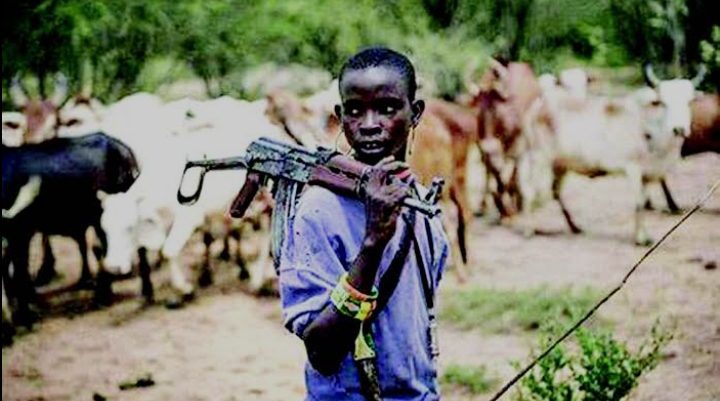

Agatu, Benue State — In a move that has reignited national debate over Nigeria’s long-running herder–farmer crisis, the Chairman of Agatu Local Government Area in Benue State, James @, has issued a 48-hour ultimatum to Fulani herdsmen to vacate all farmlands across the local government area ahead of the 2025 planting season.
The directive, announced during a high-level stakeholders’ meeting held on Saturday at the Agatu Local Government Secretariat in Obagaji, reflects mounting pressure from local farming communities who say continued grazing activities on cultivated land threaten both food security and fragile peace in the area. The meeting brought together traditional rulers, Fulani community leaders, youth representatives, security agencies and officials of the local council in what authorities described as a last-ditch effort to avert renewed conflict.
According to a statement released by the Chief Press Secretary to the council chairman, Obochi Solomon, Ejeh stressed that agriculture remains the economic lifeline of Agatu and that farmers must be allowed to access and cultivate their lands without obstruction or fear as the rainy season approaches.
“Our farmers must cultivate without disruption. We will do everything necessary to create a safe environment for them,” Ejeh was quoted as saying.
While acknowledging that the area has enjoyed relative calm in recent months, the council chairman warned that unchecked grazing on farmlands could quickly unravel the fragile stability that local leaders and security agencies have worked to sustain.
A community shaped by conflict
Agatu is not an ordinary local government area in Benue State’s security history. For more than a decade, it has been one of the epicentres of violent clashes between farming communities and armed herders, a conflict that has claimed hundreds of lives, displaced thousands of residents and destroyed entire villages.
Between 2014 and 2018, Agatu became synonymous with mass killings and large-scale destruction, with repeated attacks leaving deep scars on the social and economic fabric of the area. Many farmers abandoned their ancestral lands, local markets collapsed, and food production dropped sharply.
Although violence has significantly reduced in recent years, residents say the underlying tensions have never been fully resolved. Grazing routes still cut across farmlands, disputes over land ownership persist, and trust between farming and pastoral communities remains extremely fragile.
Local farmers argue that continued grazing on cultivated land is not merely an inconvenience but a direct threat to survival. With inflation pushing up food prices nationwide and economic hardship squeezing rural livelihoods, any disruption to farming activities carries serious consequences.
“This is not just about cows eating crops,” a farmer in Obagaji told SaharaNews247. “It is about whether we will be able to feed our families this year. Many people are already struggling.”
The ultimatum and the negotiations
During the stakeholders’ meeting, Fulani community leaders reportedly requested a one-week grace period to enable herders to prepare for relocation. The request was granted by the council, effectively extending the timeline beyond the original 48-hour ultimatum.
The Ado of the Fulani, who spoke on behalf of the herders, appealed for patience, citing logistical challenges involved in moving cattle across long distances and the need to avoid sudden movements that could trigger tensions in neighbouring communities.
Youth leaders in Agatu also played a central role in the negotiations. The General Youth Chairman of the local government, Mr Oloche Silas, pledged on behalf of Agatu youths to support a peaceful evacuation process and to discourage any form of violence or reprisals.
“We are committed to peace,” Silas said, according to the statement. “We will work with security agencies to ensure that this process does not lead to chaos or conflict.”
Representatives of the Nigeria Police Force and the Department of State Services also attended the meeting and reportedly commended the peaceful manner in which the discussions were conducted. They assured all parties of security support throughout the relocation process.
Chief John Agidani, representing the Och’Agatu, the paramount traditional ruler of the area, applauded the council chairman’s leadership and urged both farmers and herders to honour the agreement in the interest of long-term peace.
Legal and policy implications
The Agatu ultimatum raises broader legal and policy questions that extend far beyond Benue State. Nigeria currently lacks a comprehensive national framework regulating grazing and pastoral activities, leaving states and local governments to adopt their own approaches.
Benue State’s anti-open grazing law, passed in 2017, remains one of the most controversial pieces of legislation in the country’s security landscape. The law prohibits open grazing and encourages ranching, a policy that has been fiercely resisted by some pastoral groups but supported by farming communities who argue it is essential for peace and food security.
While the law significantly reduced open grazing in some parts of the state, enforcement has been inconsistent, and herders continue to operate in many rural areas, often leading to renewed tensions.
Legal experts say local government authorities like Agatu can issue administrative directives within their jurisdictions, but long-term solutions require state and federal coordination, including investment in ranching infrastructure, conflict mediation mechanisms and economic support for pastoral communities.
“This kind of ultimatum may restore calm in the short term, but without structural solutions, the conflict will resurface,” a security analyst based in Makurdi told SaharaNews247. “You cannot manage a national problem with local directives alone.”
Food security and national relevance
The Agatu development comes at a time when Nigeria is grappling with one of its worst food security crises in decades. Rising inflation, climate-related disruptions, insecurity and displacement have combined to push millions of households into food vulnerability.
Benue State, often described as the “food basket of the nation,” plays a crucial role in Nigeria’s agricultural supply chain. Any disruption to farming activities in the state has ripple effects on food prices and availability across the country.
Agricultural economists warn that continued conflicts between herders and farmers undermine national efforts to boost local food production and reduce dependence on imports.
“If farmers are afraid to go to their farms, it doesn’t matter how many agricultural policies the government announces,” said an agriculture policy expert at the University of Agriculture, Makurdi. “Food security starts with physical safety.”
The fragile peace
For residents of Agatu, the ultimatum is not about politics or policy debates; it is about whether peace will finally become sustainable after years of bloodshed.
Many locals remain cautiously optimistic but deeply sceptical. Past agreements have collapsed, and previous peace deals have been undermined by lack of enforcement and political interference.
Some community leaders fear that forcing herders to leave without providing alternative grazing arrangements could simply shift the problem to neighbouring local governments, potentially igniting fresh conflicts elsewhere.
Others argue that the ultimatum is long overdue and that failure to protect farmlands will only embolden further encroachment.
“We cannot continue like this,” said a traditional leader in one of the affected communities. “If people cannot farm, then the community cannot survive.”
A test for Nigeria’s conflict management
Beyond Agatu, the situation represents yet another test of Nigeria’s ability to manage internal conflicts through dialogue, law enforcement and policy reform rather than violence.
For years, the herder–farmer crisis has symbolised the country’s broader security challenges: weak institutions, contested land rights, ethnic mistrust and the absence of a coherent national strategy.
Whether the Agatu ultimatum leads to lasting peace or becomes another temporary truce will depend largely on what happens after the herders leave — and whether authorities use the opportunity to address the deeper structural issues that fuel the conflict.
For now, the farmlands of Agatu stand at the centre of yet another delicate negotiation between survival, security and coexistence in rural Nigeria.
Author Bio
Smart Chuks is an investigative journalist and security affairs analyst with SaharaNews247. He covers conflict, governance, and socio-economic issues across Nigeria, with a focus on rural security, human development, and public policy. He has reported extensively on herder–farmer conflicts, internal displacement, and the impact of insecurity on national food systems.