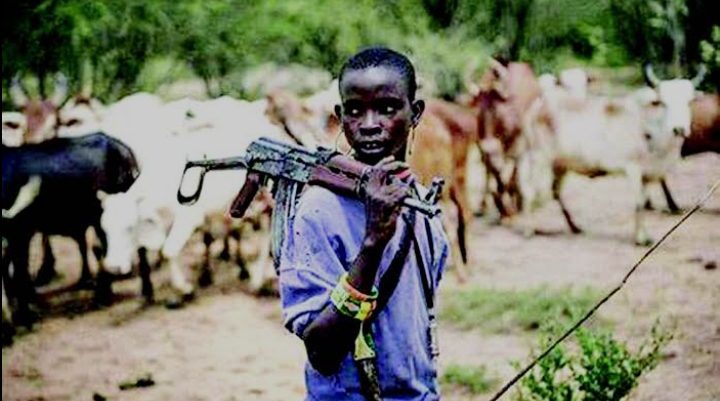

Makurdi, Benue State — The violent raid on a rural community market in Benue State this week has once again thrown Nigeria’s protracted farmer–herder crisis into sharp national focus, after armed men widely identified by residents as suspected herdsmen stormed the area, abducted several women, killed multiple people, and set the local market ablaze.
The incident, which occurred in the Anwase–Abande axis of Mbaikyor Ward in Kwande Local Government Area, has been acknowledged by security authorities and corroborated by multiple Nigerian media reports. While official casualty figures remain cautious, local accounts paint a far more disturbing picture of what transpired and what it reveals about the deepening crisis of insecurity across Nigeria’s Middle Belt.
Beyond the immediate tragedy, the attack underscores a larger and more troubling reality, as seen in similar incidents across the country, including the Bandits Raid Girls’ School in Kebbi: Students Abducted and Vice-Principal Killed as Security Concerns Grow. Despite years of military operations, policy interventions and repeated political assurances, large parts of Benue State remain effectively ungoverned spaces where armed groups operate with near-total impunity.
The Attack and the Sequence of Events
According to eyewitnesses and preliminary security briefings, the attackers arrived at Anwase Market during peak trading hours when farmers, traders and villagers from surrounding settlements had gathered for the weekly commercial exchange.
Residents described how the armed men fired sporadically to disperse traders, creating panic across the market square. In the chaos, several women were reportedly abducted, while stalls, shops and storage sheds were looted before being set on fire. By the time local security volunteers and community members attempted to organise a response, the attackers had already retreated into nearby forest routes.
The Benue State Police Command later confirmed the incident, stating that one Mobile Police Force officer and four civilians were killed during the assault. Security reinforcements were subsequently deployed to the area, and investigations were said to be ongoing.
However, community leaders and residents insist that the official figures understate the scale of the tragedy. Local sources claim that the number of casualties is higher and that several people remain unaccounted for, particularly women believed to have been taken into surrounding forest hideouts, a pattern consistent with recent cases such as the Gunmen Abduct 215 Pupils and 12 Teachers from Niger Catholic School: Nigeria’s School Security Crisis Deepens.
A Familiar Pattern in Benue’s Rural Communities
For residents of Benue State, the attack is not an isolated shock but part of a familiar and exhausting pattern. Over the past decade, Benue has emerged as one of the major flashpoints of Nigeria’s internal security crisis, particularly in the conflict between farming communities and armed groups operating under the banner of herdsmen.
Local government areas such as Guma, Logo, Ukum, Agatu and Kwande have repeatedly experienced raids, killings, kidnappings and village burnings. In many cases, the attacks follow a similar pattern. Armed men strike rural settlements or markets, kill or abduct residents, loot property and retreat into forest corridors that stretch across state borders into Nasarawa, Taraba and even parts of Cameroon.
The result has been a steady erosion of civilian safety in agrarian communities that form the backbone of Benue’s economy. Once celebrated as Nigeria’s “Food Basket of the Nation”, Benue now struggles with large-scale displacement, abandoned farmlands and collapsing rural markets, conditions that threaten both local livelihoods and national food security.
Beyond “Herdsmen”: The Reality of Armed Networks
While the term “herdsmen” remains widely used in public discourse, security analysts increasingly argue that it no longer accurately captures the nature of the violence unfolding across the Middle Belt. What operates today in many of these regions are not traditional pastoral groups but heavily armed networks that exploit rural insecurity, porous borders and weak law enforcement.
These groups are often equipped with military-grade weapons, operate along known forest routes and maintain logistical support systems that allow them to evade security forces. In Benue, the geography itself has become a strategic advantage for attackers. Dense forests, river valleys and poorly monitored rural roads provide ideal cover for hit-and-run operations.
Communities such as those in Kwande Local Government Area sit close to inter-state boundaries, making it easier for armed groups to strike and retreat beyond immediate jurisdictional reach. This structural reality explains why many attacks remain unresolved, with few arrests and even fewer successful prosecutions.
The Human Cost and the Destruction of Rural Economies
The destruction of Anwase Market goes far beyond the loss of physical structures and goods. In rural Benue, markets are not just commercial centres but social lifelines. They serve as hubs for agricultural exchange, dinformal credit networks, community interaction and survival income for women and small-scale farmers.
When a market is burned, the damage is multidimensional. Farmers lose access to buyers. Traders lose capital. Families lose daily income. Communities lose trust in public safety.
The alleged abduction of women adds a deeper layer of trauma. In previous incidents across Benue and neighbouring states, kidnapped women have often been held for ransom, subjected to forced labour or used as bargaining tools in negotiations between communities and armed groups. For families, the emotional toll is devastating and long-lasting, compounded by the reality that many victims are never rescued and their fates remain unknown.
Why Security Continues to Fail in Benue
Despite the presence of military operations such as Operation Whirl Stroke and various joint task forces, violent attacks continue with alarming regularity. Several structural factors explain this failure.
One is the intelligence gap. Rural communities often lack real-time communication channels with security agencies, making early warnings ineffective. By the time attacks are reported, assailants have already withdrawn into remote terrain.
Another is manpower and coverage. Security deployments are thinly spread across vast rural territories, with many communities located several hours from the nearest functional security post. In some areas, villagers rely almost entirely on local vigilante groups that are poorly equipped and outmatched by heavily armed attackers.
There is also political fragmentation. Security responsibility is divided between federal forces, state authorities and local actors, often with limited coordination and unclear command structures. This leads to slow response times and operational confusion during emergencies.
Perhaps most damaging is the absence of accountability. Very few high-profile attacks in Benue have resulted in successful prosecutions. This fuels a perception of impunity, emboldening armed groups and weakening public confidence in the state’s capacity to protect citizens.
The Wider National Implications
The Benue attack fits into a broader national security crisis that now spans nearly every region of Nigeria. From banditry in the North-West to insurgency in the North-East, kidnapping in the South-East and cult-related violence in the South-South, the country faces an unprecedented internal security burden.
What distinguishes the Middle Belt crisis is its direct impact on food production, land access and rural survival. As farming communities abandon fertile land due to fear, Nigeria’s agricultural output declines, pushing up food prices and increasing national vulnerability to hunger and inflation.
In this sense, attacks like the one in Anwase are not just blocal tragedies. They are national economic threats with long-term consequences for social stability and development.
A Crisis That Has Become Normalised
The raid on Anwase Market is real, verified and deeply troubling, not because it is exceptional, but because it is becoming routine. In a country where markets can be burned, women abducted and villages attacked with little consequence, violence gradually becomes normalised.
Communities adapt to fear. Displacement becomes ordinary. Loss becomes statistical.
For Benue, and for Nigeria as a whole, the real tragedy is not only what happened in Anwase, but how little has changed to prevent it from happening again. Until insecurity in rural Nigeria is treated not as episodic crime but as a national structural emergency, communities like those in Kwande will remain on the frontlines of a silent war, one fought far from the centres of power, but with consequences that reach the entire country.
About the Author
Smart Chuks is an investigative journalist and senior editorial writer at SaharaNews247, specialising in national security, conflict analysis and governance reporting. He has covered rural insecurity, terrorism and political violence across Nigeria for over a decade, with a focus on community-level impact and data-driven journalism.