By: Emmanuel Okafor
A quiet Sunday worship service turned into a nightmare in a Kwara community after heavily armed terrorists stormed a Christ Apostolic Church (CAC), killing at least three people and abducting several worshippers including the church pastor. The attack, which occurred during worship hours, has thrown the community into grief, fear, and uncertainty as families desperately search for missing members.
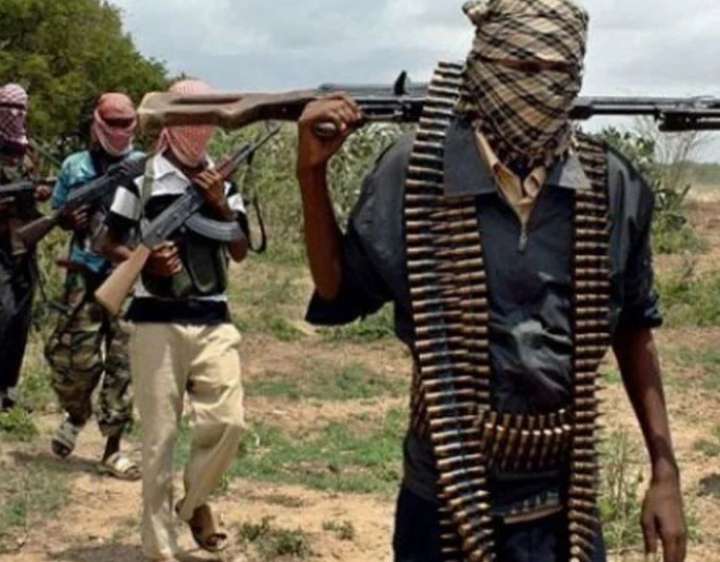
According to local residents, the attackers arrived on motorcycles and surrounded the church before opening fire. Eyewitnesses described the scene as chaotic, with church members running in every direction as the gunmen accelerated toward the building.
“It happened so fast — before we understood what was going on, they were already shooting,” one survivor said. “Some people fainted. Others ran. Many were too shocked to move.”
A Peaceful Service Ruined by Bullets
The attack reportedly lasted several minutes. The terrorists forced their way into the worship hall, firing at anyone who attempted to escape. In the confusion, children were separated from parents, elderly worshippers were trampled as they tried to reach the doors, and injured individuals were left behind in the panic.
Witnesses said the attackers appeared organized, coordinated, and familiar with the area. After shooting indiscriminately, they selected several victims — including the pastor — and marched them toward the nearby forest.
The identities of those abducted remain uncertain as families continue compiling lists. Some worshippers managed to escape into surrounding bushlands and farmland, and are still being located.
A Community Traumatised and Broken
The affected community, located in Irepodun Local Government Area of Kwara State, is known for its peaceful farming lifestyle. The church has served the community for generations — hosting baptisms, celebrations, marriages, and burials.
Today, instead of hymns and fellowship, the church compound is marked by bloodstains, broken pews, bullet shells, and abandoned Bibles.
Schools have been closed. Markets are silent. Streets are empty.
Parents fear retaliation or a second attack. Many homes have bolted doors. Some families have already begun relocating.
A Disturbing Pattern of Violence in Kwara
While Kwara is often seen as one of the calmer North-Central states, attacks have been rising steadily in rural areas. Over the last year, similar incidents — including kidnappings, killings, and armed robberies — have been reported in remote communities.
Security experts note that the attackers often operate in small cells, using forest routes to move undetected between states such as Niger, Kogi, Kwara, and Kaduna.
The attack on a place of worship signals a dangerous escalation — not just in violence, but in intent.
Why Churches and Worship Centers Are Being Targeted
Places of worship historically function as community gathering points — sometimes the only place where large groups gather without suspicion.
Targeting them serves multiple purposes:
1. Psychological warfare
Attacking a religious center sends a message — no one is safe, not even before God.
2. Economic motive
Religious gatherings attract tithes and offerings. Kidnappers assume congregations can pay ransoms.
3. Social destabilization
When worship is unsafe, community morale breaks. People flee, abandoning farmlands and livelihoods.
4. Power and control
Violent groups thrive where the government is weak. Instilling fear secures dominance.
For many Nigerians, these attacks are becoming an unbearable emotional burden.
Government and Security Response
As of the time of writing, security agencies reportedly deployed patrol officers and local vigilante groups to comb surrounding forests. However, no official update has confirmed arrests or rescue operations.
Statements are expected from:
The Kwara State Government
The Nigerian Police Force
The Christian Association of Nigeria (CAN)
Local traditional leadership councils
Community vigilante commanders
In past cases, government reaction has been criticized as slow, reactive, and insufficient.
Many rural Nigerians now feel abandoned — left to negotiate with kidnappers, flee their homes, or suffer in silence.
Why Attacks Persist: A Deep Systemic Problem
To understand the roots of such attacks, one must analyze Nigeria’s evolving security landscape.
1. Limited rural security presence
Most rural regions lack police stations, military posts, surveillance systems, or rapid-response vehicles.
2. High profitability of kidnapping
Ransom payments have reportedly emboldened criminal networks. Hostages are often released only after substantial payments.
3. Weak intelligence coordination
Security agencies often act after attacks — instead of preventing them.
4. Borderless forest routes
Dense forests and ungoverned spaces provide safe havens for armed groups.
5. Socio-economic desperation
Some young men, unemployed and disillusioned, are easily recruited by criminal cells.
Until these underlying factors are addressed, the violence is likely to continue — or worsen.
Voices From the Community
Residents who survived the assault expressed fear, grief, and anger:
> “We prayed for protection, but evil walked into the church.”
> “Our pastor was taken. We don’t know if he’s alive or dead.”
> “We are tired of crying to the government. We feel forgotten.”
These statements reflect a recurring sentiment shared across many communities affected by insecurity in Nigeria — exhaustion, helplessness, and abandonment.
Religious Leaders Speak Out
Christian leaders in Kwara and neighboring states have condemned the attack, calling for urgent reforms and community protection.
Some pastors have suspended nighttime programs. Others now hire local vigilantes during services.
Many fear that worship in rural Nigeria is becoming an act of courage instead of peace.
What Happens Next?
The next hours and days are critical.
Families of the abducted are waiting for:
Calls from kidnappers
Updates from authorities
Rescue attempts
Community support
Media attention
Local security sources suggest negotiations may soon begin.
But negotiation outcomes in similar past cases have been mixed — sometimes ending in rescue, sometimes in tragedy.
The Human Cost
Beyond statistics, beyond headlines, are real lives:
A mother searching for her missing son.
A congregation grieving their fallen brothers.
A pastor whose fate remains unknown.
Children who now associate church — a place of sanctuary — with fear.
This attack is not just a crime. It is a wound — emotional, social, spiritual.
What Must Be Done: Expert-Level Solutions
To prevent further tragedies, experts recommend:
1. Community-Integrated Security Hubs
Permanent police and military presence in vulnerable zones.
2. Technology-supported surveillance
Drones, mobile towers, forest monitoring systems, and emergency response networks.
3. Identity-based intelligence gathering
Tracking movement of unfamiliar individuals, motorcycles, and coordinated group travel.
4. Training and arming vetted community defense teams
Not vigilante mobs — but regulated community security.
5. Speedy prosecution
Criminals must face consequences — not negotiations alone.
A Nation at a Crossroads
Nigeria is battling multiple layers of insecurity — terrorism, kidnapping for ransom, banditry, communal violence, and organized armed crime.
Attacks like this one highlight a growing national crisis: communities are losing faith — not just in safety, but in the ability of the system to protect them.
The question now is whether leaders will act — or merely respond with statements, sympathy, and silence.
For the community affected, the only immediate priority is clear:
Bring back the abducted. Safely. Alive. Soon.
Author Bio
Emmanuel Okafor is a Nigerian journalist and security affairs correspondent covering rural conflict, terrorism, governance, and civilian safety in West Africa. His reporting focuses on amplifying under-reported stories from vulnerable communities affected by banditry and violence. He is passionate about accountability journalism and investigative reporting.