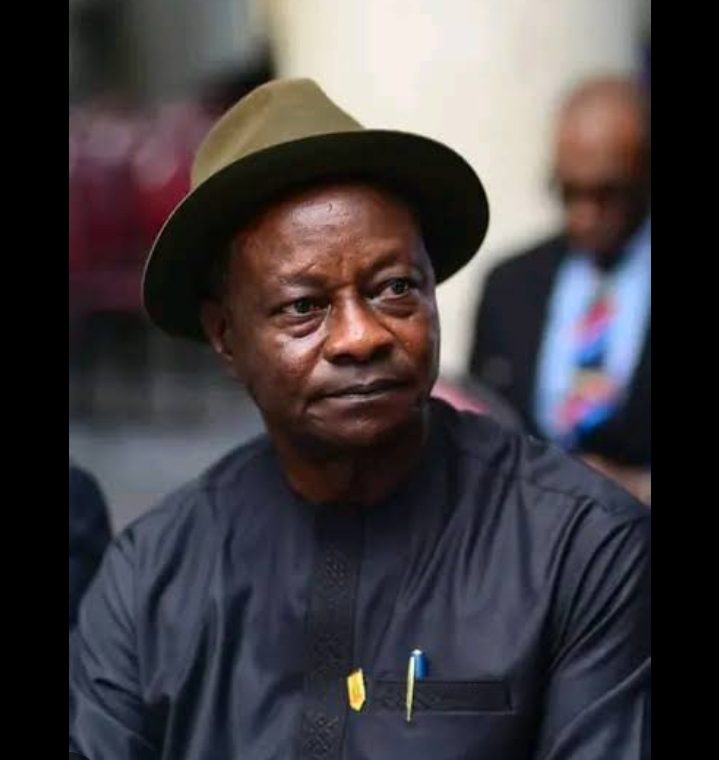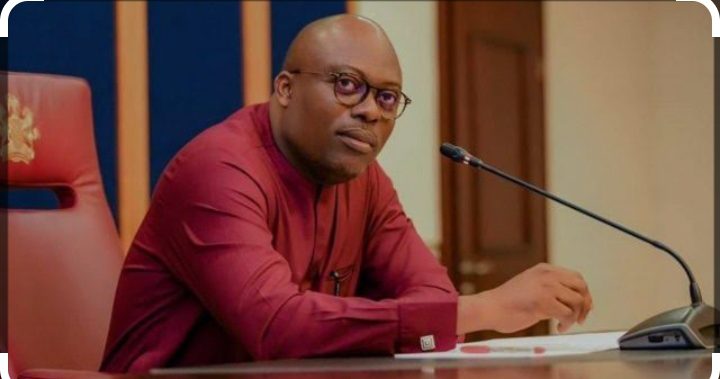
A tense and politically charged confrontation unfolded on Monday at the headquarters of Nigeria’s anti-graft agency in Abuja as supporters of former Kaduna State governor, , clashed with opposing protesters during his appearance before the (EFCC).
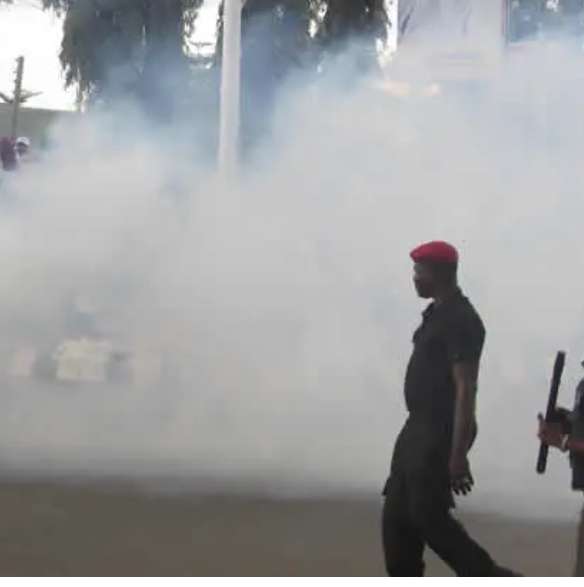
What was initially a routine compliance visit by a former public official responding to an invitation from investigators quickly transformed into a dramatic public spectacle, as rival groups converged on the EFCC complex, trading accusations, chants, and political slogans. The confrontation reportedly escalated into chaos, forcing security operatives to deploy tear gas to disperse the growing crowd.
While no official statement had been issued by the EFCC or the Nigeria Police Force at the time of this report confirming the use of tear gas, multiple eyewitness accounts, on-the-ground video footage circulating on social media, and reports by several Nigerian news platforms strongly indicate that tear gas was indeed fired to restore order after tensions between rival groups spiralled out of control.
The incident has since ignited fresh debate across the country, not just about El-Rufai and the allegations he faces, but about the broader credibility of Nigeria’s anti-corruption architecture, the politicisation of accountability, and the fragile relationship between state power and public trust.
A Protest That Quickly Turned Volatile
From early Monday morning, groups of protesters began gathering outside the EFCC headquarters in Jabi, Abuja. Two distinct camps soon emerged. On one side were supporters of El-Rufai, many wearing branded caps and carrying placards praising his record as governor and accusing the current political establishment of targeting him for speaking out against perceived injustices within the system.
On the other side were civil society activists and self-described anti-corruption campaigners who held signs demanding transparency, justice, and full prosecution over allegations of financial mismanagement during El-Rufai’s time in office.
The atmosphere quickly became tense. Witnesses told SaharaNews247 that verbal exchanges between the two groups escalated into shoving and heated confrontations near the main entrance to the EFCC complex.
“It was clear from the start that this wasn’t going to remain peaceful,” said an eyewitness who works in a nearby office complex. “Both sides were determined to dominate the space. There was shouting, insults, and people pushing each other.”
As the crowd grew larger and traffic around the area became gridlocked, security operatives stationed at the EFCC gates attempted to separate the groups and push them back from the entrance.
Within minutes, the situation deteriorated.
Security Intervention and Tear Gas Deployment
Video clips shared widely on social media platforms show scenes of confusion and panic as security operatives moved in to disperse the crowd. In several clips, people are seen running away from the EFCC gate, coughing and shielding their faces, while uniformed personnel shout orders and block off surrounding roads.
Multiple protesters interviewed by local journalists claimed they were directly affected by tear gas, reporting burning sensations in their eyes and difficulty breathing. Some accused security operatives of using excessive force, while others insisted the deployment was necessary to prevent the confrontation from turning violent.
“They just started firing tear gas. People scattered everywhere,” one protester told a television crew. “It was peaceful until both sides clashed. Then the security people moved in.”
Other witnesses said they heard loud bangs consistent with tear gas canisters, followed by smoke and people fleeing in different directions.
Despite the widespread reports and visual evidence, neither the EFCC nor the Nigeria Police Force has released a formal statement confirming or denying the use of tear gas. This absence of official communication has left the public relying largely on eyewitness accounts and media footage to reconstruct what transpired.
Why El-Rufai Was at the EFCC
El-Rufai’s appearance at the EFCC is linked to ongoing investigations into alleged financial irregularities connected to his eight-year tenure as governor of Kaduna State between 2015 and 2023.
Although the EFCC has not publicly disclosed the full details of the investigation, multiple sources familiar with the matter told SaharaNews247 that it centres on public procurement processes, state contracts, and the management of internally generated revenue and foreign loans obtained during his administration.
El-Rufai has consistently denied any wrongdoing. In several public statements and interviews since leaving office, he has insisted that his government operated within the framework of due process and transparency, describing the allegations as politically motivated.
His visit to the EFCC on Monday was reportedly in response to a formal invitation and not an arrest. Sources close to the former governor said he presented himself voluntarily and was accompanied by legal representatives.
The EFCC has not confirmed whether El-Rufai was questioned, how long he remained at the premises, or whether further invitations or charges are expected.
El-Rufai: A Polarising Political Figure
Few politicians in Nigeria generate as much controversy as Nasir El-Rufai.
A former Minister of the Federal Capital Territory and two-term governor of Kaduna State, El-Rufai has built a reputation as a blunt, confrontational, and reform-driven public figure. Supporters describe him as courageous, decisive, and unafraid to challenge entrenched interests. Critics portray him as authoritarian, divisive, and intolerant of dissent.
During his time as governor, El-Rufai pursued aggressive policies, including the demolition of illegal structures, controversial land reforms, and strong stances on security and ethnic tensions in Southern Kaduna. These policies earned him both national praise and deep local resentment.
Since leaving office, El-Rufai has remained vocal in national political debates, frequently criticising government decisions and positioning himself as a moral voice within Nigeria’s elite political class.
Despite his national profile, El-Rufai’s ongoing political realignment struggles have further complicated his public image.
This public profile explains why his appearance at the EFCC triggered such intense public reaction.
For supporters, the investigation represents political persecution.
For critics, it represents long-overdue accountability.
EFCC and the Politics of Anti-Corruption
The EFCC’s role in Nigeria’s anti-corruption war occupies a unique and controversial position in Nigeria’s political ecosystem.
Established in 2003, the agency was created to investigate and prosecute economic and financial crimes, including corruption, money laundering, and fraud. Over the years, it has secured high-profile convictions and recovered billions of naira in stolen assets.
Opposition politicians often claim the agency targets critics of the government while shielding allies. Supporters of the agency argue that it operates under difficult political conditions and faces enormous institutional pressure.
The El-Rufai episode fits into this long-running narrative.
For many Nigerians, the key question is not whether El-Rufai should be investigated — but whether the investigation will be conducted transparently, professionally, and free from political interference.
The Legal and Constitutional Dimensions
Under Nigerian law, the EFCC has the authority to invite, question, and prosecute any individual suspected of financial crimes, regardless of status or political office.
However, legal experts note that the agency must operate within strict constitutional boundaries, especially regarding the rights of suspects and the handling of public order.
“The EFCC has a duty to investigate, but it also has a responsibility to ensure that its operations do not undermine civil liberties or public safety,” said a constitutional lawyer based in Abuja.
The clash at the EFCC raises critical questions about crowd control, protest rights, and the use of force by security agencies.
Nigeria’s constitution guarantees citizens the right to peaceful assembly. However, this right is subject to public order and security considerations. When protests turn confrontational, security agencies are legally empowered to intervene.
The challenge, legal experts say, is proportionality.
“Security intervention must be necessary and reasonable,” the lawyer added. “The use of tear gas, if confirmed, must be justified by a real threat to public safety.”
A Pattern of Public Spectacle
This is not the first time a high-profile EFCC investigation has generated street protests and political drama.
In the past two decades, several prominent politicians have been accompanied by large crowds of supporters during court appearances or EFCC invitations, turning legal processes into political rallies.
The trials of former Senate President Bukola Saraki, former Vice President Atiku Abubakar’s repeated EFCC encounters, and the corruption cases involving former governors such as James Ibori and Diepreye Alamieyeseigha all generated intense public reactions.
In many of these cases, public interest eventually faded without definitive legal closure.
This historical pattern has fuelled widespread cynicism about Nigeria’s anti-corruption efforts.
“Nigerians have seen too many cases where big names are investigated, but nothing comes out of it,” said a civil society activist in Lagos. “People no longer trust the system to deliver justice.”
Public Trust and Institutional Credibility
The confrontation at the EFCC highlights a deeper crisis: the erosion of public trust in state institutions.
For ordinary Nigerians struggling with inflation, unemployment, and insecurity, corruption investigations are not abstract legal processes. They are symbols of whether the political elite will ever be held accountable for the country’s problems.
When such investigations turn into public spectacles involving tear gas and rival protests, they reinforce perceptions that the system is broken.
“It begins to look like politics, not justice,” said a university lecturer in political science. “And once people lose faith in institutions, everything becomes interpreted through a political lens.”
The EFCC’s silence following the incident has further deepened this perception. In an era of instant information and viral content, institutional silence often creates information vacuums filled by speculation and conspiracy theories.
Media, Misinformation, and the Social Media Effect
The rapid spread of videos from the EFCC protest underscores the powerful role of social media in shaping public narratives.
Within minutes of the clash, clips of people running, coughing, and accusing security operatives of firing tear gas were trending on X (formerly Twitter), Facebook, and WhatsApp groups.
Some posts claimed El-Rufai had been arrested. Others alleged he had been attacked. None of these claims were verified.
This digital chaos illustrates how easily misinformation can thrive in politically charged environments.
Without official communication from the EFCC, Nigerians were left to piece together events from fragmented and sometimes contradictory online sources.
Media analysts say this environment places a greater responsibility on professional news platforms to verify facts and avoid sensationalism.
What Is Certain So Far
Based on all available credible information, several facts can be reasonably established:
El-Rufai honoured an EFCC invitation and appeared at the commission’s headquarters in Abuja.
Supporters and critics gathered outside the complex, leading to a heated confrontation.
Security operatives intervened as tensions escalated.
Multiple eyewitnesses and video footage indicate that tear gas was deployed.
No fatalities or serious injuries were reported.
No official statement has been issued by the EFCC confirming the exact security measures used.
The Broader Implications
Beyond El-Rufai, the incident reflects a deeper structural problem in Nigeria’s governance system.
It shows how legal processes involving political elites are rarely insulated from public drama, political mobilisation, and media spectacle.
It highlights the fragile legitimacy of anti-corruption institutions.
And it exposes the unresolved tension between accountability and power in Nigeria’s democracy.
For some analysts, the real test is not whether El-Rufai was tear-gassed — but whether his case will lead to transparent legal outcomes.
“If nothing comes out of this investigation, then the protest and the tear gas mean nothing,” said a governance expert. “It becomes just another episode in Nigeria’s theatre of accountability.”
Conclusion: Between Justice and Political Theatre
The report that tear gas was fired during clashes between El-Rufai’s supporters and protesters at the EFCC headquarters is supported by multiple eyewitness accounts and independent media coverage.
However, in the absence of an official statement from the EFCC or law enforcement authorities, the precise details of the security response remain partially unconfirmed.
What is beyond dispute is that El-Rufai’s appearance before the EFCC has reignited national debate about corruption, political power, and Nigeria’s deepening crisis of executive overreach.
Whether this moment marks a genuine step toward accountability or simply another chapter in Nigeria’s long history of unresolved elite scrutiny will depend entirely on what happens next — not on the protests, not on the tear gas, but on the integrity of the legal process itself.
Author Bio
Smart Chuks is an investigative journalist and political affairs analyst with SaharaNews247. He covers governance, public accountability, and Nigeria’s democratic institutions, with a focus on corruption, rule of law, and political power dynamics.