By Smart Chuks
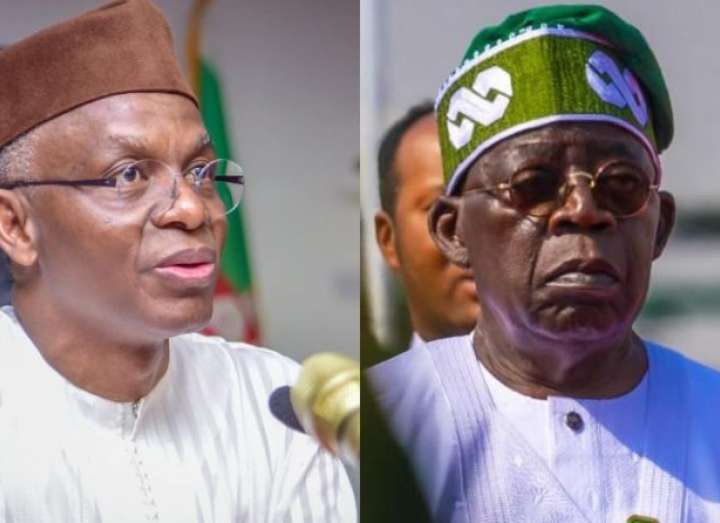
A fresh political storm is gathering ahead of Nigeria’s 2027 general elections following a bold and controversial claim by former Kaduna State Governor, Nasir Ahmad El-Rufai. During a live appearance on Arise News’ Prime Time programme on June 23, 2025, El-Rufai alleged that President Bola Ahmed Tinubu is facing an unprecedented collapse in public support across key regions of the country, particularly in Northern Nigeria and the Southeast.
According to El-Rufai, what he described as polling data shows that as many as 91 percent of respondents in both regions disapprove of the president’s performance. He further claimed that even Lagos, Tinubu’s long-time political stronghold, records approval levels below 50 percent. In his words, delivered with characteristic bluntness, “He is gone. Ninety-one percent disapproval in the North. Ninety-one percent in the Southeast. Over seventy-eight percent in Lagos. There is no region in this country where President Tinubu’s approval rating is above fifty percent.”
The statement immediately reverberated across Nigeria’s political space, sparking intense debate, disbelief in some quarters, and quiet concern in others. Within hours, the remarks dominated social media conversations, radio phone-in programmes, and political discussion panels, as Nigerians weighed the credibility and implications of such a sweeping assertion.
What El-Rufai Claimed — and What Remains Unclear
El-Rufai maintained that the figures were derived from what he termed “scientific polling” conducted by opposition-aligned researchers. However, he did not disclose the name of the polling organisation, the methodology used, the sample size, or the geographic spread of respondents. That absence of detail has become the focal point of scrutiny.
While it is not unusual for politicians to reference internal or privately commissioned polls, analysts stress that claims of this magnitude demand transparency, particularly when they have the potential to shape national political narratives. Without independently verifiable data, the figures remain El-Rufai’s personal assertion rather than an established measure of public opinion.
SaharaNews247 can confirm that the former governor made the remarks live on Arise Television and that several national media outlets, including The Guardian, Daily Post, and Politics Nigeria, accurately reported his comments. As of the time of this publication, no recognised independent polling organisations such as NOI Polls, Stears Nigeria, or Afrobarometer have released data that either confirms or directly contradicts the 91 percent disapproval claim.
A Nation Under Pressure
The resonance of El-Rufai’s comments cannot be separated from Nigeria’s current social and economic realities. The Tinubu administration has embarked on far-reaching reforms, including the removal of fuel subsidies and the liberalisation of the foreign exchange market. While government officials argue that these measures are necessary to stabilise the economy in the long term, their short-term impact has been painful for millions of Nigerians.
Inflation has remained stubbornly high, eroding purchasing power and pushing more households into financial distress. Food prices have surged, transport costs have risen, and small businesses are struggling to stay afloat. In many parts of the country, insecurity continues to disrupt daily life,u particularly in rural communities where farming and local commerce are essential to survival.
Against this backdrop, public frustration has grown more visible. Many Nigerians express a sense of fatigue and uncertainty about the future, creating fertile ground for critical narratives about the government’s performance. Even those who question El-Rufai’s specific figures acknowledge that dissatisfaction with governance is widespread.
El-Rufai’s Voice and Political Calculations
“Nasir El-Rufai is not a marginal political figure. As a former minister, two-term governor, and a key strategist in the political movements that brought the All Progressives Congress to power in 2015, his words carry weight within elite political circles and among key figures within the Tinubu administration.”
Some observers interpret his remarks as an early warning to the ruling party that public patience is wearing thin. Others view them as part of a broader repositioning ahead of 2027, whether within the APC or in collaboration with opposition forces. El-Rufai himself has not publicly declared any presidential ambition or formal political plans, leaving room for multiple interpretations of his motives.
Supporters of President Tinubu have pushed back strongly, describing the claims as exaggerated and politically motivated, pointing to recent international controversies involving President Tinubu as examples of how external narratives are sometimes weaponized against the administration.
They argue that transformative reforms often attract resistance in their early stages and insist that judgment should be reserved until the administration’s policies begin to yield tangible benefits.
Implications for the APC and the Road to 2027
If the ruling party is indeed facing growing internal and external pressure, the implications could be significant. Nigerian political history shows that major electoral shifts are often preceded by fractures within dominant coalitions. The build-up to the 2015 elections, which ended the Peoples Democratic Party’s long hold on power, is frequently cited as a case in point.
For now, the APC retains the advantages of incumbency, including nationwide structures and institutional reach. Whether public dissatisfaction translates into electoral defeat will depend on a complex mix of factors, including the credibility of opposition alternatives, the unity or fragmentation of political alliances, and the government’s ability to improve living conditions before 2027.
Beyond the Numbers
For many Nigerians, the debate triggered by El-Rufai’s statement goes beyond approval ratings and electoral calculations. It touches on deeper questions about trust in leadership, the pace and direction of reforms, and whether ordinary citizens feel heard in the corridors of power.
Civil society groups and governance advocates have called for a more evidence-based political culture, urging both government and opposition figures to ground their claims in verifiable data. In a climate of economic strain and heightened political tension, they argue, responsible discourse is essential to maintaining public confidence.
SaharaNews247 Editorial Perspective
El-Rufai’s claim of a 91 percent disapproval rating for President Tinubu remains unverified, and it should be treated as such. Yet the controversy it has generated is revealing in itself. It underscores the fragile state of public confidence and the intensity of political manoeuvring already underway, barely two years into the current administration.
As Nigeria moves closer to the 2027 elections, similar assertions, counterclaims, and strategic narratives are likely to multiply. SaharaNews247 remains committed to separating fact from opinion, providing context, and ensuring that readers are informed by verified information rather than speculation.
For continuous, balanced, and credible political reporting, stay with SaharaNews247.com.
About the Author
Smart Chuks is a Nigerian journalist and political affairs analyst with over a decade of experience covering governance, elections, and public policy. He writes from Abuja, focusing on accountability, democratic institutions, and the impact of political decisions on everyday lives. His work is guided by a commitment to factual reporting, ethical journalism, and clear analysis for both Nigerian and international audiences.