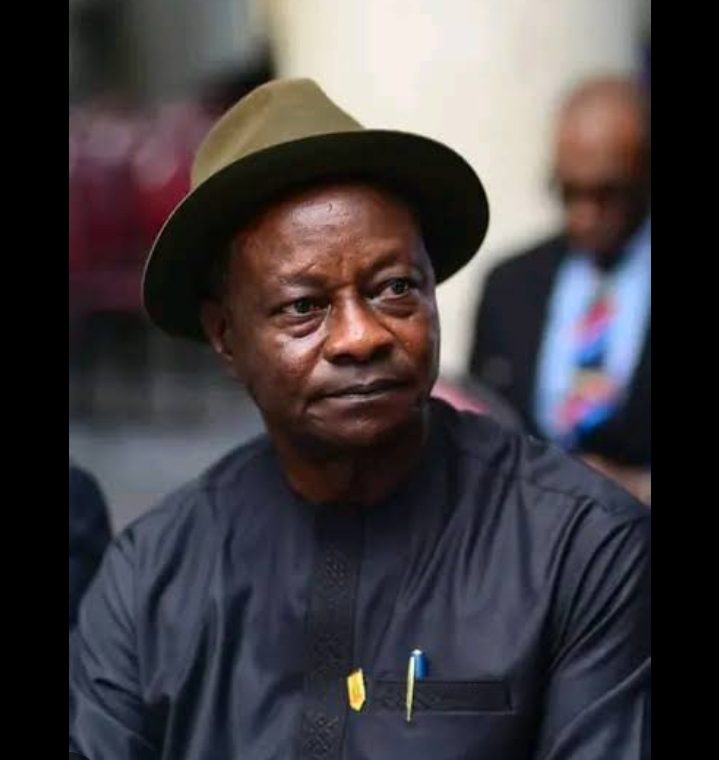

When Peter Obi walked into the packed hall in Enugu and announced his defection to the African Democratic Congress, the room fell into a brief, stunned silence before erupting into applause. It was not just the sound of a politician changing parties. It was the sound of Nigeria’s opposition politics entering a new, uncertain chapter.
For many Nigerians, this was the moment they had been waiting for since the controversial 2023 elections. Obi, whose Labour Party candidacy inspired a wave of youthful political awakening, had finally broken away from a party that had become paralysed by internal crises. And waiting with open arms was former Vice President Atiku Abubakar, who declared publicly, “I will work with you,” a simple sentence that now carries enormous political weight.
This story is not about defection alone. It is about disillusionment, ambition, broken alliances, fresh hope and the long road to the 2027 general elections.
Peter Obi’s relationship with the Labour Party had been unravelling quietly long before the cameras arrived in Enugu. After the excitement of the 2023 election faded, the party began to consume itself. Rival factions fought for control. Court cases multiplied. Governors and lawmakers elected on the platform started drifting away. Meetings ended in chaos. Strategic planning became impossible.
For Obi, who had tried to position himself as a symbol of discipline and order, the situation became unbearable. Sources close to him describe months of frustration, endless reconciliatory efforts and growing realisation that the party had lost the capacity to function as a serious national platform.
His decision to leave was therefore less impulsive than it appeared. It was the final step in a long internal process, one driven by the belief that staying in the Labour Party was now a political dead end.
Why the African Democratic Congress?
To outsiders, the ADC might look like an unlikely destination. It has never won the presidency, and until recently it occupied the political fringes. But that is exactly what made it attractive.
Unlike the Labour Party, the ADC was stable. Its leadership structure was intact. It was also hungry for relevance. Party insiders had been working quietly on the idea of turning the ADC into a coalition platform, a rallying ground for all those dissatisfied with Nigeria’s dominant political parties.
Obi’s arrival instantly transformed that vision into reality. What had been an idea on paper became a living political movement overnight.
Atiku’s Embrace and the Calculus Behind It
Atiku Abubakar did not hesitate. His welcome message to Obi was warm, almost celebratory. He described the moment as a historic step toward building a credible opposition capable of saving Nigeria from what he called deepening hardship and misgovernance.
But Atiku is not a sentimental politician. Every public move he makes is measured. His welcome was a signal to his supporters, to party elites and to undecided power brokers that the opposition is no longer divided into isolated camps. It is consolidating.
For Atiku, this alliance also offers a pathway to reintroduce himself to a generation of voters who had previously dismissed him as part of the old political order. By standing alongside Obi, he gains access to youthful energy and digital mobilisation power he has never fully commanded.
Labour Party’s Bitter Farewell
The Labour Party did not take Obi’s exit lightly. Within hours, party officials issued statements accusing him of abandoning the platform that brought him national fame. Some went further, apologising to Nigerians for ever presenting him as their presidential candidate.
The bitterness was revealing. It showed how far the relationship had deteriorated. What once looked like a reformist partnership had collapsed into mutual distrust. For the Labour Party leadership, Obi’s departure was framed not as a loss but as freedom from what they described as disruptive influence.
The APC Watches and Smiles
The ruling All Progressives Congress was quick to mock the unfolding drama. Party spokespersons dismissed Obi’s move as political inconsistency and described the ADC coalition as a gathering of desperate politicians searching for relevance.
Yet behind the bravado, there is unease. The APC knows that its biggest threat is not an individual challenger but a united opposition. The events in Enugu suggest that such unity is no longer a distant dream.
The Obidients Confront Reality
Perhaps the most emotionally charged response has come from Obi’s supporters. The Obidient movement was born out of frustration with traditional politics. Many of its members had never voted before 2023. They believed they were building something different.
Now, they find their symbol standing shoulder to shoulder with Atiku, a figure many of them once criticised. Online forums are ablaze with debate. Some see the move as betrayal. Others argue that politics is about compromise and that unity is the only path to power.
What remains clear is that Obi still commands their attention. Where he leads, many will follow, even if the road feels unfamiliar.
The Long Road to 2027
With this defection, the 2027 election has effectively begun. The ADC must now answer difficult questions. Who leads the ticket? Can Obi and Atiku coexist without rivalry tearing the coalition apart? Will regional power brokers buy into the project or undermine it from within?
These questions will define the next two years of Nigerian politics.
Nigeria’s Hunger for Change
Beyond party intrigues lies the everyday struggle of Nigerians. Inflation is relentless. Jobs are scarce. The cost of living is crushing households. For millions, politics has become a matter of survival.
Any coalition that fails to address this reality will struggle to gain credibility. Nigerians are tired of speeches. They want a vision that speaks to their pain.
A Turning Point or Another False Dawn?
Peter Obi’s defection to the ADC and Atiku Abubakar’s open welcome mark one of the most significant realignments in Nigeria’s opposition politics in recent memory. It is a moment heavy with promise and risk.
It could be the beginning of a genuine alternative. Or it could collapse under the weight of ambition and mistrust. For now, all eyes are on the ADC, where two political heavyweights are attempting to write a new chapter in Nigeria’s democratic story.
Whether this chapter ends in triumph or disappointment will depend not on slogans, but on discipline, unity and the courage to do politics differently.
About the Author
Smart Chuks is a Nigerian investigative journalist and political analyst with years of experience covering elections, governance and democratic reform across West Africa. He writes for SaharaNews247 with a focus on political accountability and the human impact of power.