As Washington Examines Violence in Nigeria, a Global Debate Intensifies Over Security, Religious Freedom, and International Accountability
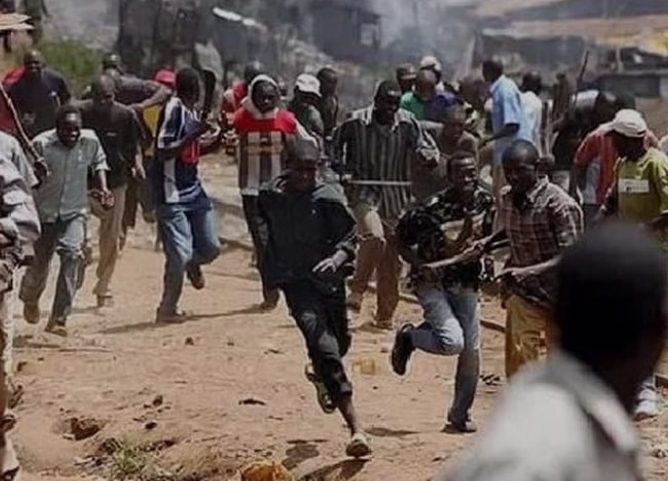
A growing debate within the United States Congress over violence affecting Christian communities in Nigeria has elevated the country’s long-running security crisis onto an increasingly prominent international stage. The development comes amid renewed calls by some American lawmakers, advocacy groups, religious organizations, and policy actors for closer scrutiny of attacks occurring across parts of Nigeria, particularly in regions that have experienced recurring violence involving armed groups, communal conflicts, banditry, insurgency, and farmer-herder disputes.
While some advocates have characterized the violence as evidence of a campaign targeting Christians, Nigerian authorities and numerous analysts have argued that the reality is significantly more complex, involving overlapping security, economic, ethnic, environmental, and governance factors that do not fit neatly within a single explanatory framework.
As of the time of publication, debates surrounding the scale, motivation, and classification of the violence remain contested among policymakers, researchers, security analysts, faith leaders, and international observers. What is not disputed, however, is that thousands of Nigerians from different religious and ethnic backgrounds have lost their lives over many years of insecurity, raising urgent questions about state capacity, accountability, civilian protection, and the future of one of Africa’s most strategically important nations.
The emerging congressional interest therefore represents more than a dispute over terminology. It touches on international diplomacy, religious freedom advocacy, foreign policy priorities, counterterrorism cooperation, national sovereignty, and the broader struggle to understand one of the world’s most complex security environments.
Why the U.S. Congress Is Paying Renewed Attention to Nigeria
Recent discussions within sections of the U.S. political establishment have focused on reports alleging persistent attacks against Christian communities in parts of Nigeria. Several lawmakers have reportedly advocated greater scrutiny of the situation and have raised concerns regarding civilian casualties, displacement, attacks on places of worship, and broader patterns of insecurity.
According to preliminary reports and public statements attributed to some American lawmakers and advocacy organizations, concerns have centered on whether the Nigerian government is doing enough to protect vulnerable communities and hold perpetrators accountable.
The congressional interest appears to be driven by a combination of public statements from some lawmakers, religious freedom concerns, humanitarian advocacy, domestic political considerations within the United States, and growing international attention to insecurity affecting some regions in Nigeria.
The debate has also been amplified by reports published by religious advocacy organizations, human rights groups, security researchers, and international media outlets documenting recurring attacks affecting communities across multiple Nigerian states.
However, a central challenge remains the difficulty of distinguishing between violence driven primarily by religious identity and violence arising from broader security, economic, ethnic, or territorial disputes.
That distinction lies at the heart of the current controversy.
The Genocide Question and the Importance of Legal Precision
The term “genocide” carries extraordinary legal, political, and diplomatic consequences.
Under international law, genocide is not simply a description of large-scale violence. The concept is tied to specific legal criteria established under the United Nations Genocide Convention, including demonstrable intent to destroy, in whole or in part, a protected national, ethnic, racial, or religious group.
This requirement of intent has historically made genocide one of the most difficult international crimes to establish.
Consequently, determining whether violence occurring in any country meets the genocide threshold requires extensive factual investigation, forensic evidence, legal analysis, and documentation of patterns of conduct.
As of the time of publication, no internationally recognized judicial body has formally determined that a genocide is occurring against Christians in Nigeria.
This distinction is significant because public debate often merges humanitarian concern with legal classification. While widespread violence may be acknowledged, the legal characterization of that violence remains subject to evidentiary standards and judicial scrutiny.
Numerous international law scholars and legal analysts have cautioned that emotionally powerful narratives, however compelling, should not substitute for rigorous factual assessment.
The challenge facing policymakers is therefore not merely whether violence exists, but how that violence should be understood, classified, and addressed.
Nigeria’s Security Crisis Is Larger Than a Single Narrative
One of the most important realities often overlooked in international discussions is that Nigeria’s security crisis encompasses multiple conflicts occurring simultaneously across different regions.
The country continues to confront insurgency threats linked to extremist groups in parts of the northeast. Armed banditry remains a major concern in several northwestern states. Kidnapping for ransom has evolved into a sophisticated criminal enterprise in numerous regions. Separatist tensions persist in parts of the southeast. Communal conflicts continue to affect several areas of the Middle Belt.
Climate pressures, population growth, competition over land and water resources, weak governance structures, rural poverty, unemployment, and the proliferation of small arms have further complicated the security landscape.
In many incidents, victims have included Christians, Muslims, traditional worshippers, farmers, herders, women, children, security personnel, and internally displaced persons.
This broader context does not diminish the suffering of any particular community. Rather, it highlights the difficulty of reducing Nigeria’s security challenges to a single explanatory framework.
Many analysts argue that understanding these intersecting dynamics is essential for developing effective policy responses.
The Data Problem: Why Statistics Alone Have Not Settled the Debate
Statistics have become a central battleground in discussions surrounding violence in Nigeria.
Different organizations often rely on different methodologies, reporting standards, geographic coverage, and classification systems. As a result, casualty figures and incident counts can vary substantially.
Researchers frequently face challenges including underreporting, inaccessible conflict zones, delayed verification, inconsistent local documentation, and political sensitivities.
According to publicly available conflict monitoring datasets, thousands of civilians have been killed in violence across Nigeria over recent years. However, determining precise motivations behind individual incidents remains difficult.
Some attacks appear to involve religious dimensions. Others are linked primarily to territorial disputes, criminal activity, insurgency, revenge cycles, resource competition, or local political tensions.
This complexity explains why experts often caution against drawing sweeping conclusions from aggregate casualty figures alone.
The debate is therefore not simply about numbers. It is about interpretation, attribution, and causation.
Who was targeted?
Why were they targeted?
Who carried out the attack?
What evidence exists regarding motive?
Was the incident isolated or part of a broader pattern?
These questions remain central to any serious assessment.
Why the Debate Matters Beyond Religious Freedom
Although much of the international discussion focuses on religious persecution, the implications extend far beyond questions of faith.
The controversy increasingly touches on Nigeria’s international reputation, investment climate, diplomatic relationships, and strategic importance within Africa.
Nigeria is Africa’s most populous country and one of the continent’s largest economies. It serves as a major regional actor in peacekeeping, diplomacy, trade, and security cooperation.
Any significant deterioration in relations between Nigeria and key international partners could have implications extending well beyond the immediate issue under debate.
International perceptions of instability can affect investor confidence.
Diplomatic disputes can complicate security cooperation.
Human rights concerns can influence foreign assistance decisions.
Political tensions can shape broader strategic partnerships.
The consequences therefore reach far beyond the immediate policy arguments taking place in Washington.
Nigeria’s Official Position and Sovereignty Concerns
Nigerian authorities have consistently rejected claims that the state is engaged in or supports a campaign against Christians.
Government officials have generally maintained that the country is confronting a broad security crisis affecting citizens of different backgrounds rather than a coordinated religious extermination campaign.
According to official positions expressed in various public forums, authorities argue that reducing the crisis to a religious conflict risks oversimplifying complex realities and undermining efforts to address root causes.
The sovereignty dimension has also become increasingly important.
Many Nigerian policymakers view external attempts to define domestic security challenges through foreign political frameworks with skepticism.
Some officials have expressed concerns that international narratives may fail to capture local complexities or may unintentionally exacerbate existing tensions.
This tension between international advocacy and national sovereignty has become a recurring feature of the debate.
The Human Cost Behind the Politics
Lost amid diplomatic exchanges and legal debates are the experiences of ordinary Nigerians living in affected communities.
Across multiple regions, families have endured displacement, bereavement, economic hardship, and psychological trauma.
Communities have witnessed attacks on homes, schools, farms, markets, and places of worship.
Children have lost parents.
Farmers have lost livelihoods.
Entire villages have experienced repeated cycles of fear and uncertainty.
For many victims, the immediate concern is not how international institutions classify the violence but whether protection, justice, and accountability will materialize.
This human dimension remains the most important aspect of the crisis.
Regardless of political disagreements over terminology, the suffering itself demands attention.
How U.S.-Nigeria Relations Could Be Affected
The congressional probe arrives at a sensitive moment in bilateral relations.
The United States and Nigeria maintain significant cooperation across security, economic, educational, health, and diplomatic sectors.
Counterterrorism collaboration remains particularly important given regional security challenges.
Should congressional scrutiny intensify, several potential consequences could emerge.
In one scenario, increased attention could lead to stronger security cooperation, improved civilian protection initiatives, and greater support for accountability mechanisms.
In another scenario, disagreements over narratives and policy responses could create diplomatic friction.
Public disputes over sanctions, religious freedom designations, or security policies could complicate broader strategic engagement.
Neither outcome is predetermined.
Much will depend on how both governments choose to manage the issue moving forward.
The Role of Advocacy Organizations and Competing Narratives
The current debate has also highlighted the growing influence of advocacy groups in shaping international policy discussions.
Religious freedom organizations, human rights groups, think tanks, diaspora networks, and civil society actors have all contributed to the conversation.
Some groups argue that international attention is long overdue and necessary to prevent further loss of life.
Others caution that selective framing may obscure the experiences of other victimized populations and oversimplify conflict dynamics.
These competing narratives reflect broader struggles over how violence is understood, represented, and prioritized in international discourse.
They also demonstrate the increasing role of non-state actors in influencing foreign policy debates.
Governance, Accountability, and the Crisis of Public Confidence
Perhaps the most important question raised by the controversy concerns governance.
Whether violence is interpreted primarily through a religious lens, a security lens, or a governance lens, recurring attacks inevitably raise questions about state effectiveness.
Can security agencies prevent attacks?
Can perpetrators be identified and prosecuted?
Can displaced communities safely return home?
Can citizens trust public institutions to protect them?
These questions strike at the heart of state legitimacy.
Over time, persistent insecurity can erode public confidence, weaken social cohesion, discourage investment, and fuel political instability.
The long-term challenge therefore extends beyond immediate security responses.
It involves rebuilding institutional trust.
Historical Context Often Missing From International Discussions
Nigeria’s contemporary security challenges did not emerge overnight.
Many current tensions are rooted in decades of historical developments involving colonial boundaries, population movements, environmental pressures, governance failures, economic inequality, and unresolved communal grievances.
The country’s remarkable religious diversity has historically produced both cooperation and tension.
In many communities, Muslims and Christians have lived together peacefully for generations.
In others, local conflicts have occasionally taken on religious dimensions.
Understanding this history is essential because simplistic explanations rarely capture the complexity of events on the ground.
The current debate risks becoming less about understanding Nigeria and more about fitting Nigeria into pre-existing international narratives.
Possible Future Scenarios
Several outcomes remain possible as congressional scrutiny continues.
In the most constructive scenario, increased international attention could encourage stronger protection measures, improved accountability, deeper security sector reforms, and greater support for vulnerable communities.
In the most likely scenario, debates over terminology will continue while policymakers focus on practical measures aimed at reducing violence and strengthening institutional capacity.
The most concerning scenario would involve escalating diplomatic tensions, growing domestic polarization, and further politicization of religious identities.
Such an outcome could undermine efforts to build consensus around effective solutions.
A significant uncertainty involves how international institutions, regional organizations, civil society groups, and faith leaders choose to engage with the issue in the coming months.
Their responses may shape both public understanding and policy outcomes.
The Accountability Questions That Remain Unanswered
Despite years of violence, many accountability questions remain unresolved.
Who is financing armed actors?
Why do some attacks continue despite military operations?
How effective are existing intelligence and early-warning systems?
What institutional reforms are necessary to improve civilian protection?
How can justice mechanisms be strengthened?
What role should local communities play in conflict prevention?
Until these questions receive credible answers, debates over terminology are unlikely to resolve the deeper structural problems driving insecurity.
Beyond Labels: The Need for Evidence-Based Solutions
The controversy surrounding allegations of a Christian genocide in Nigeria reflects broader tensions between advocacy, diplomacy, law, and security policy.
While claims that the violence constitutes genocide remain contested and have not been affirmed by an international court, the underlying humanitarian concerns are widely recognized and cannot be dismissed.
The challenge for policymakers is to separate evidence from rhetoric, legal standards from political messaging, and immediate humanitarian needs from broader geopolitical calculations.
Nigeria’s future stability will depend less on the labels attached to its crisis and more on whether effective measures are implemented to protect civilians, strengthen institutions, improve accountability, and address the structural conditions that enable violence to persist.
For both Nigeria and its international partners, the ultimate test will not be the intensity of public statements but the effectiveness of actions taken to reduce suffering and restore public confidence.
As the congressional debate evolves, the stakes extend far beyond Washington and Abuja. They touch on fundamental questions of governance, security, religious freedom, national sovereignty, and the responsibilities of states to protect their citizens.
Those questions will likely remain central long after the current headlines fade.
Author Bio:
Smart Chuks is a political affairs and investigative journalist at SaharaNews247 covering governance, elections, security, public policy, and institutional accountability across Nigeria.