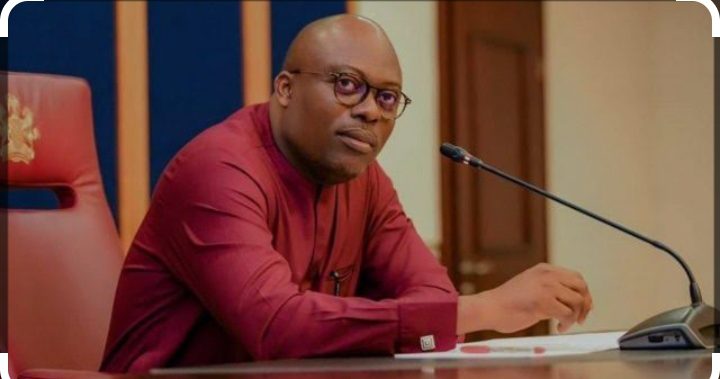

Political uncertainty has gripped the All Progressives Congress (APC) in Kebbi State following widespread speculation over the political future of Governor Nasiru Idris ahead of the 2027 general elections. Reports circulating on social media have suggested that the governor could be among a number of serving APC governors allegedly considering a new political alignment with former Vice President and 2023 Peoples Democratic Party (PDP) presidential candidate Atiku Abubakar.
While no official confirmation has emerged from Governor Idris or the Kebbi State Government to support the claims, the rumours have generated intense discussion among party members, political observers and residents, highlighting the growing importance of coalition politics as Nigeria’s attention gradually shifts toward the next general election.
The development has also reignited conversations about the balance of political power in Kebbi State, where the APC controls the executive arm of government while the opposition PDP maintains considerable influence through its representation in the National Assembly.
Rumours Fuel Political Debate Ahead of 2027
Speculation surrounding Governor Idris gathered momentum after a viral report claimed that five serving APC governors were exploring the possibility of joining a broader political coalition reportedly being championed by Atiku Abubakar ahead of the 2027 elections.
The report quickly spread across social media platforms and political circles, prompting widespread debate within Kebbi State. However, as of the time of reporting, neither Governor Idris nor his administration had publicly announced any intention to leave the APC.
The absence of an official response allowed the speculation to continue, with supporters and critics offering differing interpretations of the situation. Political analysts note that periods between election cycles often produce intense speculation about possible defections, especially as politicians reposition themselves ahead of future contests.
Kebbi’s Political Landscape Explains the Intense Interest
The significance of the rumours cannot be understood without examining Kebbi State’s evolving political landscape.
Although the APC currently controls the state government under Governor Idris, the PDP has demonstrated that it remains a formidable political force within the state. The three senators representing Kebbi State in the National Assembly—Adamu Aliero (Kebbi Central), Yahaya Abdullahi (Kebbi North) and Garba Musa Maidoki (Kebbi South)—are all members of the PDP.
Their presence has provided the opposition with an influential platform despite losing the governorship election, ensuring that political competition remains active across the state.
Former Governor Adamu Aliero also continues to command considerable political influence. Having served in multiple public offices over several decades, his political network remains relevant to discussions about future electoral alignments. Observers believe his influence makes him an important figure in any conversation regarding potential political realignments in Kebbi.
Governor Idris Won a Competitive 2023 Election
Governor Nasiru Idris emerged victorious in the 2023 governorship election after defeating the PDP candidate, retired Major General Aminu Bande.
Although the APC retained control of the state, the election illustrated that Kebbi remained politically competitive rather than overwhelmingly dominated by a single party. The relatively close contest reinforced the importance of maintaining party unity ahead of future elections.
Political observers argue that this competitive environment partly explains why even unverified reports of possible defections attract widespread attention within the state.
APC Members Express Mixed Reactions
Interviews conducted by SaharaNews247 reveal that opinions among APC members remain divided.
Some party loyalists dismissed the reports entirely, insisting that Governor Idris remains committed to the APC.
“I don’t believe it’s true,” Alhaji Sani Bello, a senior APC member from Birnin Kebbi Local Government Area, told SaharaNews247.
“This is just one of those rumours that tend to surface every election cycle. Governor Idris is too committed to the APC to leave now, especially after the victory in the last election.”
Others, however, expressed concern over the prolonged absence of an official statement addressing the reports.
One APC member from the governor’s Nassarawa II ward, who requested anonymity because he was not authorised to speak publicly, said uncertainty had unsettled some grassroots supporters.
“The silence from the government is worrisome. We are deeply concerned. If the governor eventually defects, it could significantly reshape politics in Kebbi State.”
Another APC stalwart, Ahmed Jibril, argued that politicians across the country are already evaluating future political options as discussions about 2027 gradually gather momentum.
“It is possible that political calculations are taking place. Politicians always assess their chances ahead of elections, although only those directly involved know what decisions they may eventually make,” he said.
Party Leadership Urges Loyalty Amid Growing Speculation
As speculation intensified, the Chairman of the APC in Kebbi State, Muhammad Zuru, publicly appealed to party members to remain loyal to the ruling party.
He cautioned members against aligning themselves with what he described as emerging political platforms and encouraged continued support for both the party and the state government.
His intervention was viewed by many party members as an attempt to reassure supporters and discourage premature political movements while uncertainty continued.
Although his remarks did not directly confirm or deny the rumours surrounding Governor Idris, they underscored the leadership’s desire to preserve party cohesion.
Coalition Politics Are Becoming a Central Feature of Nigeria’s Political Future
Across Nigeria, conversations about possible alliances have become increasingly common long before official campaigns for the 2027 elections.
Political parties continue to evaluate strategies that could strengthen their electoral prospects, while influential politicians remain the subject of frequent speculation regarding possible defections.
Nigeria’s political history shows that alliances and party defections have repeatedly reshaped electoral contests. Several governors, lawmakers and senior political figures have crossed party lines during previous election cycles, making reports of possible defections a recurring feature of the country’s political landscape.
However, political analysts caution that many rumours circulating years before elections never materialise. They argue that political calculations often change depending on internal party negotiations, national developments and the evolving interests of political stakeholders.
Questions Remain Over Governor Idris’ Political Position
At the centre of the debate remains one important fact: Governor Nasiru Idris has not publicly announced plans to leave the APC.
Without an official statement confirming the speculation, claims regarding any possible defection remain unverified.
SaharaNews247 made efforts to obtain official clarification. Several attempts to reach Kabir Sani-Giant, Special Adviser to Governor Nasiru Idris on Power and Politics, were unsuccessful.
Sani-Giant has remained largely out of public view following his suspension from the APC over allegations relating to conduct that attracted significant public attention. He has not publicly commented on the latest speculation surrounding the governor’s political future.
Why the Story Matters Beyond Kebbi State
The discussion surrounding Governor Idris reflects broader political developments unfolding across Nigeria as politicians begin positioning themselves well ahead of 2027.
Whether the rumours ultimately prove unfounded or evolve into genuine political negotiations, they demonstrate how coalition politics, party loyalty and electoral strategy are already shaping conversations within the country’s major political parties.
Ultimately, the political future of Governor Nasiru Idris will be determined not by speculation but by his own publicly stated decisions and actions. Until then, the reports remain part of a wider national conversation about alliances, party cohesion and the evolving dynamics of Nigerian politics ahead of the 2027 general elections.
For the APC, maintaining internal unity will remain essential as preparations for future elections gradually intensify. For opposition parties, any opportunity to attract influential political figures could significantly alter the electoral landscape in key states.
As events continue to unfold, the focus will remain on official statements from the governor, the APC leadership and other key political actors. Those responses—not social media speculation—will provide the clearest indication of whether Kebbi State is witnessing the beginning of a significant political realignment or simply another episode in Nigeria’s often unpredictable electoral politics.
Author Bio
Smart Chuks is an investigative journalist and publisher at SaharaNews247, covering politics, business, governance, security, technology, and public policy with a focus on evidence-based reporting, accountability, and in-depth analysis.