The reopening of the Bagega–Anka road in Zamfara State after troops conducted a route-clearance operation and removed explosive threats has offered temporary relief to motorists and communities, but the development also exposes a more troubling shift in the security crisis across Nigeria’s North-West.
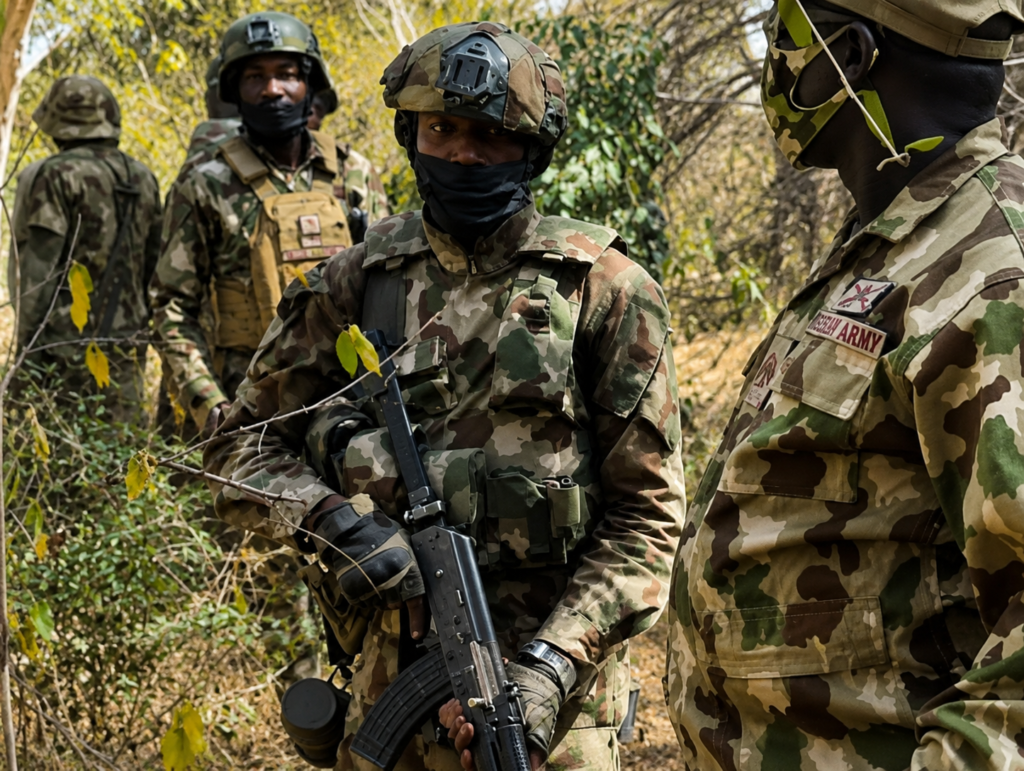
Troops of the Nigerian Army’s 1 Brigade, working with a Quick Response Force and Explosive Ordnance Disposal team, cleared the Bagega–Anka major supply route in Anka Local Government Area on July 2, 2026, after conducting a detailed scan for improvised explosive devices and other hazards. The route was subsequently declared free of explosive threats and reopened to vehicular traffic.
The operation, reported by security-focused publication Zagazola Makama, also resulted in the recovery of a Nigeria Police Counter-Terrorism/Counter-Strike vehicle that had recently struck an IED on the same route. No troop casualties were reported during the clearance operation.
The immediate result was straightforward: a road that had become dangerous because of concealed explosives was made passable again.
But the wider significance is considerably more serious.
The use of IEDs on the Bagega–Anka corridor comes after a series of explosive incidents in Zamfara in 2026, including an attack in which three police Explosive Ordnance Disposal officers were killed after their vehicle struck an IED on the same general axis in June.
Taken together, the reported incidents suggest that explosive devices are adding a dangerous dimension to the security challenge in parts of Zamfara. Roads used by civilians, police and military personnel can become potential targets, increasing the risks associated with movement through already vulnerable areas.
Bagega–Anka Road Becomes Another Security Flashpoint
The Bagega–Anka corridor is more than an ordinary rural road.
It connects communities in an area where the movement of people, agricultural produce, commercial goods and security personnel is essential to the survival of local livelihoods. Bagega, in particular, has repeatedly featured in reports concerning armed violence and military operations.
In May, troops of Operation Fansan Yamma rescued 31 kidnapped people around the Bagega–Kawaye axis in Anka Local Government Area following an air operation and subsequent ground operations against terrorist enclaves west of Bagega Forest. The military also reported the destruction of camps and recovery of weapons and motorcycles during the wider operations.
Recent military operations and reported attacks indicate that the Bagega area has remained a significant security concern for both residents and security agencies.
In early May, residents reported an attack on a military camp in Bagega during which terrorists reportedly set part of the camp and two military vehicles on fire. The incident was also linked to wider concerns about armed groups operating around forests and communities in the area.
Against that background, the reported discovery of explosive devices on roads connecting these communities adds another dimension to an already difficult security environment.
Roads are particularly vulnerable because they concentrate movement.
A successful attack on a road can potentially affect civilians, police, soldiers, traders and transporters simultaneously. It can also produce an economic effect far beyond the immediate blast site because fear can discourage motorists from using the route.
That is precisely why route clearance has become an important component of military operations in areas affected by armed groups.
What the Latest Route-Clearance Operation Reveals
According to a report by security-focused publication Zagazola Makama, troops of the Nigerian Army’s 1 Brigade, supported by a Quick Response Force and Explosive Ordnance Disposal personnel, conducted a route-clearance operation along the Bagega–Anka Main Supply Route.
The purpose was to identify and neutralise IEDs or other explosive hazards before allowing normal traffic to resume.
The operation also recovered a police Counter-Terrorism/Counter-Strike vehicle that had previously struck an explosive device on the route. The report said no troop casualties were recorded during the operation and that the road was reopened after the security team assessed the cleared section as safe for vehicular movement.
That distinction matters.
A road being reopened after a security sweep does not necessarily mean that the surrounding security problem has been eliminated. It means that security personnel have assessed the particular section of road as sufficiently cleared for movement at that point in time.
In an environment where armed groups can return to an area or plant new devices, route security is a continuing process rather than a one-off exercise.
The military therefore faces two separate challenges: finding existing devices and preventing fresh ones from being planted.
The second challenge is often more difficult.
IED Attacks Add a New Dimension to Zamfara’s Banditry Crisis
For years, the dominant public image of banditry in the North-West was built around motorcycles, assault rifles, kidnappings, cattle rustling, village raids and attacks on travellers.
IEDs introduce another dimension.
IEDs can allow attackers to threaten roads without maintaining a visible presence at the scene, making detection particularly difficult and increasing the burden on security forces responsible for route clearance.
Recent incidents indicate that this tactic has become a growing concern in Zamfara.
In February, an IED explosion along the Gusau–Funtua highway damaged a cement-laden trailer near Unguwar Mai Chida. The driver survived, while police and security personnel responded to the incident.
Also in February, security personnel defused another suspected IED along the Danjibga–Kunchin Kalgo axis in Tsafe Local Government Area. Police said the operation involved its EOD-CBRN unit, military EOD personnel and other tactical personnel.
In June, police in Zamfara reported that another explosive device had been discovered along the Kunchin Kalgo axis and safely neutralised. The police attributed its discovery partly to information supplied by residents and said investigations were continuing to identify those responsible.
The June incident was particularly significant because it demonstrated the importance of community intelligence in counter-IED operations.
Technology and military hardware can help locate threats, but local residents often possess the information needed to identify suspicious activity before it becomes an attack.
The Human Cost of Blocking Rural Roads
The consequences of insecure roads extend well beyond the immediate danger of death or injury.
For rural communities, a road is often the connection between farms and markets, villages and hospitals, students and schools, farmers and buyers, and families and government services.
When armed groups make a road too dangerous to use, people can become effectively trapped.
A farmer may be unable to transport produce. A trader may stop travelling to a market. A sick person may delay seeking medical treatment. Transport operators may increase fares to compensate for perceived risks. Security agencies may also face difficulties moving personnel and supplies.
Research on the socio-economic consequences of banditry in Zamfara has documented disruptions to rural economic activity, including risks to commuters, farmers and other residents whose livelihoods depend on safe access to roads and markets.
A separate 2026 study on armed banditry and food security in Zamfara identified insecurity, proliferation of small arms, illegal mining, competition over land resources and weak border management among factors associated with the persistence of armed groups in the state.
This is why reopening a road should not be interpreted merely as a transport development.
It is also an economic intervention.
A secure road can restore the movement of food, people and commerce. It reduces the geographic isolation of communities and gives security agencies greater access to areas where criminal groups may otherwise operate with relative freedom.
Why the Recovery of the Police Vehicle Matters
The recovery of the police vehicle damaged by an IED is another important element of the operation.
Security vehicles are often among the most vulnerable targets because they are predictable symbols of state authority and regularly travel routes used for patrols, reinforcement and rescue operations.
An attack on such a vehicle can have consequences beyond the immediate physical damage. It can threaten personnel, destroy valuable equipment and undermine confidence in the ability of security forces to move safely through affected areas.
Such incidents can also have a psychological effect, potentially reinforcing perceptions that security forces face serious difficulties maintaining safe movement through contested areas.
The June killing of three police EOD personnel on the Anka–Bagega road underscored this danger. Reports identified the dead officers as Superintendent Abdulrazak Hassan, Inspector Murtala Musa and Inspector Auwal Ahmad.
Their deaths also illustrate the particular risks faced by EOD personnel.
Unlike conventional patrol units, bomb-disposal specialists are deliberately sent toward suspected explosive devices to make roads and communities safer for everyone else.
Their work is therefore both technically demanding and exceptionally hazardous.
The loss of trained personnel can also reduce the capacity of security agencies to respond effectively to future incidents.
Community Intelligence Could Be the Missing Link
Recent incidents in Zamfara demonstrate why military capability needs to be reinforced by timely community intelligence when authorities are trying to detect and prevent roadside explosive attacks.
In June, the Zamfara Police Command said information supplied by local residents helped security personnel locate and neutralise an IED before it caused casualties along the Kunchin Kalgo axis.
The incident highlights the potential value of structured community intelligence in other areas facing similar security risks.
Residents are often the first people to notice unfamiliar movements, suspicious excavation along roads, abandoned objects or unusual activity around strategic routes. But intelligence-sharing only works when residents trust that security agencies can protect their identities and respond effectively.
The relationship must therefore be reciprocal.
Security agencies need information from communities, while communities need visible protection and confidence that providing information will not expose them to retaliation.
This is particularly important in rural areas where armed groups can exploit fear, weak state presence and limited communication infrastructure.
Zamfara’s Wider Security Crisis Remains Unresolved
The road clearance operation is a positive development, but it should not be mistaken for evidence that Zamfara’s security crisis has been resolved.
International Alert’s 2026 analysis of north-western Nigeria describes insecurity in Zamfara and Katsina as being driven by interconnected problems involving armed banditry, illicit mining, farmer-herder tensions, weak governance and shortcomings in natural-resource management.
That wider context is important because the drivers and financing mechanisms associated with armed violence can extend beyond a single criminal activity or method of attack.
Across parts of the wider North-West, armed groups have been associated with multiple sources of income, including kidnapping for ransom, illegal levies and cattle theft, while illicit economic activities have also been linked to insecurity in some areas.
Road attacks can serve several purposes at once: they can generate fear, restrict security-force movement, disrupt commerce and create opportunities for kidnapping.
This complexity explains why military operations, although necessary, cannot by themselves provide a permanent solution.
Sustained security requires intelligence, policing, functioning justice institutions, economic opportunity and effective control of territory.
The Bigger Question Is Whether Security Can Be Sustained
The most important test following the reopening of the Bagega–Anka route is not whether vehicles can pass today.
It is whether they can continue passing safely tomorrow, next week and months from now.
That requires sustained surveillance, intelligence-led patrols, rapid EOD response capability and effective coordination between the Army, Police and other security agencies.
It also requires attention to the communities surrounding the road.
If residents remain exposed to kidnapping, extortion and attacks away from the main highway, a cleared road can still become vulnerable again.
Recent military operations demonstrate that security forces have recorded tactical successes in rescuing abducted civilians, disrupting armed groups and clearing routes affected by explosive threats.
The challenge is converting these tactical successes into durable security.
That distinction is crucial.
A temporary clearance operation is a military achievement. A permanently safe road is a governance achievement.
What the Zamfara IED Threat Means for Nigeria
The latest development in Zamfara should therefore be viewed within the larger transformation of insecurity in northern Nigeria.
The reported use or suspected use of IEDs by armed groups creates a more complicated operating environment for security forces and civilians alike.
It also increases the cost of restoring normal life.
Roads require repeated clearance. Security agencies need specialised equipment and trained personnel. Transporters face greater risks. Communities become more isolated. Government spending on security rises, while local economic activity suffers.
Nigeria’s response must consequently move beyond reacting to individual explosions. Security agencies also need to strengthen intelligence-led efforts to identify those responsible for sourcing, deploying and planting explosive devices, while improving coordination between investigative, policing and military authorities.
At the same time, communities must remain central to the security strategy.
The July route-clearance operation demonstrates what coordinated security action can achieve: an explosive threat was identified, a dangerous corridor was swept, a damaged police vehicle was recovered and civilian movement was restored.
But the incident also carries a warning.
A road can be reopened physically while remaining strategically vulnerable.
For the people of Bagega, Anka and neighbouring communities, true success will not be measured by how quickly troops can clear an IED after it is discovered. It will be measured by whether civilians can travel, farm, trade and return home without living under the constant fear that the road ahead may contain an invisible threat.
That is the larger security test facing Zamfara.
Until those responsible for planting explosives and terrorising communities are identified, prosecuted and prevented from returning to the roads and communities they have targeted, each reopening remains a fragile security gain rather than a guarantee of lasting safety.
About the Author
Smart Chuks is an investigative journalist, senior newsroom editor and publisher with a focus on Nigerian politics, security, governance, public policy and major national affairs. His reporting and analysis examine the facts behind breaking developments and their wider implications for Nigerians and the international community. He writes for SaharaNews247, where he contributes original news reports, investigative features and in-depth analysis.