By Smart Chuks
In the quiet hours before dawn, when most rural communities in Yobe State are wrapped in the stillness of sleep, terror once again found its way into ordinary lives.
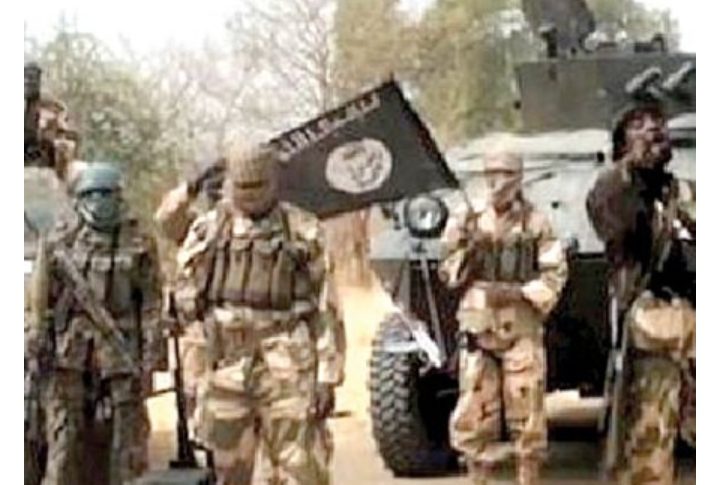
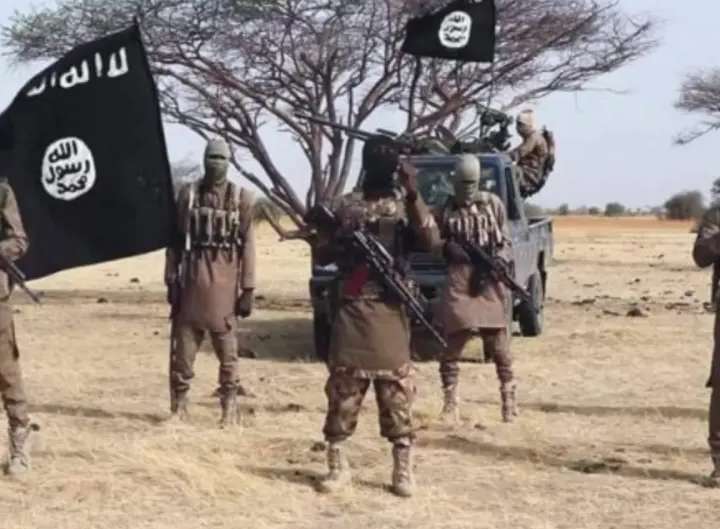
Gunmen believed to be members of the Islamic State West Africa Province, ISWAP, descended on two villages in the northeastern state, injuring a respected village head, abducting a civilian driver and ransacking a public health facility that serves hundreds of vulnerable residents.
For the people of Ja Jibiri and Ladu, the attack was not just another headline in Nigeria’s long war with insurgency. It was a reminder that safety in the region remains fragile, and that the institutions meant to protect everyday life, from traditional leadership to healthcare, are increasingly becoming targets.
This investigation by SaharaNews247 explores how the attack unfolded, why Yobe remains vulnerable, and what the incident reveals about the evolving nature of terrorism in Nigeria.
A night of fear in Ja Jibiri and Ladu
Residents say the gunmen arrived shortly after midnight, riding on motorcycles and pick-up trucks, firing sporadically as they moved into Ja Jibiri. In the confusion that followed, the village head, Lawan Hassan, was shot in the shoulder while trying to flee the scene.
Neighbours rushed him to Geidam Hospital where he is currently receiving treatment.
From Ja Jibiri, the attackers pushed further into Ladu village. There, they abducted a local driver, Madu Kura, and made away with his Toyota Hilux vehicle. But the most damaging act came when they forced their way into the Primary Health Care Centre, stripping it of medical supplies and equipment.
For villagers who depend on the centre for antenatal care, childhood immunisation and emergency treatment, the looting was devastating. Many now fear that even minor illnesses could become fatal because there is nowhere else nearby to seek help.
Why attacks on village leaders matter
In rural Nigeria, traditional rulers are more than ceremonial figures.
They are peace brokers, intelligence sources and community mobilisers.
The injury of a village head is not only a personal tragedy but a strategic blow to local stability.
When insurgents target traditional leaders, they weaken the social fabric that binds communities together. It discourages residents from sharing information with authorities and creates a vacuum of authority that extremists are quick to exploit.
In Yobe State, where government presence is often thin in remote areas, the role of village heads is even more critical. Their loss or incapacitation leaves communities exposed and directionless in moments of crisis.
The silent war on healthcare
Perhaps the most painful part of the Yobe attack was the destruction of healthcare services. The looting of the Ladu health centre means pregnant women must now travel long distances for care, children miss routine immunisation and emergencies go untreated.
Across Nigeria’s northeast, health facilities have increasingly become targets of insurgents. Sometimes they are looted for supplies, at other times damaged or abandoned due to fear. Each attack chips away at an already fragile healthcare system.
Doctors Without Borders and other humanitarian organisations have warned that attacks on health infrastructure do not just kill in the moment. They create long-term suffering by disrupting services that prevent disease and save lives quietly every day.
A familiar pattern in Yobe’s troubled history
Yobe State has lived with insurgency for more than a decade. From the early Boko Haram years to the emergence of ISWAP, communities have endured waves of violence, displacement and loss.
The massacre in Tarmuwa Local Government Area in 2024, where over a hundred civilians were killed, still watt hangs heavy in the memory of many residents. Even towns that once appeared secure, such as Gujba and Buni Yadi, have suffered repeated raids.
The latest attack fits into a pattern where militants strike soft targets, withdraw before security forces arrive and leave communities to pick up the pieces.
Defying airstrikes and military pressure
What makes the Yobe attack particularly troubling is its timing. It came just days after United States airstrikes reportedly targeted terrorist hideouts in parts of northern Nigeria. Yet ISWAP was still able to mobilise fighters, cross long distances and hit villages deep inside Yobe.
This defiance reflects the group’s ability to adapt. Over the years, ISWAP has shifted from holding territory to launching surprise raids, ambushes and night-time operations that stretch the capacity of the military.
Despite ongoing efforts by the Nigerian Armed Forces, insurgents continue to exploit gaps in intelligence, logistics and terrain knowledge, especially in remote rural areas.
Life after the gunshots
For residents of Ja Jibiri and Ladu, the aftermath is a mix of shock and quiet resilience. Families have fled to neighbouring villages, sleeping in classrooms and makeshift shelters. Farmers worry about returning to their fields, while traders count their losses.
Children, many of whom have known nothing but conflict, struggle to return to school. Teachers fear reopening classrooms without assurances of safety.
The psychological toll is harder to measure but just as real. Survivors speak of constant fear, of listening for distant engine sounds in the night, of never truly resting.
Why ISWAP keeps returning
Security analysts say ISWAP’s persistence is driven by a combination of ideology, opportunity and local conditions.
The group thrives where poverty is deep, governance is weak and young people feel abandoned. In some areas, militants offer protection, food or small sums of money in exchange for loyalty. In others, they rule through fear.
Yobe’s vast rural landscapes, poor road networks and limited state presence create ideal conditions for hit-and-run operations. Without strong community intelligence systems, militants often move undetected until it is too late.
The attack on Yobe communities once again raises hard questions about how Nigeria is fighting insurgency.
Military operations remain important, but experts argue that guns alone cannot end this war. Communities need to feel protected, not forgotten. Traditional leaders must be supported, not left exposed. Health facilities must be guarded as carefully as military outposts.
There is also a growing call for a stronger focus on development. Roads, schools, jobs and social services are not luxuries in conflict zones. They are weapons against extremism.
When young people have something to lose, they are less likely to pick up a gun.
What the future holds for Yobe
As Lawan Hassan recovers in hospital and residents of Ladu try to rebuild their looted clinic, one truth stands out. The people of Yobe are not asking for miracles. They are asking for presence, protection and dignity.
Until Nigeria can secure its rural frontiers, rebuild trust with local communities and shield essential services from attack, stories like this will continue to dominate the headlines.
The night of terror in Ja Jibiri and Ladu may fade from national memory, but for those who lived through it, the scars will remain long after the gunshots stopped.
About the author
Smart Chuks is a Nigerian investigative journalist with a strong focus on security, conflict and humanitarian affairs. He writes for SaharaNews247, providing in-depth, human-centred reporting on the challenges shaping Nigeria and the wider West African region.