
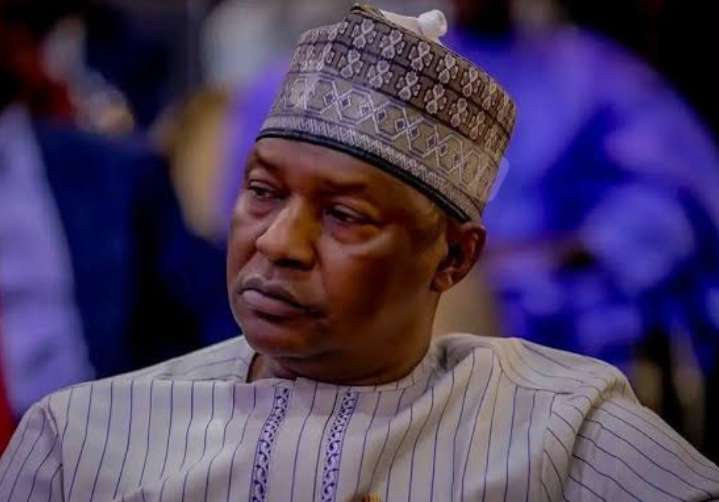
Nigeria is once again at a defining crossroads in its long and complex fight against corruption. This time, the spotlight is on a man who once stood at the very centre of the country’s justice system.
The Human and Environmental Development Agenda, widely known as HEDA, has submitted a fresh petition to the Economic and Financial Crimes Commission against former Attorney-General of the Federation and Minister of Justice, Abubakar Malami, SAN. The move has reignited national debate about accountability, abuse of power and whether Nigeria’s institutions are strong enough to investigate their own former gatekeepers.
For millions of Nigerians who watched Malami occupy the office of the nation’s chief law officer for eight turbulent years, the unfolding drama is deeply symbolic. It forces uncomfortable questions about how power is exercised, how public funds are managed, and how justice is pursued when the accused once controlled the justice system itself.
This is not merely another corruption story. It is a stress test for Nigeria’s democracy.
A Former Gatekeeper Now Under the Microscope
Abubakar Malami served as Attorney-General from 2015 to 2023 under the administration of former President Muhammadu Buhari.
During that period, he was arguably one of the most powerful figures in government. His office had oversight of prosecutions, asset recovery, international legal cooperation and sensitive negotiations involving billions of naira.
Malami was at the heart of Nigeria’s controversial Abacha loot recovery processes, legal settlements involving foreign governments, and internal policy decisions that often drew fierce criticism from civil society and the media.
Now, barely two years after leaving office, he is facing the most intense scrutiny of his public life.
The fresh petition submitted by HEDA accuses the former AGF of financial impropriety, abuse of office and questionable handling of recovered public funds. It is not the first petition against him, but civil society leaders insist this one is more comprehensive and demands urgent and transparent action.
What the New Petition Is About
Although the full contents of the petition have not been released to the public, credible reports indicate that HEDA is asking the EFCC to widen and deepen its investigation into Malami’s activities, especially during his final years in office.
The petition centres on allegations that recovered Abacha loot was either duplicated in official records or disbursed in ways that defied established procedures. There are also claims of unexplained wealth accumulation and irregular legal fee payments linked to high-value transactions approved during his tenure.
HEDA believes these transactions were not isolated events but part of a broader pattern that demands forensic financial scrutiny. The group is reportedly urging the EFCC to freeze relevant accounts, track asset ownership and subject all suspicious dealings to independent audit.
To many observers, this petition represents the strongest attempt yet by civil society to push Nigeria’s anti-corruption agency beyond routine investigation into territory that could reshape public confidence in state institutions.
EFCC Steps In
The EFCC has not taken the matter lightly. In late 2025, Malami was invited for questioning. What followed was a series of dramatic events that quickly dominated national headlines.
Sources within the commission revealed that investigators were probing up to forty-six bank accounts allegedly linked to Malami and persons connected to him. These accounts, the EFCC believes, may hold the key to unraveling the true scope of the alleged financial irregularities.
Malami was detained for several days as part of the investigation.
While he was later granted interim judicial bail by a court, the EFCC insisted that he failed to meet the conditions of administrative bail, including surrendering his international passport and fulfilling other procedural requirements. As a result, he remained in custody for longer than his supporters expected.
The commission has repeatedly denied claims of political motivation, stating that the investigation is strictly evidence-driven and guided by law.
A Fierce Legal Pushback
Malami, however, is not taking the allegations quietly.
Through his legal team and public statements, he has accused the EFCC leadership of bias and personal vendetta. He insists that all recoveries and transactions conducted during his tenure were lawful and properly documented. In particular, he has defended his role in the Abacha loot recovery process, describing claims of duplication and mismanagement as baseless and malicious.
At one point, he publicly demanded either immediate arraignment in court or unconditional release, arguing that prolonged detention without formal charges violates his constitutional rights.
This legal standoff has turned the case into a major test of Nigeria’s criminal justice system. It has also reopened old wounds between powerful institutions that once worked side by side.
The Abacha Loot Question
Perhaps the most sensitive aspect of the entire saga revolves around the Abacha loot.
For decades, Nigeria has been recovering billions of dollars stolen by the late military ruler Sani Abacha and hidden across Europe.
These recoveries were hailed internationally as a major achievement, but within Nigeria, the handling of the funds has often been shrouded in secrecy and controversy.
During Malami’s time in office, several large tranches of Abacha loot were repatriated from Switzerland, the United States and the Channel Islands. While government officials praised the transparency of the process, civil society groups were less convinced.
HEDA and other watchdogs have long argued that the disbursement of recovered funds lacked sufficient public disclosure and independent verification. The fresh petition is reviving these concerns, alleging that some recoveries may have been counted more than once or diverted in ways that have yet to be fully explained.
If these claims are substantiated, the implications would be enormous, not only for Malami but for Nigeria’s entire asset recovery framework.
Administrative Bail Versus Judicial Bail
One of the most confusing aspects of the case for the general public has been the issue of bail.
Malami’s lawyers insist that a court granted him interim bail, yet the EFCC maintains that he violated the terms of administrative bail, which is separate from judicial bail. This distinction, while technical, has major legal consequences.
Administrative bail is a temporary release granted by law enforcement agencies while investigations are ongoing. It comes with strict conditions, and failure to comply can result in re-arrest or continued detention.
The EFCC argues that Malami did not meet these conditions. His legal team disputes this, describing the commission’s actions as punitive and politically coloured.
This clash has become a crucial legal battleground and could influence how future high-profile investigations are handled in Nigeria.
Civil Society and the Battle for Accountability
At the heart of this unfolding drama is the growing role of civil society in Nigeria’s governance ecosystem.
HEDA’s persistence underscores a broader shift in public engagement.
Citizens and advocacy groups are no longer content with press releases and official assurances. They want verifiable action, transparent investigations and consequences for wrongdoing, regardless of who is involved.
For many Nigerians, this case is deeply personal. It touches on years of frustration over corruption, inequality and the feeling that powerful individuals rarely face justice.
The petition is therefore not just about Abubakar Malami. It is about whether Nigeria has finally reached a point where no office is too high to be scrutinised.
Political Undercurrents
As expected, politics has not stayed far from the conversation.
Malami’s recent defection to a new political platform and his strained relationship with elements of the current administration have fuelled speculation that the investigation may be influenced by political rivalry. The EFCC strongly rejects this narrative, but in a country with a history of politicised prosecutions, scepticism remains.
What is certain is that how this case is handled will reverberate far beyond the courtroom. It will shape public perceptions of fairness, institutional independence and the true depth of Nigeria’s anti-corruption resolve.
What Lies Ahead
The High Court has scheduled further hearings in the new year, where issues of bail, compliance and evidence disclosure will be addressed. Meanwhile, the EFCC continues its forensic examination of financial records and asset ownership structures linked to the former AGF.
If charges are eventually filed, the trial could become one of the most closely watched corruption cases in Nigeria’s recent history.
For now, the nation watches and waits.
A Defining Test for Nigeria
The fresh petition against Abubakar Malami is more than a legal document. It is a mirror reflecting the strengths and weaknesses of Nigeria’s democratic institutions.
It asks whether the country can investigate its former chief law officer with fairness and courage. It asks whether civil society can compel accountability in a system long dominated by political power.
And most importantly, it asks whether justice in Nigeria is truly blind.
The answers will not only determine Malami’s future but will also send a powerful message to every public office holder across the federation.
About the Author
Smart Chuks is an investigative journalist with SaharaNews247, specialising in governance, legal affairs and anti-corruption reporting in Nigeria. He has spent over a decade covering public institutions, accountability campaigns and policy reforms, bringing clarity and depth to stories that shape the nation’s democratic journey.