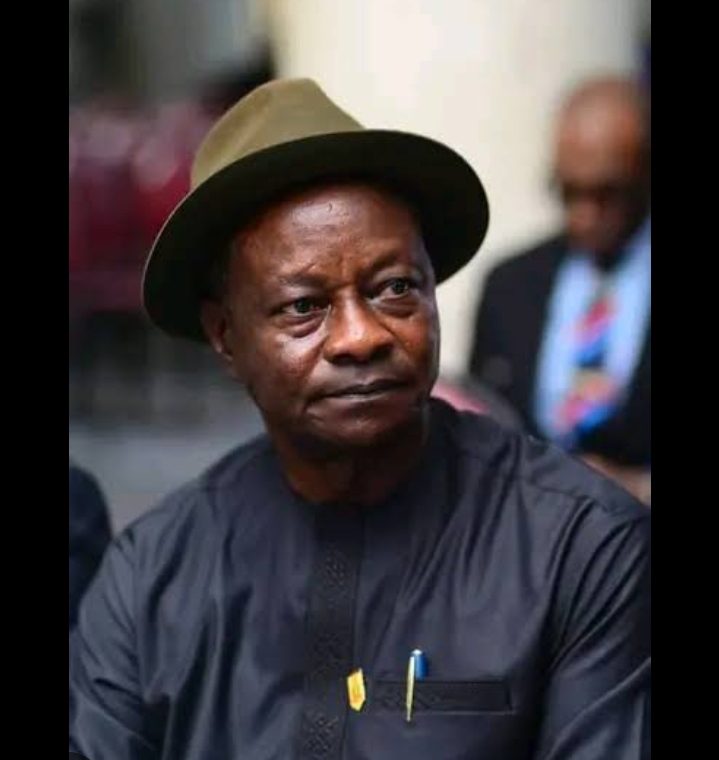

The Nigeria Democratic Congress (NDC) will hold its third National Executive Committee (NEC) meeting in Abuja on Monday, October 26, as the opposition party prepares to inaugurate its National Campaign Council, present certificates to its candidates and commission a new national secretariat ahead of Nigeria’s 2027 general elections.
The programme, announced by the party’s National Publicity Secretary, Osa Director, is expected to bring together members of the national leadership and candidates contesting presidential, National Assembly, governorship and State Houses of Assembly elections.
The NEC meeting is scheduled for 10 a.m. at the JD Vance Centre on Kashim Ibrahim Way, opposite A-Class Park, Maitama, Abuja, according to reports published by The Guardian and BusinessDay on Sunday. The party has also scheduled the commissioning of its new national secretariat in Jabi for 2 p.m., followed by the inauguration of the National Campaign Council at 5 p.m. The Guardian and BusinessDay reported the programme.
The NEC meeting is expected to feature the presentation of the party’s statement of account by its National Treasurer, an exercise the NDC says is intended to demonstrate its commitment to transparency and accountability in political party administration.
The planned activities represent an important organisational step for the party as political competition intensifies ahead of the next electoral cycle. They also come after the NDC postponed the inauguration of its campaign council from October 20 to October 26, citing the demanding schedule of its presidential candidate, Peter Obi, and an important overseas engagement.
However, the significance of Monday’s programme will extend beyond the commissioning of a building or the announcement of campaign appointments. The NDC must demonstrate that its national structures can coordinate candidates, manage resources transparently and translate its political ambitions into a coherent programme capable of competing across Nigeria’s diverse electoral landscape.
NDC Schedules Third NEC Meeting and National Secretariat Commissioning
The NDC’s third NEC meeting is expected to provide a platform for the party’s leadership to review its preparations, coordinate with candidates and advance the establishment of its national campaign machinery.
According to reports published on October 25, the party’s programme begins with the NEC meeting at 10 a.m. in Maitama. The commissioning of its national secretariat in Jabi is scheduled for 2 p.m., while the inauguration of the National Campaign Council and the presentation of Certificates of Return to candidates are scheduled for 5 p.m.
The latest programme expands on the earlier announcement, which focused primarily on the NEC meeting, financial disclosure and campaign council unveiling.
The party has indicated that attendance at the NEC meeting will be restricted to invited committee members. Reports also state that the inauguration will involve selected party officials and candidates, including members of the National Working Committee, the presidential ticket and candidates contesting other elective positions.
The arrangement places three important aspects of political organisation at the centre of the day’s activities: executive coordination, administrative infrastructure and campaign management.
For the NDC, bringing these activities together could help establish a clearer chain of responsibility between the national leadership and its candidates. It could also provide an opportunity to communicate expectations concerning campaign operations, internal accountability and the coordination of political activities across states.
Nevertheless, the announcement of a programme does not establish that the proposed structures are already fully operational. Their effectiveness will depend on the responsibilities assigned to officials, the resources available to them and the ability of the party to maintain consistent communication with candidates and supporters outside Abuja.
The outcome of Monday’s activities should therefore be assessed not only by the appointments announced but also by the practical arrangements the party establishes for implementing its campaign plans.
National Campaign Council to Coordinate Multiple Levels of Elections
A central feature of the NDC’s programme is the planned inauguration of a National Campaign Council covering presidential, National Assembly, governorship and State Houses of Assembly elections.
The breadth of the proposed structure reflects the complexity of campaigning in Nigeria, where national political messages must be adapted to different regional circumstances, constituencies and voter priorities.
A presidential campaign requires coordination of the candidate’s public engagements, policy communication, media relations, fundraising and nationwide mobilisation. Legislative campaigns, by contrast, often depend on constituency-specific concerns, relationships with local communities and the ability of candidates to demonstrate familiarity with the needs of their electorates.
Governorship elections introduce additional considerations, including state finances, infrastructure, education, healthcare, security and the relationship between state governments and the Federal Government.
Candidates for the State Houses of Assembly must also communicate proposals relevant to their constituencies while operating within the broader political identity of their party.
The NDC says its proposed campaign structure will cover all these levels. If properly organised, a coordinated framework could reduce conflicting messages, improve the distribution of campaign resources and help candidates work towards shared political objectives.
The arrangement could also give the party a mechanism for maintaining consistency between its national manifesto and the commitments made by candidates at state and constituency levels.
However, an effective campaign council requires more than a list of appointed officials. Its responsibilities must be clearly defined, its decision-making procedures understood and its relationship with state chapters established.
The party will also need to clarify how campaign resources will be allocated, how performance will be monitored and how disputes between national officials and local candidates will be resolved.
The NDC’s public announcements have not provided a comprehensive breakdown of the proposed council’s membership, departmental structure, budget or operational procedures. These details will be important in assessing the organisation’s capacity to translate its national ambitions into practical electoral activity.
Peter Obi and Rabiu Kwankwaso Face the Challenge of Building a National Coalition
The campaign preparations are taking place around the NDC’s presidential ticket associated with Peter Obi and Rabiu Musa Kwankwaso.
Obi, a former governor of Anambra State and the Labour Party’s presidential candidate in the 2023 election, emerged as a prominent opposition figure during that contest. His campaign attracted considerable attention among younger voters and other constituencies seeking changes in political leadership, public accountability and economic management.
Kwankwaso, a former governor of Kano State and former senator, brings a different political background, with an established following in Kano and a political movement that has developed a distinct identity in northern Nigeria.
Their association offers the NDC an opportunity to appeal to different voter groups and broaden its national reach. Yet the existence of a prominent presidential ticket does not automatically guarantee electoral success.
Building a competitive national coalition requires political coordination, a coherent policy programme and the ability to persuade voters beyond the candidates’ established support bases.
The party must also explain how its proposed policies would address the economic pressures confronting households, the difficulties facing businesses, youth unemployment, insecurity and weaknesses in public-service delivery.
For voters, the central question will be whether the candidates can translate their political profiles into practical proposals with credible implementation plans.
A serious national campaign must explain not only what it intends to change but also how those changes would be financed, implemented and evaluated. Commitments on employment, education, healthcare and infrastructure, for example, become more meaningful when accompanied by clear priorities and realistic explanations of how government resources would be used.
The National Campaign Council will therefore have a role extending beyond organising rallies and publicity. It will need to communicate policy positions, coordinate candidates and ensure that the party’s public commitments remain consistent across different levels of government.
The effectiveness of the Obi–Kwankwaso ticket will ultimately depend on its ability to build a durable political coalition and demonstrate that its proposals can respond to the needs of a diverse electorate.
Earlier Postponement Exposed Challenges Over Campaign Organisation
The decision to move the campaign council inauguration from October 20 to October 26 has also drawn attention to the process through which the NDC is establishing its campaign leadership.
In a statement reported by Premium Times on October 19, Osa Director attributed the postponement to Obi’s demanding schedule and an important overseas engagement. The party apologised for the change and urged its members to remain focused on its electoral objectives.
The postponement followed disagreements involving the NDC and the OK Movement, a support group associated with Obi and Kwankwaso.
According to Premium Times, the NDC had authorised Obi and Kwankwaso to nominate preferred officials for the campaign council following a dispute over an earlier campaign structure announced by the OK Movement.
The disagreement highlighted questions about the relationship between the party’s formal leadership and independent political groups mobilising support for its presidential ticket.
The OK Movement had announced a 59-member campaign council in September. The NDC subsequently disowned the structure, arguing that it had not been established through the party’s recognised processes. The movement initially defended its position before later acknowledging concerns about the procedure through which its council had been constituted.
The episode illustrates a recurring challenge in coalition politics: determining how political parties, candidates and affiliated support groups should share responsibility for campaign organisation.
Campaign councils can influence strategic decisions, access to campaign resources, public communication and relationships with candidates. Disagreements over appointments can therefore become more consequential than ordinary administrative disputes.
Nevertheless, the postponement alone does not establish that the NDC’s campaign is incapable of succeeding. Political parties frequently negotiate appointments and revise organisational arrangements as they prepare for elections.
The more important question is whether the party can establish a process that its principal stakeholders accept as legitimate and sufficiently inclusive.
A clearly defined appointment process could help prevent overlapping responsibilities and conflicting instructions. It could also provide candidates and supporters with greater certainty about which officials are authorised to make decisions on behalf of the party.
Monday’s inauguration will provide an opportunity for the NDC to clarify its campaign arrangements and demonstrate whether the earlier disagreement has been resolved sufficiently to permit coordinated political activity.
Financial Disclosure Places NDC’s Accountability Claims Under Scrutiny
Another major item on the NEC agenda is the planned presentation of the NDC’s statement of account by its National Treasurer.
The party has described the exercise as evidence of its commitment to transparency and accountability, challenging other political organisations, particularly the ruling All Progressives Congress, to adopt comparable practices.
The announcement places financial management at the centre of the NDC’s effort to establish its political identity ahead of the 2027 elections.
Running a national campaign requires substantial organisation and resources. Parties must coordinate candidates, communicate policy positions, maintain administrative operations and support lawful voter engagement across multiple states and constituencies.
The ability to account for funds received and spent is therefore an important measure of organisational credibility.
However, a public presentation of a statement of account should not automatically be treated as proof of comprehensive financial transparency. Its value depends on the period covered, the level of detail disclosed and whether the figures can be verified.
A meaningful presentation would help members and the public understand the party’s sources of income, expenditure categories, outstanding obligations and financial position. Information about the procedures used to authorise payments and account for political contributions could provide further clarity.
Independent verification, where available, would strengthen confidence in the figures.
As of the announcement reviewed for this report, the NDC had not specified whether Monday’s presentation would include independently audited accounts, supporting schedules or other documentation enabling the public to assess the completeness of its financial disclosures.
It would therefore be premature to describe the planned presentation as an independent audit or conclusive evidence that the party has met every applicable financial reporting obligation.
There is a meaningful distinction between announcing a commitment to transparency and demonstrating that commitment through accessible, verifiable records.
Nigeria’s political parties and candidates also operate within a legal framework governing political finance and election expenditure. Compliance with the applicable requirements is essential, regardless of whether a party chooses to make additional disclosures voluntarily.
The NDC’s decision to place its accounts on the NEC agenda could nevertheless provide an opportunity to demonstrate how it intends to manage its finances and explain the resources available for its forthcoming political activities.
The credibility of the exercise will depend on the information actually presented and whether the party maintains consistent reporting practices beyond Monday’s meeting.
NDC Says Economic Hardship Forced It to Issue Free Expression-of-Interest Forms
The NDC has also attributed its financial limitations partly to the economic difficulties facing some of its candidates.
In his statement, Director claimed that approximately 80 per cent of the party’s candidates could not afford expression-of-interest forms and that the party consequently issued the forms to affected aspirants without charge.
The party blamed the situation on widespread poverty, hunger and deprivation, criticising the economic policies of the APC-led Federal Government.
The figure remains the party’s claim. The public announcement reviewed for this report did not include a detailed breakdown showing the total number of candidates, the number who received free forms or the overall financial value of the assistance.
The assertion should therefore not be treated as an independently verified statistic without further documentation.
Nevertheless, the issue raises a wider question about the financial barriers confronting political aspirants in Nigeria.
For many prospective candidates, nomination-related expenses can represent an initial obstacle to participation. Those who lack substantial personal resources, access to political financiers or support from established political networks may find it difficult to compete for party tickets and sustain campaigns.
Providing forms free of charge could reduce one barrier for candidates who might otherwise be unable to participate.
However, the policy does not eliminate the broader costs of campaigning. Candidates still need to communicate with voters, organise supporters, travel within their constituencies and maintain the administrative arrangements required for effective electioneering.
The NDC will consequently need to explain how it intends to support candidates who may have limited financial capacity, particularly if a significant proportion of its aspirants require assistance.
Its financial disclosure could provide useful information about the resources available for that purpose, although the announcement alone does not establish the extent of the party’s fundraising capacity.
The broader political argument is that economic hardship can affect not only voters but also participation in the political process itself.
For the NDC, however, criticism of economic conditions will need to be accompanied by specific policy proposals addressing employment, household purchasing power, business activity and access to public services.
Voters will ultimately assess competing parties on both their diagnosis of Nigeria’s problems and the credibility of their proposed solutions.
New National Secretariat Intended to Strengthen Party Administration
The planned commissioning of the NDC’s national secretariat in Jabi is another element of its preparations.
A functioning national headquarters can provide a central location for administrative coordination, meetings, communications, document management and engagement with candidates and political stakeholders.
For a party preparing to contest elections across the country, such an office can help centralise information and improve communication between national officials and state-level organisations.
Its effectiveness, however, will depend on more than the commissioning ceremony or the building itself.
The secretariat will need reliable administrative systems, competent personnel and clearly defined responsibilities. It must also be capable of supporting activities beyond Abuja, where candidates will face different political circumstances and constituency priorities.
A national office can help coordinate the party’s work, but it cannot substitute for functioning state chapters, effective local engagement or credible relationships with voters.
The NDC’s decision to combine the secretariat commissioning with the NEC meeting and campaign council inauguration suggests an effort to demonstrate organisational progress on several fronts.
The more important measure will be whether the headquarters becomes an effective centre for coordinating campaign operations, maintaining records, communicating official decisions and supporting candidates.
If the party can establish these functions, the secretariat could contribute to greater organisational consistency as the electoral calendar advances.
2027 Election Timetable Increases Pressure on Political Parties
The NDC’s activities are unfolding against the timetable for Nigeria’s next general elections.
According to the electoral calendar published by the Independent National Electoral Commission, the presidential and National Assembly elections are scheduled for January 16, 2027, while governorship and State Houses of Assembly elections are scheduled for February 6, 2027.
The timetable leaves political parties with a limited period to organise campaign structures, communicate their policy positions, coordinate candidates and prepare for the demands of electioneering.
For the NDC, Monday’s programme is therefore an opportunity to establish the personnel and administrative arrangements needed to implement its campaign plans.
A national council can provide strategic direction, but it must be supported by clear reporting lines, reliable communication and effective coordination with state and constituency candidates.
The party must also ensure that its activities comply with applicable electoral laws and regulations, including requirements governing campaign conduct, political finance and election expenditure.
These responsibilities extend beyond the presidential contest. Candidates for legislative and governorship positions need strategies that reflect their constituencies and the issues most relevant to their voters.
A national framework can help maintain consistency, but it must also allow candidates to address local priorities without undermining the party’s wider political programme.
The NDC’s proposed all-encompassing council could provide a mechanism for balancing those objectives if its responsibilities and decision-making procedures are clearly established.
The challenge is to ensure that organisational announcements translate into practical operations before the election dates arrive.
What Nigerians Should Expect From the NDC After Monday’s Meeting
The significance of the NEC meeting will become clearer through the decisions and disclosures that follow it.
The composition of the National Campaign Council will provide an early indication of how the party intends to distribute responsibilities among its national leadership, presidential ticket, state-level candidates and campaign officials.
The party’s financial presentation will also deserve close attention. The information disclosed could help clarify its financial position, fundraising arrangements and capacity to support campaign operations.
The circumstances surrounding the earlier postponement make internal coordination another important issue. A clear organisational structure and accepted appointment process could help reduce uncertainty and prevent competing groups from issuing conflicting instructions.
Beyond these immediate developments, the NDC will need to demonstrate how its national structure will connect with voters. That means communicating its policy proposals, supporting candidates at different levels and establishing credible channels for public engagement.
The party will also need to show how its promises of transparency and accountability will be reflected in its own administration.
For voters, the most consequential questions concern the party’s proposed programme of government, the feasibility of its commitments and the competence of the people expected to implement them.
The NDC’s political appeal will ultimately depend on whether it can offer a credible alternative on the issues affecting Nigerians, including the cost of living, employment, security, education, healthcare and infrastructure.
Its organisational preparations may create the foundation for that effort, but they cannot substitute for clear policies, effective leadership and public trust.
Conclusion: NDC Faces an Important Organisational Test Ahead of 2027
The Nigeria Democratic Congress is scheduled to hold its third National Executive Committee meeting in Abuja on Monday, October 26, alongside the commissioning of its national secretariat, the inauguration of its National Campaign Council and the presentation of certificates to candidates.
The programme brings together administrative coordination, campaign organisation and a proposed financial disclosure at a time when political parties are preparing for Nigeria’s 2027 general elections.
The NDC says its National Campaign Council will cover presidential, National Assembly, governorship and State Houses of Assembly contests, reflecting its intention to coordinate electoral activities across different levels of government.
Its planned financial presentation also provides an opportunity to demonstrate how the party manages its resources, although the credibility of that exercise will depend on the detail and verifiability of the information released.
The party must also show that it can manage internal disagreements, establish clear responsibilities and support candidates operating in different political environments.
These are substantial organisational demands. A campaign council can help coordinate political activity, but its existence alone does not establish electoral readiness or guarantee public support.
With the presidential and National Assembly elections scheduled for January 16, 2027, and the governorship and State Houses of Assembly elections scheduled for February 6, the NDC will need to move from organisational planning to sustained implementation.
The central test will be whether it can translate its promises of accountability and effective leadership into credible policies, transparent administration and meaningful engagement with voters.
Monday’s programme is an important step in that process. Its lasting significance, however, will depend on what the party does after the ceremonies end.
About the Author
Smart Chuks is a journalist and political analyst at SaharaNews247.com, covering Nigerian politics, governance, public policy and national affairs. His reporting focuses on factual accuracy, accountability and developments shaping Nigeria’s democratic and economic future.