
The debate over violence affecting Christian communities in Nigeria has moved from advocacy circles and diplomatic discussions into the center of American political and legislative attention, creating one of the most significant recent tests in U.S.-Nigeria relations.
In recent months, members of the United States Congress have introduced resolutions and legislative proposals focused on religious freedom concerns in Nigeria, while President Donald Trump has publicly threatened punitive measures against the Nigerian government over what he and several American lawmakers describe as persistent attacks on Christians. The developments have elevated a long-running security and human rights issue into a matter of international diplomacy, foreign policy, and geopolitical significance.
Yet behind the headlines lies a far more complicated reality.
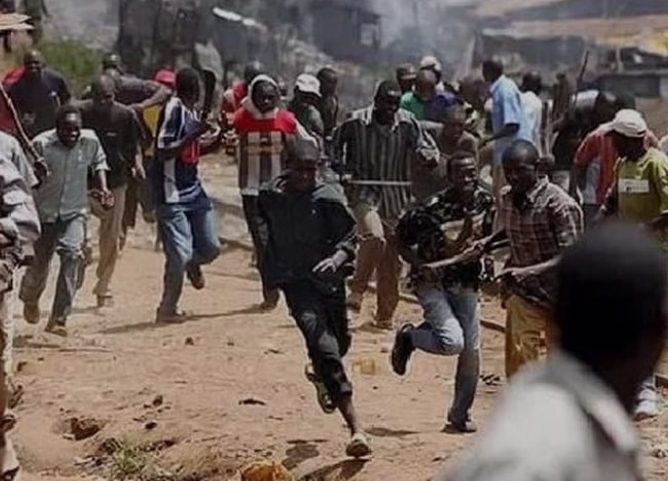
Nigeria’s security crisis involves multiple overlapping conflicts, including jihadist insurgencies, farmer-herder violence, organized banditry, communal clashes, kidnapping networks, separatist unrest, and governance failures that have evolved over more than a decade. While Christian communities have undeniably suffered devastating attacks in many parts of the country, experts, government officials, and independent observers continue to debate whether the violence should be understood primarily through the lens of religious persecution, broader insecurity, or a combination of both.
As Washington increases pressure on Abuja, the consequences extend beyond religious freedom advocacy. The dispute touches questions of national sovereignty, international human rights obligations, security cooperation, counterterrorism strategy, foreign aid, diplomatic relations, and the future direction of one of Africa’s most important bilateral partnerships.
How Nigeria Became a Major Religious Freedom Issue in Washington
Concerns about violence against Christians in Nigeria are not new.
For years, religious freedom organizations, church networks, advocacy groups, and some lawmakers in the United States have argued that attacks carried out by extremist groups and armed militias deserve greater international attention.
Those concerns gained renewed momentum in 2025 when Senator Ted Cruz introduced the Nigeria Religious Freedom Accountability Act of 2025. According to information released by his office, the legislation seeks to hold accountable officials allegedly involved in facilitating or tolerating religious freedom violations and violence against Christians and other religious minorities.
Around the same period, congressional attention expanded through House initiatives focused on Nigeria’s religious freedom record. Congressional records show that H.Res.860 was introduced in the House of Representatives by Representative Chris Smith of New Jersey, commending the redesignation of Nigeria as a Country of Particular Concern and calling attention to alleged violations of religious freedom.
The legislative activity reflects growing concern among some American policymakers that existing diplomatic engagement has failed to adequately address violence affecting religious communities in Nigeria
Supporters of these measures argue that international pressure is necessary because attacks have continued despite years of security operations and government commitments.
Critics, however, contend that congressional narratives sometimes oversimplify a highly complex security environment.
The Significance of the Country of Particular Concern Designation
One of the most consequential developments has been Nigeria’s designation as a Country of Particular Concern (CPC) under U.S. religious freedom policy.
The designation is reserved for countries accused of engaging in or tolerating severe violations of religious freedom. Supporters view it as a powerful diplomatic tool capable of increasing international scrutiny and encouraging reform.
For Nigeria, however, the designation carries both symbolic and practical implications.
Symbolically, it places Africa’s largest economy and most populous nation among countries facing serious religious freedom criticism from Washington.
Practically, it can influence diplomatic engagement, congressional oversight, foreign assistance discussions, and future policy decisions.
The debate surrounding the designation also reveals a broader disagreement about how violence in Nigeria should be understood.
Advocates supporting the designation argue that Christians have been disproportionately targeted in numerous attacks and that the international community has not adequately recognized the scale of the problem.
Nigerian officials, meanwhile, maintain that the country faces a broader terrorism and security crisis affecting citizens across religious lines.
Why the Numbers Remain Contested
One of the most contentious aspects of the international debate involves casualty statistics.
Congressional resolutions, advocacy organizations, faith-based groups, and human rights campaigns have cited various estimates regarding deaths, church destruction, displacement, and abductions involving Christian communities.
However, casualty estimates vary significantly depending on methodology, geographic scope, reporting standards, and source material.
Some organizations focus exclusively on attacks affecting Christian populations.
Others count all victims of insecurity regardless of religion.
Still others examine incidents linked specifically to jihadist organizations such as Boko Haram and the Islamic State West Africa Province (ISWAP).
The result is a landscape in which large figures are frequently cited but often interpreted differently by different stakeholders.
For journalists and policymakers alike, the challenge is distinguishing between verified data, advocacy estimates, government records, and emerging reports.
This is one reason why many analysts caution against treating any single dataset as definitive.
The disagreement over numbers is not merely academic. It shapes diplomatic responses, legislative proposals, sanctions debates, and public perceptions of the crisis itself.
Understanding the Multiple Conflicts Driving Violence
A major weakness in much international reporting is the tendency to treat Nigeria’s security crisis as a single conflict.
In reality, several different forms of violence intersect across various regions.
In the northeast, Boko Haram and ISWAP continue to operate despite years of military campaigns. These groups have targeted Christians, Muslims, traditional rulers, schools, security personnel, and civilian populations.
In parts of the Middle Belt, clashes involving farming communities and pastoralist groups have produced cycles of violence that often contain religious, ethnic, economic, and environmental dimensions simultaneously.
In northwestern states, criminal gangs have developed sophisticated kidnapping and extortion operations largely driven by profit rather than ideology.
Separatist tensions in the southeast create additional security challenges.
These overlapping conflicts complicate efforts to classify every incident within a single explanatory framework.
Many attacks have undeniable religious dimensions.
Others involve disputes over land, grazing routes, political power, local rivalries, or economic survival.
The complexity helps explain why different observers often reach different conclusions regarding the nature of the violence.
The Nigerian Government’s Position
Nigerian authorities have consistently rejected claims that the state sponsors, supports, or tolerates systematic religious persecution.
Government officials argue that terrorism and criminal violence affect multiple communities and that both Christians and Muslims have suffered significant casualties.
Nigerian Foreign Minister Yusuf Tuggar publicly stated that state-backed religious persecution would be incompatible with Nigeria’s constitutional framework and legal system. Government representatives have also argued that some international narratives rely on incomplete or misleading information.
Officials further point to military operations against insurgent groups, arrests of suspected militants, rescue operations, and counterterrorism campaigns as evidence that the government is actively confronting insecurity.
Nevertheless, critics argue that the persistence of attacks raises legitimate questions about state capacity, accountability, and the effectiveness of existing security strategies.
Trump’s Intervention Changes the International Conversation
The issue gained unprecedented visibility when President Donald Trump publicly threatened major action against Nigeria.
According to multiple reports, Trump warned that the United States could halt assistance and even consider military action if the Nigerian government failed to stop killings affecting Christians. The remarks generated immediate international attention and intensified diplomatic tensions.
The comments represented a significant escalation beyond traditional diplomatic criticism.
Historically, U.S. concerns regarding religious freedom have generally been expressed through diplomatic channels, congressional hearings, sanctions mechanisms, aid conditionality, or public statements.
Threatening potential military action against a major African partner introduced an entirely different level of geopolitical sensitivity.
The reaction inside Nigeria was swift.
Government officials rejected the characterization of the crisis and emphasized Nigerian sovereignty. Analysts warned that inflammatory rhetoric could complicate counterterrorism cooperation and strain bilateral relations.
The Constitutional and Governance Questions
Beyond immediate security concerns, the controversy raises deeper constitutional questions.
Nigeria’s constitution guarantees freedom of religion and prohibits discrimination on religious grounds.
Yet debates continue regarding the interaction between constitutional protections, state-level legal systems, religious institutions, and local governance structures.
International critics frequently point to blasphemy laws and certain state-level practices as evidence of broader religious freedom concerns.
Supporters of reform argue that legal protections must be strengthened to ensure equal treatment of all citizens regardless of faith.
Others caution that reforms touching sensitive religious questions require careful management in a country with extraordinary religious and ethnic diversity.
These debates are likely to become more prominent as international scrutiny increases.
Economic and Diplomatic Consequences
The controversy extends beyond religion and security.
Nigeria remains one of Africa’s largest economies, a major energy producer, and a strategic regional actor.
Any deterioration in relations with Washington could affect investment sentiment, diplomatic engagement, security cooperation, and development assistance.
Although no major sanctions regime has yet emerged from the current debate, congressional proposals indicate growing interest among some policymakers in using economic and diplomatic tools to influence Nigerian behavior.
For Nigeria, the challenge involves balancing legitimate concerns about international perception with the need to protect sovereignty and maintain constructive relationships with strategic partners.
The Accountability Gap
Perhaps the most important issue underlying the entire debate is accountability.
Whether violence is interpreted primarily as religious persecution, terrorism, criminality, communal conflict, or a combination of all four, many victims remain without justice.
Communities affected by attacks frequently report concerns about slow investigations, limited prosecutions, inadequate compensation, and insufficient preventive security measures.
This accountability deficit fuels frustration among victims and creates opportunities for competing political narratives.
Without visible accountability, distrust deepens.
Without trust, reconciliation becomes more difficult.
Without reconciliation, cycles of violence become harder to break.
These realities may ultimately matter more than international political disputes.
Future Scenarios: What Happens Next?
The best-case scenario would involve stronger security coordination, more effective protection of vulnerable communities, improved accountability mechanisms, and constructive diplomatic engagement between Abuja and Washington. In this scenario, international pressure could contribute to meaningful reforms while preserving bilateral cooperation.
The most likely scenario is continued diplomatic tension accompanied by ongoing congressional scrutiny. Legislative proposals may advance, hearings could increase, and religious freedom concerns will likely remain a recurring issue in U.S.-Nigeria relations. At the same time, both governments have strong incentives to preserve broader security and economic cooperation.
The worst-case scenario would involve escalating diplomatic confrontation, punitive measures, reduced security cooperation, and further deterioration of trust between the two countries. Such an outcome could complicate counterterrorism efforts and create additional uncertainty in an already fragile security environment.
Several strategic uncertainties remain unresolved. Will Congress pursue stronger measures? Will Nigeria implement reforms capable of reducing international criticism? Can security conditions improve sufficiently to alter the debate? And perhaps most importantly, can policymakers develop responses that recognize both the reality of religious freedom concerns and the broader complexity of Nigeria’s security crisis?
Why This Debate Matters Beyond Nigeria
The dispute is ultimately about more than one country.
It reflects a growing international debate over how governments, international institutions, and human rights advocates should respond when religion, insecurity, terrorism, governance failures, and identity politics intersect.
The stakes are significant.
For affected communities, the issue concerns safety, justice, and survival.
For Nigeria, it concerns sovereignty, national unity, constitutional governance, and international reputation.
For the United States, it concerns the credibility of religious freedom advocacy and the limits of foreign policy pressure.
As congressional scrutiny intensifies and diplomatic tensions continue, the central challenge remains unchanged: how to protect vulnerable populations, uphold fundamental rights, and address the root causes of violence in a country whose security challenges resist simple explanations.
Author Bio
Smart Chuks is a political affairs and investigative journalist at SaharaNews247 covering governance, elections, security, public policy, and institutional accountability across Nigeria.