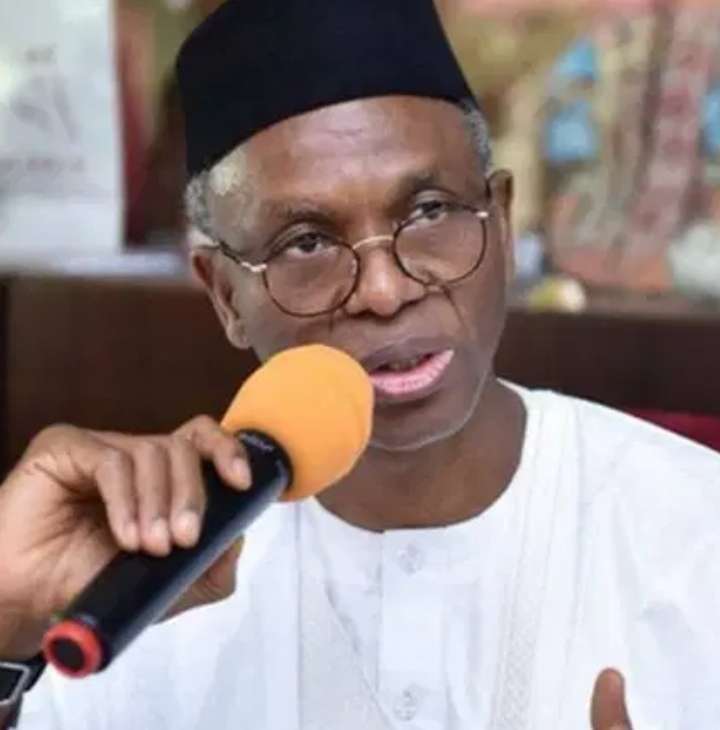
Kaduna, Nigeria — April 1, 2026 — Former Kaduna State Governor Nasir Ahmad El‑Rufai was again seen at the Federal High Court in Kaduna on Wednesday morning, marking a pivotal moment in a high‑profile legal battle that has captivated national attention. The proceedings, centred on El‑Rufai’s bid for bail in a major corruption case, embody not just the personal legal fate of a once‑prominent political figure, but also broader questions about the rule of law, accountability, and Nigeria’s anti‑graft enforcement landscape.
In an atmosphere marked by heightened security and intense media focus, El‑Rufai arrived shortly after 9:00 a.m. at the court complex. Operatives from the Independent Corrupt Practices and Other Related Offences Commission (ICPC) accompanied him amid tight cordons of security personnel and officials controlling access. The court appearance follows a sequence of adjournments, strategic legal filings, and procedural complexities that have made this case one of the most closely watched in recent memory, especially amid Nigeria’s ongoing concerns about governance and accountability.
An Adjourned Hearing and Rising Stakes
The immediate focus on Wednesday was the continuation of bail proceedings, which had been adjourned to April 1 after a Tuesday session in which the Federal High Court deferred ruling on the application. The application, filed by El‑Rufai’s legal team, is central to whether he will remain in custody as the trial progresses. The former governor’s counsel has argued zealously for his release on bail, invoking constitutional rights and the need for adequate preparation for defence; the prosecution has opposed on the grounds that the gravity of the charges and ongoing ICPC investigations justify continued detention.
These developments come on the heels of earlier adjournments, including a March 31 postponement and previous procedural delays that have kept El‑Rufai in custody under ICPC control pending further court direction. Legal analysts note that these repeated calendar shifts and tactical filings reflect both the complexity of the matter and the careful legal positioning by defence and prosecution alike.
The Charges Unearthed
El‑Rufai’s current courtroom appearances stem from a suite of charges filed by the ICPC, set out in suit number FHC/KD/73/2026. The anti‑graft agency accuses the former governor of conversion and unlawful possession of public property and money laundering among other during his tenure as governor from 2015 to 2023. These counts, though denied by El‑Rufai, form the backbone of a prosecution strategy that represents one of the most visible assertions of anti‑corruption enforcement in recent Nigerian governance history.
The prosecution’s narrative, as outlined in court filings and media reports, suggests alleged financial improprieties, including questionable transactions involving El‑Rufai’s accounts and entanglements with businesses linked to his administration. One parallel case involving Amadu Sule, a business associate arraigned on charges of alleged money laundering in excess of ₦311 billion, has further underscored the expansive reach of ICPC’s investigation, although that matter remains distinct and does not directly implicate El‑Rufai in the specific charges before the Kaduna Federal High Court.
Legal Arguments and Procedural Tactics
The defence team, led by seasoned legal counsel including Senior Advocate Ukpon Akpan (SAN), has aggressively pursued bail, filing legal briefs asserting that El‑Rufai’s continued detention unduly hampers his constitutional rights and impedes adequate preparation for trial. The team has also raised procedural concerns over aspects of the arraignment. Meanwhile, the prosecution has countered that granting bail amidst active investigations and potential interference with evidence or witnesses is inappropriate.
This legal tug‑of‑war reflects deep jurisprudential questions about bail standards in high‑profile cases involving allegations of public corruption — questions that go to the heart of criminal procedure and constitutional guarantees in Nigeria. Judges must navigate between protecting individual rights and upholding the integrity of the judicial process, particularly when public confidence in anti‑graft enforcement is at stake.
Security, Public Engagement, and Press Access
Wednesday’s proceedings saw extensive security deployment at the Federal High Court, with law enforcement agencies maintaining cordons and regulating access to the premises. The visible security posture once again highlighted the sensitive nature of the case and the potential for public tension or demonstrations. This reflects a broader insecurity pattern across Nigeria.
In previous hearings, journalists were reportedly denied access to certain court areas, a development that sparked debate about transparency and open justice. Media access, civil society observers have argued, is foundational to public scrutiny in matters of significant public interest, especially when prominent public figures face charges of corruption.
National Reaction and Civil Society Commentary
Public discourse around El‑Rufai’s legal travails has been expansive. Supporters of robust anti‑corruption enforcement have welcomed the ICPC’s action as a necessary assertion of accountability, emphasizing that no individual, regardless of status, should be perceived as above the law. Advocacy organisations such as the Democracy Watch Initiative have publicly lauded the ICPC’s commitment to pursuing the case with diligence.
Conversely, critics have raised concerns over perceived selective application of justice, legal delays, and broader political undercurrents influencing high‑profile prosecutions. Among these criticisms are assertions that legal tools like bail adjournments, extended detention, and procedural manoeuvres could be exploited to prolong or politicise legal outcomes. These debates reflect broader national unease with governance, institutional impartiality, and the public’s trust in state agencies.
Broader Context: Governance, Anti‑Graft Action, and Institutional Confidence
The El‑Rufai bail hearing is more than a single court event; it unfolds within a larger narrative about Nigeria’s struggle to fortify democratic institutions and enforce laws against corruption at all levels of government. Over the past decade, anti‑graft agencies like the ICPC and the Economic and Financial Crimes Commission (EFCC) have become central to national efforts to investigate alleged wrongdoing by public officials — often with mixed results in terms of convictions and public perception.
El‑Rufai, a figure once celebrated by segments of the political class for his administrative reforms in Kaduna, now finds himself on the opposite side of that enforcement landscape. His case thus embodies tensions between political legacies, accountability, and evolving expectations of governance in Nigeria. For many observers, the manner in which this case is adjudicated — from bail rulings to trial management — will have lasting implications for how anti‑corruption efforts are perceived and pursued in the years ahead.
What Lies Ahead
As the Federal High Court resumes the bail hearing, attention will now shift to whether the judge will grant terms that allow El‑Rufai temporary freedom, or insist on continued detention while the substantive charges are resolved over the coming months. The outcome will be dissected by legal scholars, political commentators, and ordinary Nigerians alike, not simply for its immediate impact on El‑Rufai’s liberty, but for what it signals about fairness, justice, and institutional strength. Similar high-profile investigations have shaped public perception of justice in Nigeria.
This case is poised to continue dominating legal and political discourse, and SaharaNews247 remains committed to providing comprehensive, authoritative coverage as events unfold — guided by legal expertise, verified fact and contextual analysis.
About the Author
Smart Chuks is a senior investigative journalist and editorial lead at SaharaNews247.com, specialising in governance, accountability and institutional reform. His reporting spans Nigeria’s legal and political landscape, with a focus on unpacking complex judicial processes and their implications for democracy and public trust.