In Nigerian politics, silence is rarely accidental. It is not simply the absence of speech, nor a failure of communication. More often, it is a calculated political act, deployed with as much intention as a televised address or a carefully worded press statement. Across successive administrations, Nigerian presidents have repeatedly used non-response as a strategic tool, allowing crises to fester, controversies to simmer, and public outrage to rise without offering immediate explanation or reassurance. This pattern has shaped public trust, redefined the boundaries of accountability, and altered how power is exercised in Africa’s largest democracy.
Silence, in this context, is not passive. It is an instrument of control, ambiguity, and political insulation. By refusing to speak, delaying responses, or delegating communication to aides and institutions, presidents often create a buffer between themselves and public pressure. The result is a political culture where non-communication becomes a form of governance, and where absence of explanation is itself a message.
Understanding the politics of silence requires examining how this strategy has evolved across different presidencies, what purposes it serves, and how it affects democratic accountability in Nigeria’s fragile political environment.
Silence as Political Power in Nigeria’s Democratic System
In classical political theory, silence has long been understood as a form of power. Leaders who speak less often command attention when they do speak. Silence creates mystique, authority, and distance. In authoritarian systems, it also signals that leaders are beyond public questioning.
Nigeria operates formally as a constitutional democracy, but its political culture is deeply shaped by decades of military rule. Between 1966 and 1999, most Nigerian leaders were military officers whose authority did not depend on public consent or continuous explanation. Orders were given, not debated. Accountability was limited, and dissent was often suppressed.
This legacy did not disappear with the return to civilian rule in 1999. Instead, it evolved into subtler forms. Elected presidents inherited institutions and leadership cultures that treated silence as strength and public explanation as optional.
In this environment, silence functions in several strategic ways. It allows leaders to avoid legal liability. It protects them from being trapped in contradictory statements. It buys time for behind-the-scenes negotiations. It lets political storms exhaust themselves. And it shifts the burden of interpretation onto citizens, journalists, and opposition figures.
Rather than clarifying reality, silence creates a fog in which multiple narratives compete, none officially endorsed, all politically convenient.
Obasanjo and the Selective Use of Presidential Voice
Under , silence was not a dominant personal trait, but it was strategically deployed. Obasanjo was often outspoken, confrontational, and willing to engage critics directly. Yet in moments of serious political controversy, his administration frequently relied on institutional silence.
During the impeachment crises of state governors, constitutional disputes with the National Assembly, and allegations of electoral manipulation, the presidency often avoided detailed public explanations. Instead, statements were left to spokesmen, party officials, or security agencies.
Obasanjo rarely provided comprehensive justifications for decisions such as the controversial removal of governors, the use of federal power in state politics, or persistent accusations surrounding the 2003 and 2007 general elections. Silence did not mean inactivity. On the contrary, it was accompanied by intense political manoeuvring behind closed doors.
In Obasanjo’s case, silence functioned as insulation. It shielded the presidency from direct political cost while allowing it to exercise decisive influence. When controversies subsided, the administration moved on without ever offering full public accountability.
Yar’Adua and the Silence That Created a Constitutional Crisis
The most dramatic example of silence in Nigeria’s presidential history occurred under . His prolonged illness and eventual disappearance from public life created a constitutional crisis rooted almost entirely in non-communication.
For months, Nigerians did not know the true state of the president’s health. He was absent from the country, reportedly receiving medical treatment abroad, yet no official medical bulletin was issued. The presidency provided no clear timeline, no transparent briefing, and no formal handover of power.
This silence paralysed governance. Cabinet meetings stalled. Critical national decisions were delayed. Power struggles emerged within the executive branch. The vice president operated in a constitutional grey zone, unable to formally assume authority without written delegation.
The crisis only ended when the National Assembly invoked the “doctrine of necessity” to transfer power, effectively bypassing constitutional ambiguity created by presidential silence.
Yar’Adua’s case demonstrates how silence can destabilise the state itself. It was not a strategic communication tool but an institutional failure of transparency. Yet even here, silence served political interests. It allowed powerful figures within the ruling elite to negotiate succession privately while keeping the public in the dark.
The absence of official communication became a mechanism for elite control over a national emergency.
Goodluck Jonathan and the Silence of Hesitation
represented a different model of silence. His non-response was not rooted in authoritarian instinct or secrecy, but in hesitation, political caution, and indecision.
During moments of national crisis, Jonathan was often criticised for delayed or muted responses. The most notable example was the 2014 abduction of schoolgirls in Chibok by Boko Haram. For weeks after the incident, the presidency offered no clear public address, no immediate national broadcast, and no transparent communication about government efforts.
The silence triggered outrage, both domestically and internationally. Citizens accused the government of indifference, incompetence, and emotional detachment. Protest movements emerged, filling the vacuum left by presidential non-communication.
Jonathan’s silence reflected a leadership style that prioritised elite consensus over public engagement. Decisions were discussed privately, often slowly, and communicated cautiously, sometimes too late.
In this case, silence did not protect power. It weakened it. The presidency lost control of the narrative, allowing social media, foreign governments, and civil society to define the crisis.
Jonathan’s experience shows that silence becomes politically costly when it is perceived as lack of empathy, urgency, or moral authority.
Buhari and the Institutionalisation of Presidential Silence
No Nigerian president embodied political silence more consistently than . His leadership style elevated non-response into a defining feature of governance.
Buhari rarely gave spontaneous press conferences. He avoided unscripted interviews. He did not regularly address the nation during crises. Most communication was handled by spokesmen, ministers, or official statements issued hours or days after major events.
During national controversies, from herdsmen-farmer violence to mass protests against police brutality, the presidency often remained silent for extended periods. When statements eventually emerged, they were formal, legalistic, and emotionally detached.
This silence was not accidental. Buhari’s background as a former military ruler shaped a leadership philosophy rooted in discipline, distance, and hierarchical authority. He believed that the office of the presidency should not be drawn into emotional public debate.
Silence served several strategic purposes. It reduced the risk of misstatements. It limited political exposure. It forced critics to exhaust themselves in speculation. And it reinforced an image of the presidency as aloof, insulated, and above daily political turbulence.
Yet the cost was significant. Public trust declined. Citizens felt ignored. Social media became the primary arena for political discourse, unmediated by official voices. Rumours, conspiracy theories, and misinformation thrived in the absence of authoritative presidential communication.
Under Buhari, silence became a governing method, not just a personal trait.
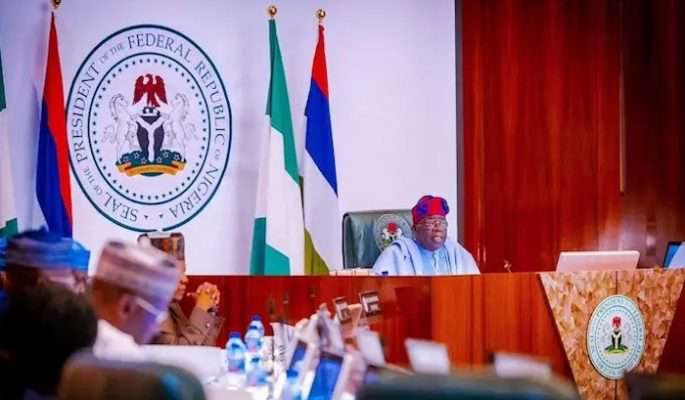
Tinubu and the Strategy of Ambiguity
Under , silence has taken a more sophisticated form: strategic ambiguity. Unlike Buhari, Tinubu is politically verbose, media-savvy, and deeply experienced in elite negotiation. Yet he has selectively used silence during critical moments.
Following major economic reforms, subsidy removal, currency adjustments, and controversial appointments, the presidency often delayed direct explanation, allowing ministers, party officials, and policy experts to speak first. The president observed public reaction before offering personal intervention.
This approach allows Tinubu to test political waters. If backlash is severe, policies can be adjusted without personal embarrassment. If acceptance grows, he can later claim ownership and leadership.
Silence here functions as political reconnaissance. It gathers information, measures resistance, and maps public sentiment before committing presidential authority.
Unlike Buhari’s ideological silence, Tinubu’s silence is tactical. It reflects a politician skilled in timing, perception management, and elite bargaining.
Why Silence Works as Political Strategy in Nigeria
Silence works in Nigerian politics because of structural and cultural conditions.
First is institutional weakness. Nigerian institutions often lack enforcement power. Courts are slow. Parliaments are divided. Regulatory bodies are politicised. In such an environment, silence rarely produces immediate consequences.
Second is elite dominance. Politics is driven by small networks of powerful actors. Decisions are made privately, and public communication is often symbolic rather than substantive. Silence allows elites to negotiate without scrutiny.
Third is public fatigue. Nigerians are accustomed to delayed explanations, broken promises, and official ambiguity. Over time, expectations of transparency have been lowered, allowing silence to become normalised.
Fourth is information asymmetry. The presidency controls access to intelligence, financial data, and national security information. By remaining silent, it monopolises truth while citizens speculate in the dark.
Silence, therefore, is not just individual leadership style. It is embedded in the political system itself.
The Democratic Cost of Presidential Silence
While silence may serve short-term political interests, its long-term consequences are corrosive.
Democracy depends on communication. Citizens cannot hold leaders accountable if they do not know what decisions are being made or why. Silence undermines informed consent, weakens civic participation, and erodes institutional legitimacy.
When presidents do not speak, other voices fill the vacuum. Rumours replace facts. Ethnic narratives replace policy explanations. Misinformation spreads faster than official truth.
Silence also damages crisis management. In moments of national trauma, citizens expect emotional reassurance as much as technical response. A silent presidency appears distant, uncaring, and disconnected from public suffering.
Over time, silence creates a political culture where power operates without explanation, and where leaders are judged not by transparency but by control.
This transforms democracy into ritual rather than substance. Elections occur, institutions exist, but meaningful communication between ruler and ruled becomes optional.
Silence as a Mirror of Nigerian Power
Ultimately, the politics of silence reflects deeper realities about Nigerian governance. It reveals a system where power is centralised, accountability is negotiable, and public communication is treated as political risk rather than democratic duty.
Presidents do not remain silent because they lack something to say. They remain silent because speaking carries cost, exposure, and vulnerability.
From Obasanjo’s selective engagement to Yar’Adua’s constitutional vacuum, from Jonathan’s hesitation to Buhari’s institutional distance, and now Tinubu’s tactical ambiguity, silence has evolved into a governing language of its own.
It is the language of elite politics, whispered in private rooms and echoed through official statements that say little while appearing to say something.
In Nigerian politics, silence does not mean nothing is happening. It usually means everything is happening where the public cannot see it.
Author Bio
Smart Chuks is a Nigerian investigative journalist and political analyst, and the editorial lead at SaharaNews247. He specialises in governance, power structures, political accountability, and democratic institutions in Africa. His work focuses on uncovering how political systems operate beyond official narratives and how elite decision-making shapes public life.