Abuja — In a decisive move that has stirred debate among students, parents, educators, and policy watchers nationwide, the Joint Admissions and Matriculation Board (JAMB) has announced that the registration period for the 2026 Unified Tertiary Matriculation Examination (UTME) will end firmly on 28 February 2026, with no extensions beyond that date. This timetable — including the midnight closure of e-PIN sales on 26 February 2026 — marks a significant moment in Nigeria’s admissions landscape, representing a shift toward stricter deadlines and more regimented planning in the country’s examination and university admission ecosystem.
For many Nigerian students, UTME registration is not merely a procedural hurdle — it is the gateway to tertiary education, the launchpad for careers, and a milestone that shapes millions of academic futures each year. Understanding what this deadline means, how it aligns with broader trends, and how it connects to ongoing issues in Nigeria’s education sector is vital for candidates and the public alike.
In this editorial, we examine the official announcement, place it within the broader education context, integrate key internal SaharaNews247 education category stories, and assess the implications for equity, access, and system reform.
Confirming the Facts: JAMB’s Official Position
JAMB has confirmed through official communiqués and stakeholder statements that the deadline for purchasing UTME registration e-PINs is midnight on 26 February 2026, and that complete registration must be concluded by 28 February 2026. The Board has emphasised that no extension will be granted under any circumstances, a stance that represents a departure from prior years when registration windows were sometimes prolonged due to public pressure, technical hitches, or administrative delays.
This firmness signals an institutional recalibration within JAMB — one that prioritises predictability, coordination with other national examinations, and improved planning for tertiary institutions. The Board’s leadership argues that open-ended registration timelines have historically posed logistical challenges, strained Computer-Based Test (CBT) centres, and disrupted the broader national examination calendar.
As of mid-February, over 1.5 million candidates had registered for the 2026 UTME, a figure that aligns with typical annual participation rates.
The Board’s position makes clear that the closure is final — and that candidates who fail to complete both the e-PIN purchase and the CBT registration process will forfeit the opportunity to sit for the 2026 UTME.
The Stakes for Students: Responsibility Meets Reality
The 2026 UTME deadline places a new premium on candidate responsibility, while also exposing persistent systemic inequalities in access to education.
For many students, early registration offers clear benefits. It reduces the last-minute rush at CBT centres, mitigates the risk of technical failures, and provides candidates with more time to verify and correct their registration details. This, in turn, supports better preparation and less stress as the examination date approaches.
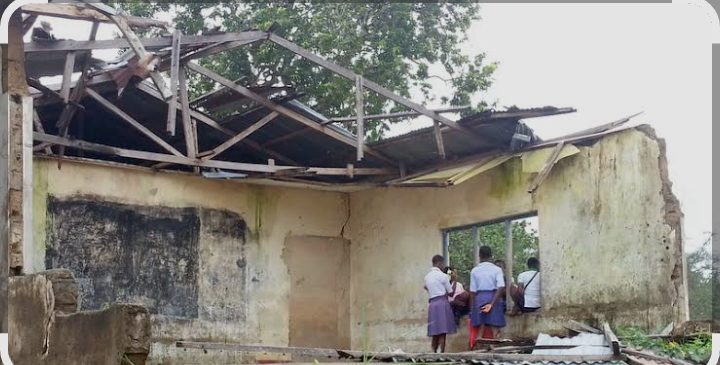
However, the reality on the ground in Nigeria remains uneven. Many candidates face genuine barriers, not out of negligence but because of structural challenges. Limited access to accredited CBT centres in rural areas, unreliable internet connectivity, and financial constraints around registration fees and travel remain significant hurdles. In this context, the imposition of an inflexible deadline may disproportionately disadvantage students from underserved communities.
This tension between personal responsibility and systemic constraints echoes broader debates within the education sector. For example, reports such as “BREAKING: Federal Colleges of Education to now award Bachelor’s degrees” highlight ongoing reforms intended to expand pathways to higher education — reforms that carry deep implications for teacher preparation and institutional capacity but may not directly address access barriers for UTME candidates.
Broader Education Landscape: Pressure on Examination Bodies and Applicants
The 2026 UTME issue also intersects with broader concerns about Nigeria’s examination culture and the performance of students in national assessments. More than once, debates about the quality of UTME outcomes have spilled into public discourse. A story published on SaharaNews247 — “UTME Failure: Your Tears Will Make Sense If You Resign — Atiku’s Aide Fires Back at JAMB Registrar Oloyede” — illustrates how performance outcomes, public perceptions, and accountability narratives intertwine in the education ecosystem.
That report documented sharp criticism of examination administration amid high failure rates, sparking questions about preparedness, access to quality instruction, and the adequacy of support systems for students — factors that directly influence how candidates approach the UTME registration process and their subsequent performance.
“These pressures are not isolated events; they are symptomatic of a broader challenge within Nigeria’s education sector — one where performance expectations, institutional practices, and public confidence intersect and sometimes clash, as documented in UTME Failure: Your Tears Will Make Sense If You Resign, highlighting public backlash and calls for reform.”
Institutional Reform: A New Admissions Culture?
JAMB’s adamant stance on the 2026 registration deadline must be understood within the context of the Board’s evolving reform agenda. Over recent years, JAMB has embraced technology, adopted biometric verification, and pushed toward higher levels of data integrity and process standardisation. In doing so, it aims to reduce incidences of impersonation, fraud, and logistical breakdowns.
Yet, technological transformations demand stability and predictability — two elements that rigid deadlines are intended to enforce. Frequent deadline extensions in previous cycles strained data systems, complicated the Central Admissions Processing System (CAPS), and made it difficult for universities to plan admissions effectively.
For the nation’s tertiary institutions, a fixed registration timeline provides clarity and allows for earlier admission planning. Universities and polytechnics can begin internal admissions processes, departmental cut-off analyses, and academic calendar preparations without the uncertainty of last-minute data shifts.
However, such institutional discipline must be balanced with equitable access — a balance that the Nigerian education system has struggled to achieve for years.
Education Policy and Public Misinformation
Another dimension of the education sector’s current challenges is public confusion around policy and administrative roles. In late 2025, a viral claim circulated online asserting that JAMB was no longer a prerequisite for tertiary admissions — a claim that the Federal Ministry of Education publicly debunked. Official statements reaffirmed that JAMB remains the sole statutory body responsible for coordinating entrance examinations and admissions into Nigerian universities, polytechnics, and colleges of education.
This clarification matters because misinformation about admissions processes can mislead candidates, distort registration behaviour, and undermine confidence in institutional procedures. Public confusion coupled with rigid deadlines creates a volatile environment in which candidates may make critical decisions based on inaccurate assumptions.
Parents and Schools: Adapting to a New Norm
The fixed 2026 UTME deadline is reshaping expectations within family units and secondary schools. In prior cycles, delays and extensions often led to a lax attitude toward early registration planning. Schools frequently incorporated UTME registration at the end of academic sessions or postponed it until mock examinations concluded.
That approach is rapidly becoming unsustainable. Schools are now under pressure to integrate UTME timelines into their academic calendars, educate students earlier about registration requirements, and coordinate closely with CBT centres well in advance. For parents, financial planning — covering registration fees, transportation to CBT centres, and preparatory materials — now needs to happen earlier in the academic year.
This shift in behaviours reflects a broader cultural recalibration in how stakeholders approach the pathway to higher education — one that emphasises planning, preparation, and timeliness.
Equity and Access: The Unfinished Work
Despite institutional efforts to streamline processes and enforce deadlines, the core challenge remains Nigeria’s longstanding inequities in educational access. Candidates from urban and well-resourced backgrounds are more likely to navigate registration requirements early, secure CBT centre appointments, and access preparatory resources.
Those from rural areas, economically disadvantaged families, and communities with limited digital infrastructure face far greater obstacles — obstacles that a hard deadline does not resolve.
If Nigeria’s education leaders intend to make rigid timelines a long-term feature of the UTME process, complementary support mechanisms are essential. These should include targeted outreach in underserved areas, subsidised registration support, expanded CBT centre access, and investment in digital infrastructures.
Absent such measures, strict deadlines risk reinforcing inequality rather than promoting fairness.
Conclusion: A Defining Moment in Nigeria’s Education System
The 2026 UTME registration deadline represents a significant inflection point for Nigeria’s examination and admissions culture. JAMB’s firm stance reflects growing institutional maturity and a desire for process integrity. For universities and policy planners, a fixed timeline offers clarity and improved planning capabilities.
Yet for students, particularly those in vulnerable communities, the hard deadline highlights persistent inequities in access and infrastructure. The deadline is not merely a procedural detail — it is a barometer of how well the system balances discipline with inclusion.
As Nigeria continues to reform its education sector, the question remains: can the pursuit of administrative efficiency be paired with robust support for students’ diverse realities?
This editorial underscores that predictable timelines and equitable access must go hand in hand. Without both, the aspiration of a fair and inclusive Nigerian education system will remain partially unfulfilled.
About the Author:
Smart Chuks is a senior investigative journalist and editorial strategist at SaharaNews247. With a decade of experience covering education policy, national examinations, and youth issues in Nigeria, he brings comprehensive analysis and verified reporting to complex topics shaping the nation’s academic landscape. Contact him at editorial@saharanews247.com for commentary, insights, or follow-up reporting.