Originally published May 11, 2026 | Substantially updated and editorially upgraded August 20, 2026
Nigeria is approaching the 2027 general election under a security burden that has become more complicated than the insurgency and communal conflicts that once dominated national security discussions. Banditry, mass kidnapping, rural attacks, separatist violence, terrorism, communal clashes and criminal networks now overlap across different parts of the country, while the economic consequences of insecurity are increasingly being felt in food prices, transportation, investment and household livelihoods.
The central question is no longer simply how many attacks Nigeria records in a given month. It is whether the Nigerian state can demonstrate enough capacity to protect communities, restore access to farmland and major roads, disrupt criminal economies and rebuild public confidence before voters return to the polls in 2027.
Recent security assessments underline the scale of the challenge. A Nextier Nigeria Security and Conflict Outlook cited by Nigerian media recorded 4,654 deaths and 3,141 abductions across the country in 2025, with banditry identified as the deadliest driver of violence during the period. Those figures illustrate why insecurity has become an increasingly important issue in discussions about Nigeria’s political and economic future.
The figures also require caution. Conflict statistics can vary according to methodology, reporting coverage and how incidents are classified. They should therefore be used as indicators of the scale and pattern of violence rather than treated as a single definitive national count.
What is less disputed is the broader consequence: insecurity is disrupting ordinary economic activity, undermining confidence in public institutions and creating political pressure that the government will have to confront well before the 2027 presidential and National Assembly elections.
Why Nigeria’s Security Crisis Has Become a 2027 Election Issue
Security has historically been one of the most politically sensitive issues in Nigeria because the responsibility for protecting lives and property rests fundamentally with the state.
The constitution, security institutions and successive administrations have all placed national security at the centre of government responsibility. Yet the nature of the threat has changed considerably over the years.
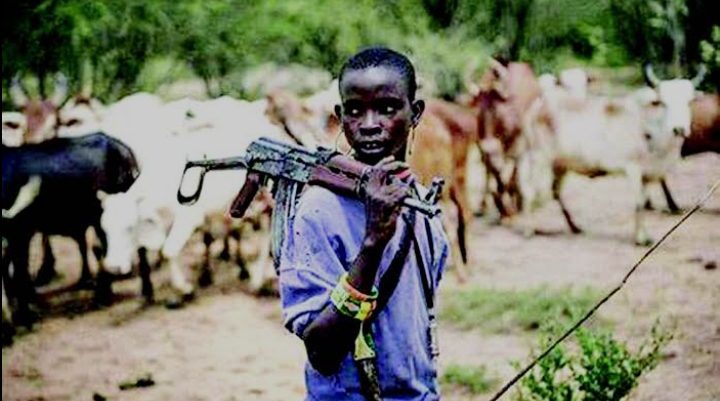
The North-East remains affected by the long-running insurgency involving Boko Haram and Islamic State West Africa Province. Parts of the North-West have experienced persistent banditry and kidnapping. The Middle Belt continues to face communal and farmer-herder conflicts alongside criminal violence. In the South-East, separatist tensions and attacks attributed by authorities to armed groups remain security concerns.
These crises do not operate in complete isolation.
Criminal groups can exploit porous borders, weak rural policing, difficult terrain, limited intelligence coverage and vulnerable communities. Kidnapping networks can move across state boundaries. Illegal weapons can circulate between criminal organisations. Local grievances can be exploited by armed actors. Economic hardship can make vulnerable communities easier targets for recruitment, extortion or coercion.
The consequence is a security environment that increasingly demands coordinated national and local responses rather than isolated military operations.
That creates a political problem for the federal government.
By the time Nigerians vote in 2027, voters are unlikely to assess security performance solely through official statistics. Many will judge the situation through much more immediate experiences: whether they can travel safely, whether farmers can reach their fields, whether children can attend school without fear, whether businesses can operate after dark and whether security agencies respond quickly when communities are attacked.
The political importance of insecurity therefore lies partly in the difference between official claims of progress and citizens’ everyday experiences.
Banditry Has Developed Into a Criminal Economy
Banditry in north-western Nigeria has evolved beyond the image of isolated groups carrying out occasional attacks.
In several affected areas, armed groups have developed revenue systems based on ransom payments, cattle rustling, extortion, illegal levies and control over access to land and local economic activity.
This creates a form of criminal economy in which violence becomes financially sustainable.
When farmers are forced to pay money before entering their fields, when communities are compelled to provide livestock or other resources, or when families are forced to raise ransom payments after abductions, armed groups acquire financial resources that can be used to purchase weapons, recruit members and sustain operations.
That makes conventional policing more difficult.
The state is not simply confronting armed men committing individual offences. It is confronting networks that can generate revenue, obtain intelligence from local environments and exploit areas where government presence is weak.
The economic consequences are substantial.
Farmers who cannot safely cultivate their land produce less. Traders face higher transportation risks. Food moves through more expensive and insecure supply chains. Families displaced from rural areas seek shelter elsewhere. Local government institutions struggle to provide basic services in communities affected by repeated violence.
In this environment, insecurity becomes self-reinforcing.
Reduced agricultural activity contributes to supply shortages. Supply shortages can contribute to higher food prices. Higher living costs increase household pressure. Economic vulnerability creates new opportunities for criminal exploitation. The resulting insecurity then further damages economic activity.
Breaking that cycle will require more than military victories against individual armed groups.
Kidnapping Has Become a National Security and Economic Problem
Few crimes have transformed perceptions of personal security in Nigeria as dramatically as kidnapping.
The victims now cut across social and economic categories. Students, travellers, farmers, business owners, religious leaders, health workers and entire communities have been targeted in different incidents across the country.
The consequences extend beyond the people directly abducted.
Families frequently spend significant amounts of money attempting to secure the release of relatives. Businesses may increase spending on security. Transport operators face higher operating risks. Travellers alter routes or avoid journeys altogether. Parents become more reluctant to send children to schools considered vulnerable.
The cumulative effect is difficult to measure because fear itself has economic consequences.
A road does not have to experience an attack every day to become economically damaging. If passengers believe a route is dangerous, demand can decline. If farmers fear travelling to distant farmland, production can fall. If investors perceive a region as persistently insecure, investment decisions may change.
This is why kidnapping should not be treated merely as a criminal-justice problem.
It is also a development problem.
It affects mobility, education, agriculture, employment, investment and the relationship between citizens and the state.
For the government, that makes the fight against kidnapping particularly important ahead of 2027.
Rural Insecurity Is Becoming a Food Security Problem
Nigeria’s food-security challenge cannot be separated from insecurity in agricultural communities.
Where violence prevents farmers from cultivating land, the consequences eventually move from villages to urban markets.
Agricultural production depends not only on the availability of land but also on the ability of farmers to reach farms, obtain inputs, harvest crops and transport produce to markets.
Persistent insecurity can disrupt every stage of that process.
A farmer who abandons farmland because armed groups operate nearby loses income. A community that experiences displacement loses productive capacity. A trader who faces increased transportation risk may pass additional costs to consumers.
The final result can be higher prices for households already struggling with the cost of living.
This creates an especially difficult policy challenge for the federal government.
Economic reforms can attempt to improve agricultural productivity, infrastructure and investment, but insecurity can undermine those gains if farmers cannot safely operate.
Security policy therefore increasingly overlaps with economic policy.
Protecting farming communities is not only about preventing deaths and abductions. It is also about protecting national food production and reducing the economic consequences of rural displacement.
The Economic Cost of Insecurity Extends Beyond the Battlefield
Nigeria’s security crisis is frequently discussed in terms of casualties and attacks, but the economic costs are equally important.
Companies operating in insecure areas may face higher insurance, transportation and security expenses. Small businesses may shorten operating hours. Farmers may reduce cultivation. Construction projects can be delayed. Workers may avoid certain areas.
For households, insecurity creates additional expenses that are rarely captured in official economic statistics.
A family may spend money on private security, transport alternatives or emergency relocation. A business may employ additional guards. A farmer may pay informal security costs simply to access land.
These expenses reduce money available for productive activity.
At the national level, prolonged insecurity can therefore contribute to weaker productivity and investor uncertainty while increasing pressure on government resources.
The government must simultaneously fund security operations, humanitarian assistance, infrastructure reconstruction and other public services.
That is one reason Nigeria’s security crisis cannot be solved independently of the country’s wider economic challenges.
Tinubu’s Security Record Will Be Tested Before 2027
President Bola Ahmed Tinubu inherited security problems that had developed across several administrations and regions.
The government’s argument that the crisis predates the current administration is historically relevant. But it does not eliminate the political responsibility of the government currently in office.
Every administration is ultimately judged by what it does with the circumstances it inherits.
The central political question before 2027 will therefore be whether Nigerians believe the security situation is improving.
That perception will depend on more than official briefings.
If attacks decline significantly, major roads become safer, farming communities regain access to their land and kidnapping networks are disrupted, the government can point to measurable progress.
If violence remains persistent despite security spending and repeated operational announcements, opposition parties will have an obvious political argument: that the government has failed to translate resources and promises into sufficient improvements in everyday security.
The distinction between absolute security and measurable improvement is therefore important.
No government can eliminate every criminal attack in a country as large and geographically diverse as Nigeria.
But citizens can reasonably expect the state to demonstrate that its capacity to prevent, respond to and investigate serious crimes is improving.
Intelligence May Matter More Than Troop Numbers
One of the most difficult questions facing Nigeria’s security architecture is whether increasing personnel and military deployments can solve a problem that increasingly depends on intelligence.
Armed groups often exploit difficult terrain, local knowledge and mobility.
Security forces may arrive after an attack has occurred, only for perpetrators to disappear into forests or surrounding communities.
This creates an intelligence problem.
Effective prevention requires information about planned attacks, movements of armed groups, weapons supply routes, financiers, communication networks and local collaborators.
It also requires coordination between agencies.
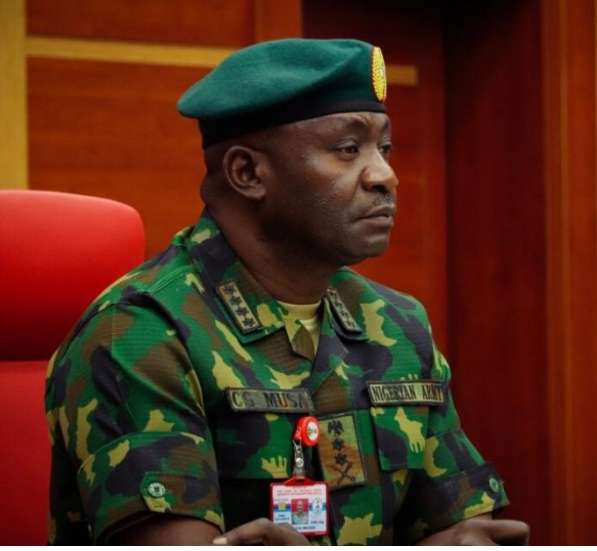
The Nigerian Army, Nigerian Police Force, Department of State Services, Nigeria Security and Civil Defence Corps and other relevant institutions operate with different mandates, structures and sources of information.
The ability to turn those separate streams of information into actionable intelligence is therefore critical.
Better coordination could allow security agencies to identify threats earlier, deploy resources more efficiently and disrupt criminal operations before attacks occur.
Technology can support that process, but technology alone is not enough.
Surveillance systems, drones, digital mapping, forensic tools and modern communications can improve operations only when institutions have trained personnel, reliable intelligence procedures and clear accountability mechanisms.
Community Trust Remains a Critical Security Asset
Nigeria’s security agencies cannot be present in every village, road and farming community at all times.
That makes cooperation with local populations indispensable.
Residents often know unusual movements, unfamiliar individuals and changes in local criminal activity before government agencies do.
But communities are less likely to provide information when they distrust security institutions or fear retaliation.
This is why community confidence should be treated as a security asset rather than merely a public-relations issue.
When citizens believe that information will be protected and that security agencies will respond appropriately, intelligence collection becomes easier.
When citizens believe that reporting criminals will expose them to retaliation without adequate protection, silence becomes a rational survival strategy.
Rebuilding trust therefore requires more than public statements.
It requires professional conduct, timely response, protection of informants, credible investigations and accountability when security personnel themselves are accused of wrongdoing.
The State Police Debate Has Become More Relevant
The debate over state police has gained importance as Nigeria searches for ways to make policing more responsive to local security conditions.
Supporters argue that state-level police institutions could improve local intelligence, reduce response times and provide a more geographically informed security presence.
Critics raise legitimate concerns about political interference, especially where governors or other powerful state actors could attempt to misuse police structures against opponents.
The debate should therefore not be reduced to a simple choice between state police and the existing system.
The deeper question is what institutional safeguards would be required if policing responsibilities were decentralised.
Professional recruitment, independent oversight, transparent funding, clear command structures and enforceable human-rights protections would be essential.
Nigeria’s security crisis has demonstrated the limitations of a system in which a single national police structure must respond to thousands of geographically dispersed communities with very different security conditions.
But decentralisation without safeguards could create a different set of problems.
The challenge is to build a policing system that is both locally responsive and institutionally accountable.
Security and the 2027 Electoral Process Are Becoming Increasingly Connected
The political consequences of insecurity extend beyond voting preferences.
Violence can affect whether citizens are able to participate in elections at all.
Displaced populations may face difficulties maintaining access to registration and voting arrangements. Communities affected by persistent attacks may experience reduced political mobilisation. Candidates may find it more difficult to campaign safely in high-risk areas.
Political parties may also adjust their campaign strategies according to security conditions.
These factors can influence electoral participation and perceptions of legitimacy.
The issue is particularly important because Nigeria’s 2027 election will take place against a political backdrop already marked by intense competition, shifting alliances and debate over the performance of the Tinubu administration.
Insecurity will therefore become part of a broader political argument about competence.
The governing party will have an incentive to demonstrate measurable security gains.
Opposition parties will have an incentive to highlight unresolved attacks, kidnappings and displacement.
The public, meanwhile, will ultimately judge the competing narratives against personal experience.
Why Security Could Influence Voter Behaviour in 2027
Voters do not experience national security policy as an abstract concept.
They experience it when travelling on a highway, sending children to school, farming distant land, operating a shop or returning home after work.
That makes security politically powerful.
A government may point to successful military operations, arrests or weapons recoveries. Those achievements matter.
But voters may give greater weight to whether they personally feel safer.
This creates a communication challenge for government.
Security successes must be demonstrable and understandable. Official claims that cannot be reconciled with citizens’ experiences may produce distrust rather than confidence.
Conversely, genuine improvements that are not effectively communicated can fail to generate the political benefit they might otherwise produce.
The 2027 political contest could therefore become a battle not only over security performance but also over competing interpretations of security data.
The Risk of Politicising Nigeria’s Security Crisis
Security failures are naturally political because governments are responsible for public safety.
However, there is a danger when every attack is immediately converted into partisan propaganda.
Nigeria’s security crisis is too complex to be reduced to the performance of one political party.
The country’s present challenges developed over many years and involve structural issues including weapons proliferation, weak institutions, economic pressures, difficult terrain, porous borders, local conflicts, organised crime and longstanding grievances.
A serious national security debate must therefore distinguish between legitimate political accountability and simplistic political blame.
Government performance should be scrutinised.
Security spending should be examined.
Operational failures should be investigated.
But casualty figures and allegations should also be independently verified before being converted into political claims.
That distinction is particularly important during an election period, when misinformation can spread quickly.
The Digital Information War Is Changing Public Perception of Insecurity
Nigeria’s security debate is increasingly shaped by social media.
Videos of attacks, photographs of victims, eyewitness accounts and claims about military operations can reach millions of people within hours.
This has positive implications.
Citizens can draw attention to attacks that might otherwise receive limited national coverage. Journalists can receive information from locations that are difficult to reach. Communities can raise emergency alerts rapidly.
But the same environment creates serious risks.
Old videos can be presented as new incidents. Unverified casualty figures can circulate widely. Claims about perpetrators can be published before investigators establish what happened.
During an election season, such misinformation can become particularly dangerous because security narratives can be weaponised for political purposes.
Professional journalism therefore has an important role.
News organisations must distinguish confirmed facts from allegations, identify the source of casualty figures and avoid presenting unverified social-media claims as established events.
For a country already dealing with insecurity, information integrity is itself part of national resilience.
Nigeria’s Security Crisis Has an International Dimension
Nigeria’s security situation also matters beyond its borders.
As West Africa’s most populous country and one of the continent’s most important economies, prolonged instability in Nigeria can have regional consequences.
Criminal networks do not necessarily respect international borders. Weapons trafficking, human trafficking, illicit financial flows and extremist networks can operate across several countries.
Nigeria therefore relies partly on cooperation with neighbouring states and regional institutions.
Intelligence sharing, border management and joint security initiatives can become increasingly important as criminal groups adapt to pressure in one location by moving operations elsewhere.
International partners also have an interest in Nigeria’s stability because serious deterioration could generate additional humanitarian, migration and economic pressures across West Africa.
This means Nigeria’s domestic security crisis is simultaneously a regional security concern.
The Government’s Biggest Test Is Turning Security Operations Into Lasting Stability
Nigeria has carried out numerous military and law-enforcement operations against insurgents, bandits and other armed groups.
Operations can produce important tactical successes.
But tactical success is not automatically strategic success.
A criminal group can be disrupted without the underlying conditions that allowed it to emerge being resolved.
A community can be cleared of armed groups but become vulnerable again if there is no functioning police presence, justice system, economic opportunity or local governance afterward.
Long-term security therefore requires a transition from emergency response to institutional stability.
That means restoring government services in affected communities, rebuilding damaged infrastructure, improving schools and health facilities, protecting agricultural activity and ensuring that serious crimes are investigated and prosecuted.
The objective should not simply be to defeat armed groups repeatedly.
It should be to make it increasingly difficult for new groups to emerge.
The Justice System Is Part of Nigeria’s Security Architecture
Security policy frequently focuses on arrests and military operations while paying less attention to what happens afterward.
Yet criminal justice is central to deterrence.
If suspects are arrested but investigations are poorly prepared, prosecutions are delayed or cases collapse because evidence is inadequate, public confidence can deteriorate.
The problem becomes even more serious when communities believe that powerful individuals or organised criminal networks can evade accountability.
Strengthening investigative capacity, forensic capabilities, prosecutorial coordination and court administration is therefore essential.
Nigeria’s security institutions need not only the capacity to apprehend suspects but also the ability to build legally sustainable cases.
The rule of law is not an obstacle to effective security.
It is one of its foundations.
What Nigeria Must Demonstrate Before the 2027 Election
The most important measure of security progress before 2027 will not necessarily be a single nationwide statistic.
It will be whether the government can demonstrate sustained improvements in areas that directly affect citizens.
Can farmers safely return to abandoned farmland?
Can major transport corridors operate with lower kidnapping risks?
Can communities report threats and receive timely responses?
Can security agencies share intelligence effectively?
Can criminal suspects be investigated and prosecuted efficiently?
Can displaced communities return home safely?
Can election officials and voters operate without intimidation in vulnerable areas?
These questions offer a more meaningful way to assess security performance than political slogans.
If the answer to several of them becomes demonstrably positive, the government will have a stronger argument that its security strategy is working.
If the answer remains negative in large parts of the country, insecurity is likely to remain a major vulnerability for the administration as the 2027 campaign intensifies.
What the Security Crisis Means for Nigeria’s Democracy
The most serious consequence of prolonged insecurity may ultimately be its effect on public confidence in democratic institutions.
Democracy depends partly on the belief that public institutions can provide order, resolve disputes and protect citizens.
When communities repeatedly experience attacks without timely protection or justice, confidence in those institutions can weaken.
That does not automatically mean Nigerians will reject democracy.
But it can encourage frustration, political disengagement and greater reliance on informal systems of protection.
In extreme circumstances, prolonged insecurity can also create opportunities for armed groups to present themselves as alternative authorities.
That is why security is fundamentally a governance issue.
The objective is not simply to suppress violence.
It is to ensure that legitimate public institutions remain more capable, more trusted and more effective than the criminal or armed networks seeking to replace them.
The 2027 Election Will Test More Than Political Alliances
Nigeria’s approaching election is already generating political calculations involving parties, candidates, alliances and regional interests.
But the security environment could determine how those political strategies perform in practice.
Political parties may build campaigns around the cost of living, unemployment, corruption, governance and constitutional reform.
Security will cut across all of them.
A farmer cannot separate food prices from the security of farmland.
A business owner cannot separate investment decisions from the safety of workers.
A parent cannot separate education from the security of schools.
A traveller cannot separate economic opportunity from the safety of roads.
This interconnectedness makes insecurity unusually powerful as a political issue.
It touches almost every major area of public policy.
Nigeria Cannot Solve the Crisis With Military Force Alone
Military operations will remain necessary against heavily armed insurgents and criminal groups.
But military power cannot by itself rebuild local economies, restore courts, create jobs or rebuild public trust.
Nigeria’s long-term security strategy therefore needs to combine force with governance.
It needs reliable intelligence, professional policing, functioning courts, secure borders, economic opportunity, agricultural recovery and credible local administration.
It also requires sustained political attention beyond election cycles.
A recurring problem in Nigerian governance has been the tendency to treat security emergencies as immediate crises while allowing the institutional reforms required to prevent their recurrence to move slowly.
The result is a cycle of reaction.
An attack occurs. Security forces respond. Political leaders promise reforms. Public attention shifts. Another crisis emerges.
Breaking that cycle requires long-term planning.
The Central Question Before 2027
Nigeria’s security crisis is unlikely to disappear before the next general election.
The more realistic question is whether its trajectory can be changed.
If the government succeeds in reducing attacks, disrupting kidnapping networks, improving intelligence, protecting agricultural communities and strengthening local policing, the security issue could become evidence of institutional recovery rather than governmental weakness.
If violence continues at high levels, particularly in areas where communities feel abandoned by the state, insecurity could become one of the most damaging political liabilities facing the administration.
The outcome will not be determined by speeches.
It will be determined by what happens on roads, farms, in schools and in communities across the country.
Conclusion: Nigeria’s Security Crisis Is Now a Test of State Capacity
Nigeria’s insecurity crisis in 2026 is no longer adequately described as a collection of unrelated attacks.
Banditry, kidnapping, insurgency, communal violence, separatist tensions, rural displacement and organised crime have created overlapping pressures on the country’s security institutions and economy.
The consequences are visible in disrupted agriculture, rising security costs, displaced communities, damaged livelihoods and growing public anxiety.
But the most consequential question is what happens next.
The approach to the 2027 election will test whether the Nigerian state can translate security spending and operational activity into measurable improvements in citizens’ lives.
For President Bola Ahmed Tinubu’s administration, the challenge is particularly significant. The government inherited longstanding security problems, but by 2027 voters will judge the administration on the conditions they experience under its watch.
For the opposition, insecurity provides a powerful avenue for challenging the government’s record. But opposition parties will also face scrutiny over whether they can offer credible alternatives rather than simply catalogue failures.
For Nigerians, the issue is more immediate than electoral strategy.
They want to travel safely.
They want farmers to cultivate their land.
They want children to attend school without fear.
They want businesses to operate without ransom threats or extraordinary security costs.
They want government institutions to respond when communities are attacked.
And they want criminal networks to face justice.
Those expectations are not partisan.
They are basic demands of a functioning state.
As Nigeria moves toward 2027, the country’s political future will therefore be shaped not only by campaign alliances, economic reforms or presidential ambitions, but also by whether citizens believe their government is capable of protecting them.
The ultimate measure of Nigeria’s security strategy will not be the number of military operations announced or the number of political promises made.
It will be whether ordinary Nigerians become measurably safer.
That is the standard by which the country’s security architecture, democratic institutions and political leadership will ultimately be judged.
Author Bio
Smart Chuks is a Nigerian journalist, publisher and digital media analyst covering governance, elections, security, public policy and institutional accountability. He is the publisher of SaharaNews247 and writes long-form reports and analysis on major political, judicial, economic and national-security developments across Nigeria.