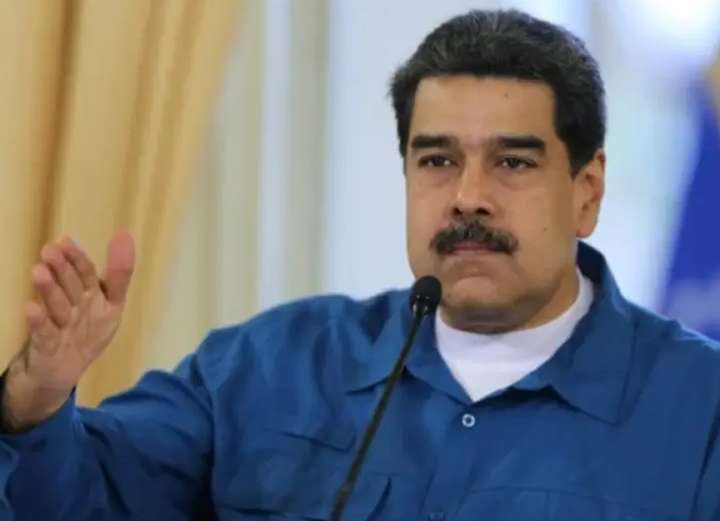
When news broke in early January that Venezuelan president Nicolás Maduro had been taken into United States custody, many people across the world struggled to believe it. For years, his name had been linked with drug trafficking allegations, political repression and economic collapse, yet he appeared untouchable, protected by power, loyal security forces and foreign allies.
Now he is in a New York detention facility, facing federal charges that could keep him behind bars for the rest of his life.
The U.S. Department of Justice says the operation that led to his arrest was not a spontaneous decision but the result of years of cooperation between federal agencies, intelligence services and international partners. That single sentence from the DoJ, that they worked together with agencies to make Maduro face justice, has since ignited fierce debates about law, sovereignty and the future of global accountability.
This is the full story behind that statement and why it matters far beyond the borders of Venezuela.
The Rise and Fall of a Once Promising Nation
To understand why the arrest of Nicolás Maduro feels so dramatic, you must first understand what Venezuela used to be.
For much of the twentieth century, Venezuela was Latin America’s success story. It had vast oil wealth, a thriving middle class and influence that stretched across the region. Caracas was a magnet for immigrants and investors. That changed after the death of Hugo Chávez in 2013 and the emergence of Maduro as his successor.
Maduro inherited a fragile economy already strained by years of populist policies and deep dependence on oil exports. When global oil prices collapsed, the illusion of stability vanished. Inflation ran out of control. Supermarkets emptied. Hospitals lacked basic supplies. Parents skipped meals so their children could eat. More than seven million Venezuelans eventually fled their homeland, scattering across South America, the United States and Europe.
While citizens struggled to survive, allegations began to surface that members of the ruling elite were enriching themselves through corruption and drug trafficking. Investigators spoke quietly about a shadowy network inside the military and political class that allegedly protected cocaine shipments moving from Colombia through Venezuela and onward to international markets.
The Case That Would Not Die
In 2020, the United States unsealed an indictment that many observers thought was mostly symbolic. It accused Maduro and several top officials of narco terrorism, large scale drug trafficking, weapons offences and money laundering. The charges were staggering in scope. Prosecutors claimed that Maduro had personally overseen operations designed to flood American streets with cocaine, using the drug trade as a weapon against the United States.
At the time, Maduro laughed off the charges, calling them imperialist fiction. Few believed Washington would ever manage to put him in a courtroom.
But behind closed doors, investigators kept working. Former insiders defected. Financial trails were traced through offshore accounts. Intelligence agencies shared fragments of information that slowly formed a clearer picture of how power and crime had merged inside Venezuela.
When the Department of Justice finally announced that it had worked with multiple agencies to bring Maduro to justice, it was revealing the existence of a vast, coordinated effort that had quietly unfolded over half a decade.
The Night That Changed Venezuela
Details of the actual operation remain closely guarded, but U.S. officials confirm that it involved a mix of intelligence gathering, law enforcement planning and military execution. What is known is that it happened fast, with precision and almost no public warning.
Within hours, the man who once controlled one of Latin America’s most powerful states was airborne, bound for New York. Alongside him was his wife, Cilia Flores, herself accused of playing a role in shielding drug operations.
The announcement stunned the world. For supporters of the Venezuelan opposition, it felt like a miracle. For Maduro loyalists, it was nothing less than an act of foreign aggression.
Can Justice Ignore Borders
The arrest has forced a difficult conversation about international law. Traditionally, sitting heads of state are shielded from prosecution in foreign courts. That protection exists to prevent global chaos, where leaders are constantly at risk of arrest every time they travel.
The United States argues that this protection does not apply to Maduro because it does not recognise him as Venezuela’s legitimate president. In Washington’s view, his election was fraudulent, his government criminal and his immunity void.
Legal experts are deeply divided. Some warn that this logic could be abused by powerful nations to target weaker states. Others say that when a leader turns an entire country into a criminal enterprise, the old rules should no longer apply.
Shockwaves Across the Globe
Reactions have been intense and contradictory. Western allies of the United States have cautiously welcomed the move, calling it a bold stand against corruption and organised crime. Russia, China, Cuba and several Latin American countries have condemned it as illegal and destabilising.
Inside Venezuela, power has shifted uneasily. Maduro’s allies have named an interim leadership, rejecting any authority from Washington. Streets in Caracas are tense. People whisper about the future in crowded buses and long food queues.
For many Venezuelans, this moment is deeply emotional. Some wept with relief, believing justice has finally arrived. Others fear that the country will descend into deeper chaos.
Why This Matters to Nigeria and Africa
The story of Nicolás Maduro is not only a Latin American story. It is a global warning.
Across Africa, including Nigeria, citizens are painfully familiar with corruption, elite impunity and leaders who hide behind power. The idea that a sitting president can be arrested abroad sends a powerful signal. It suggests that the world may be moving toward a new era where political office is no longer a shield against accountability.
But it also raises fears. If justice becomes a tool of geopolitics, who decides which leaders are criminals and which are partners.
The Trial That Will Shape History
Maduro now sits in a U.S. detention centre awaiting trial. His lawyers are expected to challenge everything, from the jurisdiction of the court to the legality of his capture. The courtroom battles could last for years.
If he is convicted, it will be the most dramatic assertion of extraterritorial justice in modern times. If the case collapses, it will expose the operation as a dangerous gamble that rewrote international norms without delivering accountability.
The Human Story Behind the Headlines
Lost in the politics and legal arguments is the human tragedy that made this story possible. Millions of Venezuelans did not flee because of ideology. They fled because their children were hungry, their parents were sick and their future had vanished.
For them, the arrest of Nicolás Maduro is not about law textbooks or diplomatic protocol. It is about whether the suffering they endured will ever be acknowledged.
A World Watching Closely
The Department of Justice’s claim that it worked with agencies to make Maduro face justice is more than a statement. It is a challenge to the old order. It tells the world that the boundaries between nations, once sacred, are now negotiable when crime reaches the highest levels of power.
Whether this becomes a turning point for global justice or a dangerous precedent will depend on what happens next.
The world is watching. So is history.
About the Author
Smart Chuks is an investigative journalist and international affairs analyst with years of experience covering governance, corruption and global justice. He writes for SaharaNews247, bringing Nigerian and international readers closer to the human stories behind the world’s biggest political events.