
By Emeka Okafor
Summary
U.S. President Donald Trump has once again sparked global attention after warning that American troops “could be” deployed to Nigeria and that air strikes were being considered. The warning came in response to what he described as mass killings of Christians in the country. Trump also said he had directed the Pentagon to “prepare for possible action.”
Nigeria’s government immediately rejected the characterization, saying the country’s violence is complex, not religiously one-sided, and that Nigeria’s sovereignty must be respected. As of now, there is no verified evidence that the United States has issued formal orders for troop deployment or air strikes in Nigeria. The statement remains a threat and directive to prepare, not a confirmed operation.
What President Trump Said
Between October 31 and November 2, 2025, President Trump publicly stated that the United States could send troops or launch air strikes in Nigeria if the Nigerian government failed to stop what he called the “killing of Christians.” Speaking during a press interaction and on his social media platform, he said he had asked the Pentagon to draw up operational plans and review U.S. aid to Nigeria.
These comments quickly made international headlines, with major outlets like Reuters, TIME, and Politico confirming that Trump indeed used the phrase “could be” when referring to possible troop deployment or air action.
However, there’s an important distinction between a presidential warning and a formal military order. While Trump’s words carry weight, actual deployment requires multiple legal and logistical steps, as well as coordination with Nigeria — something that has not occurred so far.
Nigeria’s Response: Sovereignty First
In a swift reaction, the Nigerian government rejected parts of Trump’s statement. Officials said Nigeria would not tolerate any unilateral military intervention and that sovereignty remained non-negotiable. However, they added that the country welcomed foreign assistance in its ongoing battle against insurgency and terrorism, provided it respected Nigeria’s laws and territorial integrity.
Presidential aides also clarified that the violence in Nigeria’s north is not strictly religious. Victims include both Christians and Muslims, and many attacks are driven by factors such as land disputes, terrorism, and banditry rather than religion alone.
Understanding the Conflict in Context
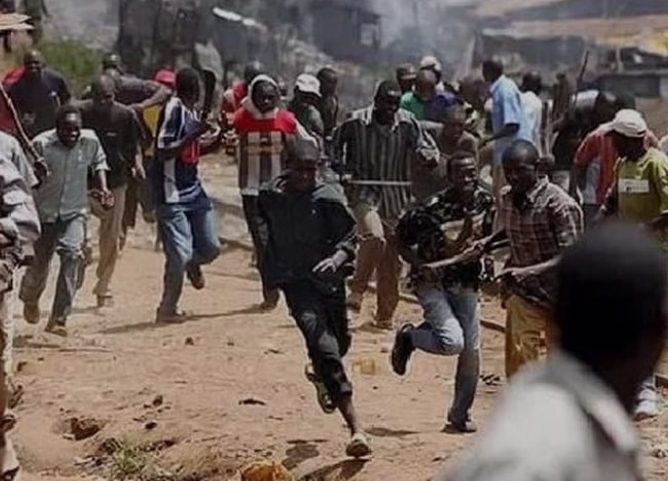
Nigeria’s security challenges are deep and multifaceted. While religion often becomes a headline focus, the underlying issues include terrorism, poverty, ethnic tensions, resource competition, and political grievances. The main sources of violence include:
Boko Haram and ISWAP insurgencies in the northeast, which continue to terrorize communities and destabilize entire regions.
Banditry and kidnapping in the northwest and central states, driven largely by economic desperation and weak law enforcement.
Farmer-herder clashes in the middle belt, linked to land scarcity, climate change, and dwindling resources.
Labeling the crisis as a “Christian genocide,” as Trump did, oversimplifies a deeply complex reality. Analysts say such framing risks inflaming religious divisions and undermining ongoing peace efforts.
Is the U.S. Really Sending Troops?
As of early November 2025, no credible reports or government documents indicate that the United States has begun moving troops toward Nigeria or initiated air operations. According to defense officials quoted by Reuters, no specific operational orders have been issued.
Military analysts note that planning “contingency options” is a standard Pentagon practice when a president raises potential military scenarios. It does not necessarily mean imminent action. Moreover, launching operations in a sovereign nation like Nigeria would require extensive diplomatic groundwork and, in most cases, the host country’s cooperation.
Legal and Strategic Implications
1. International Law and Sovereignty
Conducting a military strike or troop deployment inside another sovereign state without consent would violate international law and could trigger a diplomatic crisis. Nigeria’s firm rejection of unilateral intervention shows it intends to defend its sovereignty, even while remaining open to partnerships.
2. Logistics and Basing
The U.S. maintains limited permanent military presence in West Africa. Its nearest established base is in Djibouti, far from Nigerian territory. Any large-scale operation would require significant logistical preparation, overflight permissions, refueling capacity, and local intelligence partnerships — all of which take time and negotiation.
3. Intelligence and Target Verification
Nigeria’s conflicts are decentralized, with armed groups blending into local populations. Accurate targeting without causing civilian casualties would require advanced, on-the-ground intelligence cooperation — something not easily achieved from afar.
The Viral Video: Real Clip, Misleading Context
A video circulating on social media shows Trump making the statements that have gone viral. The clip is real and corresponds with his recent remarks. However, its online captioning and reposts have often been misleading.
Many users have shared the clip with false claims that U.S. troops are already en route to Nigeria. This is not true. The video proves that Trump said the words, not that military action has been initiated.
Always verify videos by checking the date, full transcript, and the media outlets that originally published them. Viral edits and out-of-context captions can easily distort the actual situation.
Why Trump Spoke Out Now
Several factors appear to explain Trump’s timing and tone:
Domestic Politics: Religious advocacy groups and conservative media figures in the U.S. have pressured the administration to act on violence against Christians in Africa, particularly Nigeria. Trump’s statement plays strongly with his evangelical base.
Foreign Policy Strategy: Trump’s administration has long favored direct, public threats as a way to pressure foreign governments without necessarily acting militarily. His warning to Nigeria fits that pattern.
Symbolic Leverage: Nigeria is Africa’s largest democracy and one of America’s key strategic partners. A public warning allows Trump to project power globally while forcing Nigeria’s leaders to take visible steps against insurgent violence.
Possible Outcomes and Scenarios
1. Diplomatic Pressure and Aid Reassessment
The most probable short-term outcome is heightened diplomatic tension and a possible review of U.S. aid to Nigeria. Washington may use aid or trade conditions to pressure Abuja into taking stronger action against militant groups.
2. Coordinated Security Assistance
A moderate scenario could see increased U.S.-Nigeria cooperation — sharing intelligence, providing equipment, or training military units — but without direct combat involvement.
3. Limited Strikes with Nigerian Consent
If Nigeria formally requests targeted help against known terrorist camps, the U.S. could launch limited, joint operations. However, this would require strict coordination and Nigerian approval.
4. Unilateral U.S. Military Action
The least likely and most controversial scenario would be the United States acting without Nigeria’s consent. Such a move would violate sovereignty, provoke regional backlash, and damage diplomatic ties across Africa.
Impact on Nigerians and Regional Stability
For ordinary Nigerians, Trump’s threat has generated mixed emotions. Some see it as potential leverage to force faster government action against terrorists. Others fear it could invite foreign interference and worsen instability.
If mishandled, external military involvement could polarize communities, undermine Nigeria’s sovereignty, and embolden extremist propaganda. Diplomatically, it could strain U.S.-Africa relations and fuel anti-Western sentiment in parts of the continent.
However, if approached through partnership and mutual respect, the situation could open a path for deeper security cooperation and intelligence sharing — especially against groups like ISWAP and Boko Haram.
How to Verify Future Claims
To avoid misinformation and panic, readers should take these steps:
1. Check official statements from the Pentagon, White House, or Nigeria’s Presidency before believing any viral claim.
2. Follow credible international outlets such as Reuters, BBC, and Al Jazeera for updates.
3. Verify videos by checking upload dates, context, and transcripts.
4. Be wary of social media headlines that exaggerate or twist facts.
Final Analysis
President Trump’s remarks are undeniably significant. They reflect growing U.S. frustration over Nigeria’s security crisis and highlight the complex intersection of religion, politics, and international diplomacy.
Yet it is essential to separate rhetoric from reality. What Trump has done is issue a warning and instruct military planning, not authorize active combat operations. For now, the situation remains political, not operational.
Nigeria, for its part, must continue addressing its security challenges decisively and transparently. Effective domestic action will weaken the justification for any external intervention and strengthen Nigeria’s position on the global stage.
The world is watching how both countries navigate this tense but pivotal moment.
About the Author
Emeka Okafor is a Senior Political Analyst and West Africa Correspondent for SaharaNews247. He has over 12 years of experience covering governance, security, and diplomacy across Africa. He is the author of Borderlines and Battlelines: Security in Modern Nigeria and contributes regularly to discussions on international policy and regional stability.