
By Michael Adetayo
Introduction
A wave of uncertainty and panic is sweeping across northern Nigeria and the wider Sahel region following reports that terrorist elements are fleeing Nigeria in the wake of Donald Trump’s alleged threat to invade the country. The development, reportedly compounded by Chad’s sudden closure of its borders, has sparked widespread debate, confusion, and speculation about the true nature of these claims.
As tensions rise, analysts are asking: Is there any truth behind these reports, or are they just another wave of social media misinformation? This in-depth report by SaharaNews247 examines verified facts, political undercurrents, and regional implications surrounding the story.
Background: The Trump Statement That Sparked the Firestorm
The controversy began when multiple social media posts alleged that former U.S. President Donald Trump had issued a stern warning, threatening to invade Nigeria over what he described as the country’s failure to curb terrorism and human rights violations.
The reports quickly went viral, triggering a storm of discussions online — from WhatsApp groups to X (formerly Twitter). Some claimed that terrorist groups in Northern Nigeria began retreating toward the Chadian and Nigerien borders following Trump’s remarks.
However, no official record or credible statement from Trump’s campaign, office, or any verified American media outlet has confirmed such a threat. This immediately raised questions about the authenticity of the report.
Verification: What We Know So Far
After extensive cross-checks by SaharaNews247’s fact-checking desk, the following findings were established:
1. No official U.S. statement or diplomatic memo has referenced any planned invasion or military operation against Nigeria.
2. The U.S. State Department and Pentagon websites contain no such notice or press release.
3. The report appears to have originated from unverified social media posts, later amplified by smaller blogs without credible sourcing.
That said, the timing of these viral posts coincides with rising global scrutiny of Nigeria’s human rights record, particularly following the U.S. designation of Nigeria as a “Country of Particular Concern” — a move widely reported and confirmed.
This background may have given the false invasion claim some perceived legitimacy.
Chad’s Border Closure: The Real Story
While Trump’s alleged “invasion threat” remains unverified, the border closure by Chad is confirmed. On October 31, 2025, the Chadian government temporarily closed its borders with Nigeria, citing security threats, cross-border smuggling, and terrorist infiltration as reasons.
According to Chad’s Ministry of Defense, the closure was a preventive measure following increased militant movement in the Lake Chad Basin, where Boko Haram and ISWAP operate.
This action, though unrelated to Trump’s comments, intensified public belief that something bigger was happening behind the scenes — feeding the rumor that terrorists were on the run.
Expert Reactions: Separating Fact from Fear
Security experts and regional analysts have warned Nigerians to be cautious about viral claims of U.S. military intervention.
“There’s no evidence that the U.S. plans to invade Nigeria. What’s happening is a mix of misinformation and real security developments that people are connecting incorrectly,”
— said Dr. Ibrahim Dogo, a Sahel security analyst at the University of Maiduguri.
He explained that Chad’s border control operation and Nigeria’s ongoing joint counterterrorism missions under the Multinational Joint Task Force (MNJTF) might be giving the impression of a larger geopolitical maneuver.
The Social Media Factor: How Disinformation Spreads
Social media continues to play a critical role in spreading both news and disinformation in Nigeria.
Analysts note that the “Trump invasion” narrative follows the same pattern as other viral hoaxes that have gripped Nigeria in recent years — especially those tied to Western powers and regional politics.
The combination of fear, frustration with governance, and declining trust in mainstream media fuels public susceptibility to false news.
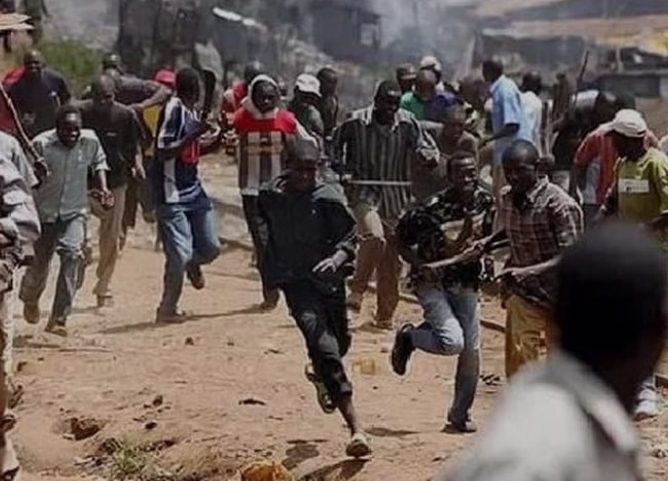
Platforms like Facebook, X, and TikTok have been flooded with dramatic videos and voice notes claiming to show militants fleeing to Chad and Niger, though none have been independently verified.
Reality Check: What’s Really Driving the Panic
In truth, terrorist movement along Nigeria’s borders is not new.
Security agencies regularly monitor Boko Haram and ISWAP fighters moving between Borno, Yobe, and Lake Chad.
Recent military operations have dislodged several insurgent cells, forcing some fighters to retreat — a fact that might explain the reports of “fleeing terrorists.”
Thus, while some movements may be real, they likely have no link to Trump’s alleged statement but rather to local military pressure and border control initiatives.
The Political Undercurrent: U.S.–Nigeria Tensions
It’s undeniable that relations between Nigeria and the United States have experienced tension recently.
The U.S. designation of Nigeria as a Country of Particular Concern (CPC) due to religious freedom and human rights issues added friction.
Furthermore, statements by U.S. lawmakers criticizing Nigeria’s security failures have intensified diplomatic unease.
While none of these actions suggest an invasion, they highlight the growing impatience of Western nations with Nigeria’s prolonged insurgency crisis.
Some Nigerian commentators have interpreted these signals as the West’s “warning shot” to Abuja — demanding accountability or facing isolation.
Public Reaction: Fear, Skepticism, and Hope
Across northern Nigeria, reactions have been mixed.
Some locals express fear and confusion, while others welcome any action that might finally end years of terrorist brutality.
“If the U.S. really wants to help us fight these people, let them come. We are tired,”
said a resident of Maiduguri during a phone interview with SaharaNews247.
Others, however, view the report as another “online drama” designed to distract from pressing domestic issues.
The Nigerian government has not issued an official comment on the alleged Trump threat, maintaining its focus on domestic counterterrorism and regional cooperation.
Regional Implications: Chad’s Role and the Sahel Equation
Chad remains a key military ally in the fight against terrorism in the Sahel.
Its decision to seal the border is likely tactical — aimed at containing the spillover effect from Nigeria’s recent military offensives.
The move underscores rising insecurity across the Sahel, where groups like ISIS-West Africa and Jama’at Nusrat al-Islam wal-Muslimin (JNIM) continue to expand.
Experts believe that Chad’s border closure may help prevent the regrouping of fighters but could also disrupt local trade and humanitarian activities in the region.
Diplomatic Repercussions: Nigeria’s Balancing Act
Even as these reports circulate, Nigerian authorities must navigate a delicate diplomatic balance.
On one hand, they must reassure citizens that no foreign power plans to invade Nigeria.
On the other, they must acknowledge legitimate concerns from allies like the U.S. regarding human rights, governance, and corruption in the security sector.
Analysts warn that failure to communicate effectively could fuel panic, undermine investor confidence, and weaken international relations at a sensitive time.
Media Responsibility and the Importance of Verification
The spread of the “Trump invasion” story serves as a reminder of the dangers of misinformation.
Media outlets have a duty to verify before amplifying unconfirmed reports — especially in volatile contexts like Nigeria’s security landscape.
At SaharaNews247, every report undergoes fact-checking and cross-verification using credible sources, government statements, and independent monitoring organizations.
Readers are encouraged to treat viral content with caution and rely on verified media platforms for accurate information.
Conclusion: The Truth Amid the Turbulence
While the Chadian border closure is real, the claim that Donald Trump threatened to invade Nigeria and that terrorists are fleeing because of it remains unsubstantiated.
What is true is that Nigeria’s terrorism landscape is shifting, with increased military operations and cross-border responses creating visible movement among insurgents.
The situation underscores how quickly disinformation can spread, blurring the line between reality and rumor in an already tense environment.
The real battle — beyond terrorism — may be the fight for truth, clarity, and public trust in Nigeria’s information space.
Author Bio
Michael Adetayo is a political correspondent for SaharaNews247, specializing in West African security and foreign affairs.
He has covered regional conflicts, diplomatic relations, and governance issues across Africa for over a decade.