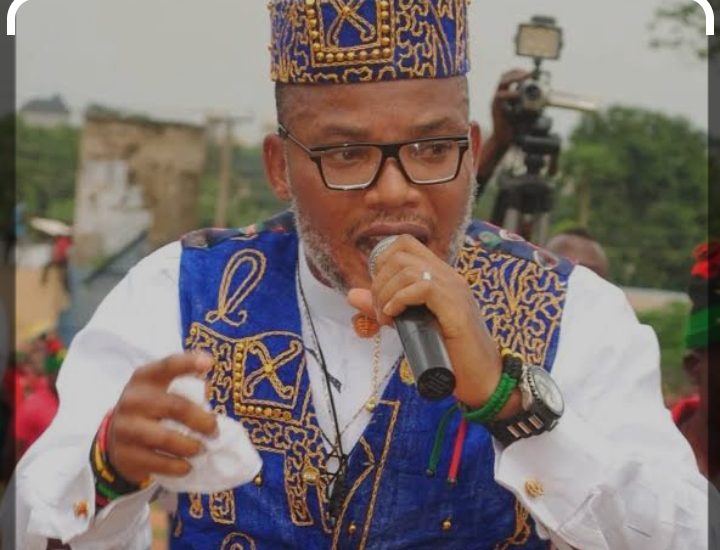

A panel of medical experts appointed by the Nigerian Medical Association (NMA) has concluded that the ailment complained of by Nnamdi Kanu, the detained leader of the Indigenous People of Biafra (IPOB), is not life-threatening and that he is medically fit to stand trial.
The findings were submitted to the Federal High Court in Abuja and partially read in court during Thursday’s proceedings before Justice James Omotosho. The ruling settles a long-running medical controversy that briefly slowed one of Nigeria’s most closely watched trials.
What the Medical Panel Found
The NMA team, constituted following a directive of the court, examined Nnamdi Kanu and produced a detailed report confirming that his health challenges were not severe enough to prevent him from standing trial.
The report, submitted on October 13 and presented to the court on October 16, indicated that Kanu’s vital signs and overall condition were stable and that he could continue to participate actively in court proceedings.
After reviewing the report, Justice James Omotosho expressed satisfaction with the findings and scheduled six consecutive days, starting October 23, for Kanu to open and close his defence.
In addition, the court granted the defendant’s legal team permission for a private consultation with him on October 22, to take place within the courtroom, in order to ensure confidentiality and fair preparation for trial.
The NMA’s involvement came after earlier judicial directions issued on September 26, when the court asked the association to constitute a neutral medical panel to determine whether Kanu’s condition required specialized care outside the custody of the Department of State Services (DSS).
Legal and Procedural Implications
1. Continuation of the Trial
The NMA’s finding that Kanu is fit for trial clears a major procedural hurdle. Nigerian law requires that an accused person must be in sound mental and physical condition to participate effectively in their defence. The court’s approval of the NMA’s report allows the case to proceed without further delay.
2. Limiting Delay Tactics
In many high-profile trials, defence teams sometimes request adjournments on medical grounds. However, with the NMA’s professional verdict now on record, it becomes increasingly difficult for the defence to seek repeated postponements on health-related issues unless new, credible evidence of deterioration emerges.
3. Strengthening Judicial Credibility
The NMA is widely respected as an independent professional body. Its participation in this case enhances public confidence that the court has acted transparently and fairly. The court’s reliance on a neutral expert report helps assure observers that Kanu’s medical rights were not ignored.
4. Human Rights Considerations
Nnamdi Kanu’s detention has long drawn international scrutiny over alleged violations of due process and basic human rights. While the latest medical report confirms his fitness to stand trial, it does not erase concerns about the conditions of his detention or access to adequate healthcare. Human rights advocates are still likely to demand full transparency from the authorities.
The Political Context
The Nnamdi Kanu case extends beyond the courtroom—it is deeply political and symbolic. As the leader of IPOB, his prosecution continues to stir emotions across the South-East region and among the Nigerian diaspora.
Public Perception and Reactions
Every new development in his case shapes public sentiment. News that his ailment is not life-threatening may calm some of the anxiety among supporters who feared neglect. However, some IPOB sympathizers may question the neutrality of the medical panel, arguing that a government-backed process could not have been fully independent.
Government’s Position
For the Federal Government and security agencies, the NMA’s conclusion provides a legal green light to move forward with the trial. It also helps dispel international criticism that Kanu was being denied adequate medical attention while in DSS custody.
Opposition and Activist Views
Opposition voices and human rights groups might continue to call for the full release of the NMA report, including detailed methodology and medical data, to confirm the authenticity and thoroughness of the evaluation.
What to Expect Next
For the Prosecution:
The prosecution is expected to resume the presentation of its evidence and witnesses, relying on the NMA report to prevent any further medical-related adjournments.
For the Defence:
Kanu’s lawyers will likely review the full medical findings and possibly request additional documentation or clarifications. They are also expected to focus their defence strategy on constitutional arguments—such as alleged unlawful rendition and due process violations—rather than health concerns.
For Civil Society:
Human rights organizations and observers will keep a close watch on how the proceedings unfold, ensuring that Kanu continues to receive fair treatment and that his rights under Nigerian and international law are upheld.
The Question of Independence
While the NMA is an autonomous professional body, the transparency of its process remains crucial. Nigerians will be keen to know:
Who was on the medical panel?
The credibility of the report partly depends on whether the doctors were chosen without political bias or government influence.
Where was the examination conducted?
Since Kanu remains in DSS custody, questions may arise about whether the medical team had full access to perform an independent assessment.
Was the evaluation comprehensive?
Critics may argue that the assessment only examined Kanu’s short-term fitness to stand trial rather than his long-term health status.
The answers to these questions will shape public confidence in the NMA’s role and the fairness of the ongoing trial.
Possible Scenarios Going Forward
1. Trial Continues as Scheduled
With the medical issue settled, the court will likely proceed with the defence presentation from October 23. This would signal a major step toward concluding the high-profile case.
2. Defence Challenges the Report
If new medical evidence emerges or the defence raises credible concerns about the NMA’s process, the court could consider a supplementary review. However, that scenario appears unlikely in the short term.
3. Public and Political Pressure
Even if the medical controversy is legally resolved, the political tension around Kanu’s detention may persist. Protests, petitions, and international advocacy efforts could continue.
Bottom Line
The Nigerian Medical Association’s finding that Nnamdi Kanu’s ailment is not life-threatening and that he is fit to stand trial is a major development in a long-running legal saga. It allows the Federal High Court to proceed with the substantive case while quelling immediate concerns over his health.
However, the broader political and human rights questions remain unresolved. As Kanu prepares to begin his defence on October 23, attention will shift from medical issues back to the central legal battle — one that continues to test Nigeria’s justice system, its respect for due process, and the delicate balance between national security and individual rights.
Author Bio
Smart Chuks is the Senior Political Editor at SaharaNews247. He specializes in Nigerian court and security reporting, with over a decade of experience covering human rights, politics, and national affairs. Chidi is known for his analytical approach to complex political and legal stories.