
By: Samuel Adedayo Ibrahim
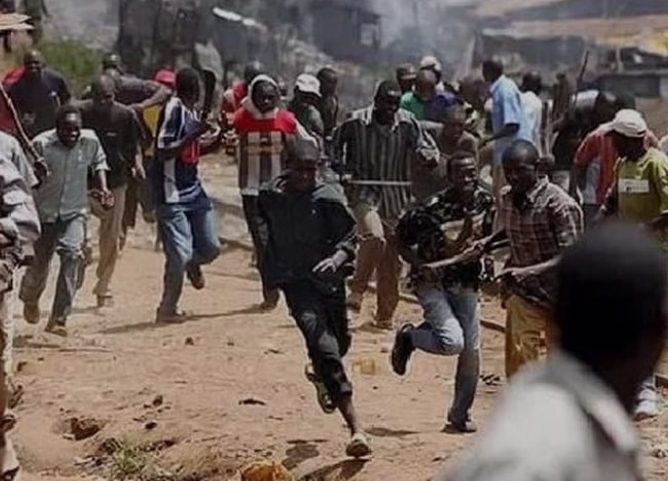
Nigeria has entered a sensitive phase of global scrutiny following statements by U.S. President Donald Trump, who publicly warned that the United States might consider military intervention in Nigeria if the killings of Christians continue. The remarks sparked fear, confusion, political debate, and regional tension, particularly across northern Nigeria — the region most referenced in the accusations.
This situation raises several urgent questions:
Is the United States truly preparing for military involvement in Nigeria?
Is there credible evidence of a religious genocide?
How are Nigerian authorities responding?
What are the implications for citizens in northern states already affected by insurgency and banditry?
This comprehensive analysis explores verified facts, contested claims, geopolitical context, risks, and national implications, offering a grounded perspective on what may unfold next.
What Sparked the Controversy?
The controversy began after President Trump referenced high casualty figures among Christian communities in Nigeria. He suggested that if the Nigerian government failed to act decisively, the United States “would not sit back and watch.”
Subsequent reports indicated that U.S. military planners were asked to examine possible intervention scenarios, including:
Special Forces deployment
Limited precision airstrikes
Joint counterterrorism missions
Full-scale operations if deemed necessary
Although no deployment order has been issued publicly, the rhetoric represents a rare and aggressive U.S. stance toward Nigeria.
Nigeria’s Official Response
The Nigerian government responded swiftly and cautiously:
Rejected the genocide narrative
Asserted that Nigeria guarantees religious freedom
Described the killings as part of a complex internal security situation
Expressed willingness to accept U.S. assistance only under Nigerian authority and sovereignty
Observers note that the response was intentionally balanced, avoiding confrontation with Washington while calming internal concerns.
African Union and International Reactions
The African Union (AU) publicly rejected the genocide framing, stating there is “no verified or legal basis to declare the situation in Nigeria a genocide.”
International organizations emphasized:
The importance of independent investigations
Fact-based assessments
Avoiding politically charged language that could escalate tensions
The message is clear: global concern exists, but unilateral action is not broadly supported.
Is There Evidence of a Religious Genocide?
This remains highly debated.
Arguments Supporting the Claim
Certain advocacy groups highlight systematic killings of Christians.
Lawmakers reference incidents in Plateau, Kaduna, Benue, Taraba, and Borno states as potential patterns of religious persecution.
Claims suggest government inaction exacerbates vulnerability.
Arguments Challenging the Claim
Analysts note that:
Much of the violence stems from insurgency, criminality, land conflicts, poverty, and governance weaknesses — not solely religious motives.
Boko Haram and ISWAP have killed both Muslims and Christians.
Many victims of banditry and extremist attacks are Muslim communities.
Available data is incomplete and politically sensitive.
Conclusion: While Christian communities have suffered greatly, the violence does not meet the legal definition of genocide, which requires clear intent to eliminate a religious or ethnic group.
Northern Nigeria’s Reaction: Fear and Uncertainty
Northern communities, already coping with insurgency, banditry, and communal clashes, experienced heightened tension:
Fear of accidental U.S. airstrikes
Concern over foreign troops entering civilian areas
Anxiety about retaliatory attacks from extremist groups
For ordinary citizens, the threat reignited trauma and uncertainty that have persisted for years.
Political Implications
The issue has intensified political divisions:
Southern and Christian communities viewed U.S. threats as pressure for accountability.
Northern and Muslim leaders condemned the remarks as inflammatory and disrespectful to sovereignty.
Analysts warn that religious framing risks hardening political and communal divides, complicating future dialogue and reconciliation.
Potential U.S. Military Involvement
Experts believe military intervention is possible but unlikely:
The United States generally intervenes militarily in Africa under extreme circumstances such as threats to global security or confirmed genocide.
Nigeria is not a failed state, reducing justification for unilateral action.
Contingency plans could involve intelligence gathering, special forces advising Nigerian troops, drone strikes, or precision air operations, rather than full occupation.
Humanitarian Considerations
Northern Nigeria already hosts over 3.4 million displaced people. Potential U.S. intervention could:
Increase displacement
Disrupt humanitarian aid
Endanger civilians and aid workers
Trigger extremist propaganda against foreign involvement
Humanitarian agencies are calling for careful protection measures and transparent planning.
Role of Local Leaders
Traditional rulers, governors, religious leaders, and community mediators are critical in preventing panic. Messaging that emphasizes:
Unity
Shared victimhood
Collaboration
Peaceful solutions
can reduce tensions and prevent escalatory cycles of violence.
Recommendations for Citizens and Policymakers
To minimize risk and address root causes:
1. Independent Investigations: UN and AU-led audits to clarify the facts.
2. Civilian Protection: Humanitarian corridors and safeguards for displaced persons.
3. Capacity-Building Over Unilateral Action: Strengthen Nigerian security forces rather than pursue foreign-led strikes.
4. Governance and Socioeconomic Investment: Address land disputes, poverty, and weak institutions.
5. Responsible Communication: Avoid incendiary religious framing in official messaging.
Impact on Daily Life in Northern Nigeria
Ordinary citizens face:
Market disruptions and school closures
Fear of collateral damage
Heightened ethnic and religious tensions
Potential recruitment by armed groups due to insecurity
Supporting local peacebuilding, early-warning systems, and community reconciliation is crucial.
Conclusion
Donald Trump’s statements highlight global concern over Nigeria’s security situation. While they bring attention to the plight of affected communities, the rhetoric carries risks:
Potential escalation
Internal political and religious polarization
Humanitarian consequences
The way forward for Nigeria involves fact-based diplomacy, strengthened governance, comprehensive security reform, and community-centered peacebuilding. Military action alone will not resolve the underlying drivers of conflict.
Author Bio
Samuel Adedayo Ibrahim is a senior defence and foreign policy analyst at SaharaNews247. With over 11 years of experience covering insurgency, governance, and African security, he provides evidence-based reporting and policy analysis. He is based in Abuja, Nigeria.