
By Smart Chuks
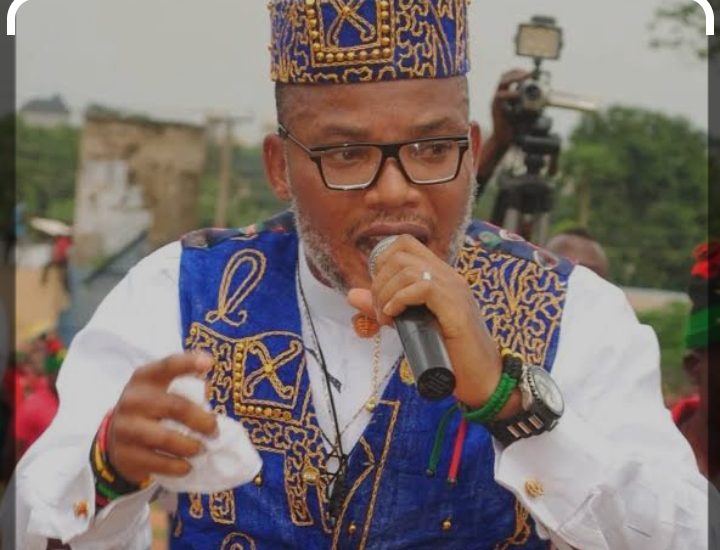
US Congressman John James Sparks Global Conversation. The case of Nnamdi Kanu, leader of the Indigenous People of Biafra (IPOB), has once again gained international attention following recent remarks by United States lawmaker John James, who suggested that Kanu’s continued detention may be an example of religious and political persecution in Nigeria. The statement has triggered renewed debate across diplomatic, legal, and human rights circles and reopened difficult questions about governance, justice, and fundamental freedoms in Nigeria.
As conversations intensify worldwide, Kanu’s case has shifted from a national legal matter to a symbol of broader discussions: ethnic tensions, minority protection, constitutional rights, and the limits of state power.
This article examines the details, reactions, legal implications, and potential geopolitical effects of this development, offering a balanced and deeply researched analysis.
Who Is John James and Why Does His Statement Matter?
John James is a U.S. Congressman representing Michigan’s 10th District, known for his strong stance on human rights, democracy, and minority protection. Unlike many international observers who comment from a distance, James sits in a legislative position with real capacity to influence U.S.–Nigeria diplomatic relations, especially because the United States is one of Nigeria’s largest development and security partners.
His statement suggests growing concern among Western policymakers who believe the Nigerian government’s handling of Kanu’s detention may violate international legal standards and human rights protections, especially concerning fair trial, legal representation, and humane detention conditions.
The significance of his comment goes beyond political rhetoric. It signals a shift from diplomatic silence to formal international scrutiny.
The Core of the Allegation: Is This Religious Persecution?
Congressman James stated that Kanu’s treatment may reflect discrimination against Christians and certain ethnic minorities in Nigeria. His argument aligns with broader concerns previously raised by U.S. lawmakers, advocacy groups, and international organizations.
Multiple global human rights bodies have accused Nigeria of failing to protect Christian communities in the southeast and middle belt regions from targeted violence. In that context, Kanu’s prolonged detention without final judgment is viewed by some as part of a pattern rather than an isolated legal issue.
This raises critical questions:
Is Kanu simply undergoing legal prosecution for alleged crimes?
Or is he being punished because of his identity, ideology, and influence?
The Nigerian government strongly denies the persecution claim, asserting that Kanu is being tried under the rule of law for terrorism-related offenses, incitement, and operating an outlawed separatist organization.
But international observers argue differently.
Background: Nnamdi Kanu and the Biafra Movement
Nnamdi Kanu became a global figure after leading IPOB, a movement calling for the secession of southeastern Nigeria to form an independent state of Biafra. The original struggle for Biafra dates back to the Nigerian Civil War (1967–1970), which claimed over a million lives. For many supporters, Biafra represents justice, identity, and cultural dignity.
IPOB has grown from a small activist group into one of the most visible independence movements in Africa. Through broadcasting platforms such as Radio Biafra, Kanu mobilized millions and challenged Nigeria’s leadership on issues of resource control, marginalization, and political representation.
In response, the Nigerian government labeled IPOB a terrorist organization in 2017. That decision remains controversial internationally, as no major Western or African nation has recognized IPOB as a terrorist group.
The Arrest and Detention Controversy
Kanu was initially arrested in Nigeria in 2015 and later released on bail. In 2021, he was re-arrested in Kenya under circumstances that his legal team described as extraordinary rendition. Since then, despite court rulings ordering his release, he remains in detention.
Legal experts argue that holding a defendant without implementing court orders undermines the independence of the judiciary and violates both domestic and international law, including:
The Nigerian Constitution
The African Charter on Human and Peoples’ Rights
The United Nations International Covenant on Civil and Political Rights
For critics, this is where the accusation of persecution becomes strongest: when state institutions override judicial processes.
International Reactions and Rising Diplomatic Pressure
John James is not the first U.S. official to raise concerns. Several lawmakers and policy advocates have previously criticized Nigeria’s handling of Kanu’s case, while some human rights organizations have called for independent investigations.
The growing global attention may eventually influence:
U.S. foreign aid decisions
Military cooperation
Trade and diplomatic agreements
Visa restrictions for political actors involved
Nigeria, as Africa’s largest democracy and economy, cannot ignore the potential consequences of such scrutiny.
Nigeria’s Position: National Security First
The Nigerian government maintains that Kanu’s trial is lawful and necessary to preserve national stability. Officials accuse IPOB of inciting unrest, promoting separatism, and fueling violent resistance across the southeast.
Authorities argue that allowing movements that threaten national unity to grow unchecked could destabilize the country, spark communal violence, and weaken the rule of law.
To many in government, the case is not about religion or ethnicity. It is about preventing extremism.
Public Opinion: Divided Across Ethnic and Political Lines
In Nigeria, Kanu inspires sharply contrasting reactions.
To many Igbo and southeastern citizens, he is a freedom voice and symbol of resistance against injustice.
To others, he represents a destabilizing force challenging national cohesion.
To some youth movements, he embodies courage and the right to self-determination.
To certain political elites, he disrupts existing power structures and risks igniting old regional tensions.
The emotional weight behind these perspectives shows that this is more than a legal case—it is a struggle for identity, memory, and belonging.
What Happens Next?
With international debate intensifying, several outcomes remain possible:
Continued legal battle with no clear resolution
Diplomatic intervention leading to negotiation
Conditional or unconditional release
Regional referendum discussions
Long-term political reform addressing power distribution and minority rights
Whatever path emerges, the effects will reshape Nigeria’s political history.
Conclusion
The renewed global focus on Nnamdi Kanu’s case marks a turning point. Whether seen as lawful prosecution or political persecution, the case raises serious questions about governance, human rights, national unity, and the future of democracy in Nigeria.
The coming months will likely determine not only the fate of one man, but also the credibility of Nigeria’s justice system in the eyes of the international community.
History is watching.
Author
Written by:
Smart Chuks
Investigative Writer and Political Affairs Analyst for SaharaNews247
Specializing in African politics, international diplomacy, human rights reporting, and governance systems.