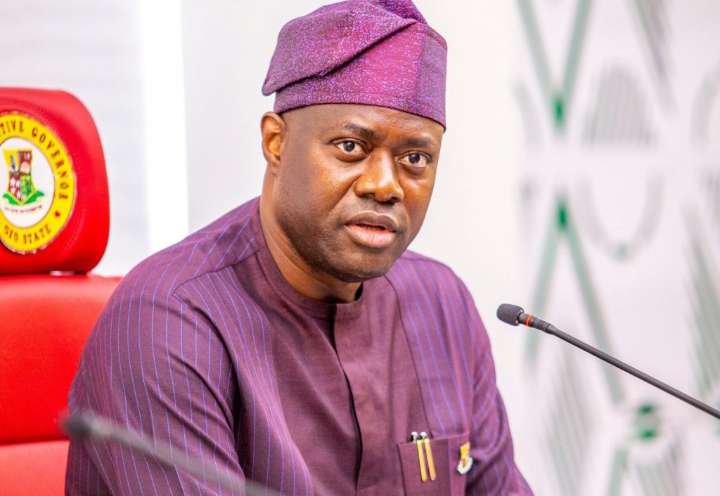
Nigeria is a country of extraordinary contrasts. It is home to Africa’s largest population, a youthful demographic bursting with energy, and an economy that has repeatedly shown resilience despite deep structural shocks. Yet it is also a nation persistently haunted by division. Ethnic mistrust, religious suspicion, regional rivalry and political antagonism have become recurring features of national life. Against this backdrop, Oyo State Governor Seyi Makinde’s assertion that Nigeria’s elite bear major responsibility for the country’s disunity has struck a powerful chord.
Makinde’s comment did not emerge from a vacuum. It reflects a long-running debate about who benefits from Nigeria’s fragmentation and who pays the price. For many ordinary Nigerians, disunity is not an abstract concept; it is felt in insecurity, economic hardship, and the erosion of trust in national institutions. When a sitting governor publicly points a finger at the elite class, the statement deserves more than applause or dismissal. It demands careful, evidence-based examination.
This article takes a critical and human-centred look at Makinde’s claim. It explores what “the elite” means in the Nigerian context, how elite behaviour has historically shaped division, and why these patterns persist. It also considers the limits of blaming elites alone and examines what meaningful change would require in a complex, diverse federation like Nigeria. The goal is not to sensationalise the claim, but to understand it, test it against reality, and situate it within Nigeria’s broader political and social journey.
Understanding the context of Makinde’s remarks
Governor Makinde’s statement came during public engagements where he urged Nigerians to look beyond ethnic and religious lines. He warned against the deliberate stoking of differences by powerful actors who thrive on division. His words echoed a familiar frustration among citizens who see political rhetoric grow sharper during election cycles, only to fade once power has been secured.
Makinde, a second-term governor with a reputation for technocratic governance, has often presented himself as a leader focused on institutions rather than sentiments. His administration in Oyo State has emphasised infrastructure, market redevelopment and civil service reforms, frequently framed as inclusive policies meant to benefit residents regardless of origin or belief. When such a figure speaks about elite responsibility, it signals a concern that goes beyond partisan sparring.
For international observers, Makinde’s statement aligns with a wider African and global discourse on elite accountability. Across developing democracies, scholars and policy analysts have repeatedly shown how elite competition, when poorly regulated, can undermine national cohesion. Nigeria’s case is particularly striking because of its size, diversity and historical experiences with both military rule and civilian governance.
Who are “the elite” in Nigeria?
In everyday conversation, “the elite” can sound vague, even conspiratorial. In analytical terms, however, it refers to a relatively small group of individuals who wield disproportionate influence over political power, economic resources and public narratives. In Nigeria, this group cuts across several spheres.
There are political elites: elected officials, party leaders, power brokers and influential officeholders who shape policy and control state machinery. There are economic elites: wealthy business figures, contractors and financiers whose proximity to power allows them to influence decisions and secure privileged access. There are also cultural and social elites: prominent religious leaders, media owners and opinion shapers whose words can mobilise millions.
Makinde’s criticism appears primarily directed at political and economic elites. These are actors who, in pursuit of power or profit, have incentives to mobilise identity, manipulate grievances and weaken institutions. The argument is not that elites are inherently harmful, but that the prevailing structure of incentives encourages behaviour that fragments society rather than unites it.
A historical pattern of elite-driven division
Nigeria’s experience with elite-driven division did not begin in the present democratic era. Its roots stretch back to the colonial period, when British administrators governed through indirect rule and reinforced ethnic identities as administrative units. Colonial policies rewarded collaboration and punished dissent, creating early forms of elite competition tied to identity.
After independence, the struggle for control of the new state intensified these dynamics. Political leaders mobilised regional and ethnic bases, leading to tensions that culminated in the civil war of 1967–1970. While the war ended with a declaration of “no victor, no vanquished,” the underlying structures of elite competition remained largely intact.
Military rule temporarily suppressed open political contestation, but it did not eliminate elite rivalry. Instead, it centralised power and resources, making control of the federal state even more valuable. When democracy returned in 1999, the stakes were high. Elections became winner-takes-all contests, and elites once again turned to identity politics as a reliable mobilising tool.
Seen through this historical lens, Makinde’s claim reflects continuity rather than novelty. The methods may have evolved, but the core pattern remains: elites competing for power in ways that exploit social fault lines.
How elite behaviour fuels contemporary disunity
The most visible way elites contribute to disunity is through identity-based politics. During campaigns, politicians often appeal to ethnic or religious solidarity, presenting themselves as defenders of a group against perceived threats. Such narratives simplify complex issues into emotional binaries of “us” versus “them.” While effective in mobilising votes, they leave deep scars on national cohesion.
Another mechanism is the capture of public institutions. When appointments, contracts and opportunities are distributed through patronage networks, citizens begin to see the state as a prize to be captured rather than a neutral provider of public goods. Groups excluded from these networks feel marginalised, while those included become invested in defending the status quo. Over time, trust in institutions erodes, and grievances multiply.
Media manipulation has also become a powerful tool. Traditional media outlets and digital platforms can be used to amplify divisive narratives, spread misinformation or demonise opponents. In a country with high social media usage and low digital literacy in some areas, false or inflammatory content spreads quickly. When elites sponsor or tolerate such practices, they contribute directly to social tension.
Selective development further deepens divisions. When infrastructure and services are perceived to favour certain regions or communities, resentment grows elsewhere. Even well-intentioned policies can become sources of conflict if they are poorly communicated or unevenly implemented. In such an environment, elites find it easy to frame development disparities as deliberate acts of exclusion.
Are elites the only ones to blame?
While the evidence supports Makinde’s assertion that elites play a central role in Nigeria’s disunity, a balanced analysis must acknowledge other factors. Structural challenges such as poverty, unemployment, rapid urbanisation and population growth create fertile ground for conflict. When millions struggle to meet basic needs, they are more vulnerable to divisive narratives that offer simple explanations and scapegoats.
Ordinary citizens also possess agency. Communities sometimes embrace identity politics willingly, especially when they believe it offers protection or advantage. Grassroots leaders, local vigilantes and informal power brokers can escalate tensions independently of national elites. Blaming elites alone risks oversimplifying a complex social reality.
At the same time, not all elites behave the same way. Some political and economic leaders actively promote inclusion, invest in public goods and resist the temptation to mobilise identity. The challenge lies in creating a system where such behaviour is rewarded rather than punished.
Why division remains politically profitable
To understand why elite-driven division persists, one must consider incentives. Nigerian politics is highly competitive, with enormous rewards attached to winning office. Control of budgets, appointments and contracts offers both political influence and economic benefit. In this environment, strategies that deliver quick electoral gains often trump long-term considerations of national unity.
Identity politics is efficient. It provides ready-made constituencies and emotional resonance. It is cheaper than building broad-based policy platforms and easier than addressing structural problems. Weak accountability mechanisms further reduce the cost of divisive behaviour. When sanctions are rare and short-lived, there is little deterrent.
This does not excuse elite actions, but it explains them. Sustainable change requires altering these incentives so that unity and good governance become politically advantageous rather than risky.
What meaningful reform would require
If Nigeria is to move beyond elite-driven disunity, reforms must be both institutional and cultural. Strengthening the independence of the judiciary, electoral bodies and anti-corruption agencies is essential. When institutions function impartially, it becomes harder for elites to manipulate them for sectional gain.
Political finance reform is another critical area. Transparent and enforceable rules on campaign funding can reduce the influence of narrow interests and patronage networks. When money in politics is visible, citizens are better positioned to hold leaders accountable.
Equitable development also matters. Addressing regional disparities through fair resource allocation and targeted investment can reduce the grievances that elites exploit. This does not mean equal outcomes everywhere, but it does require a sense of fairness and inclusion.
Education and civic engagement play a quieter but equally important role. Citizens who understand their rights, responsibilities and shared interests are less susceptible to divisive rhetoric. Media literacy, in particular, can help people distinguish between genuine debate and deliberate manipulation.
The responsibility of leaders like Makinde
As a governor, Makinde occupies a space where rhetoric meets action. His critique of the elite carries weight precisely because he is part of that elite. This creates both an opportunity and a burden. To be credible, such statements must be matched by consistent policies that promote inclusion, transparency and accountability at the state level.
Governors can set examples through fair appointments, balanced development and measured public communication. They can also collaborate across party and regional lines, demonstrating that cooperation is possible even in a polarised environment. While no single leader can transform Nigeria alone, collective action among reform-minded elites can shift norms over time.
A shared future at stake
Nigeria’s diversity is not its problem; it is its defining strength. The challenge lies in how power is exercised within that diversity. Governor Seyi Makinde’s assertion that the elite are responsible for disunity is, at its core, a call for introspection among those who hold influence. It asks whether leadership is being used to build a shared future or to secure narrow advantage.
For citizens, the statement invites vigilance and engagement. For elites, it demands responsibility. And for observers at home and abroad, it offers a window into the ongoing struggle to reconcile power, identity and nationhood in one of Africa’s most important countries.
Disunity is not inevitable. It is produced by choices, incentives and structures that can be changed. Whether Nigeria will make those changes depends on whether its elites, and its people, decide that unity is worth the effort.
Author bio
Smart Chuks is an investigative journalist and political analyst with SaharaNews247. He covers governance, public accountability and social cohesion in Nigeria, with a focus on how power shapes everyday life. His work seeks to bridge local realities with global perspectives, offering readers context, clarity and critical insight into Nigeria’s evolving story.