
By Smart Chuks
SaharaNews247
The Middle East is witnessing one of its most serious aviation disruptions in years following a sharp military escalation between Israel and Iran that has forced the closure of multiple national airspaces and sent shockwaves through global travel, trade, and financial markets.
Civil aviation authorities across the region moved swiftly to suspend or restrict flights after Israel launched a major military operation against targets inside Iran, prompting Tehran to shut down its airspace and retaliate with missile and drone launches. The unfolding crisis has stranded thousands of passengers, grounded commercial aircraft, and forced international airlines to reroute long-haul flights at significant cost.
Israeli Strikes Target Strategic Sites in Iran
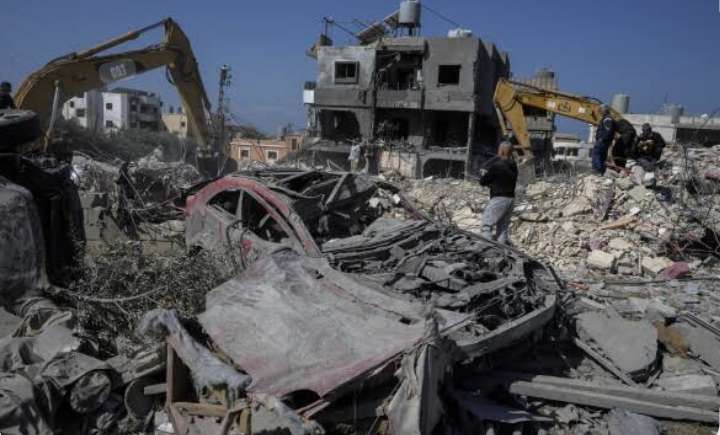
In the early hours of June 13, Israel confirmed it had carried out a series of coordinated airstrikes deep inside Iranian territory. Israeli officials described the operation as a pre-emptive action aimed at degrading Iran’s nuclear and missile capabilities, as well as key command centres linked to the Islamic Revolutionary Guard Corps.
Security sources indicated that several high-value military and strategic facilities were struck, including locations believed to be associated with weapons development and storage. Iranian state media later acknowledged explosions in and around Tehran and other strategic areas, though official casualty figures remain disputed.
International observers note that the strikes represent one of the deepest and most direct Israeli military actions inside Iran in recent years, marking a significant escalation in the long-running shadow conflict between both countries.
Iran Shuts Down Airspace Amid Retaliation
Within hours of the attacks, Iranian aviation authorities announced the immediate closure of the country’s airspace to all civilian and commercial flights “until further notice,” citing security concerns and ongoing defensive operations.
The decision effectively removed one of the busiest transit corridors linking Europe and Asia, forcing airlines to divert aircraft through longer and more expensive routes over Saudi Arabia, Central Asia, or the Indian Ocean.
Iran subsequently launched a wave of retaliatory missiles and drones towards Israel. While Israeli defence systems, supported by allied forces, intercepted many of the projectiles, air raid sirens were reported in several Israeli cities, prompting temporary airspace restrictions and heightened security alerts.
Regional Airports and Airlines Grounded
The impact on aviation has been immediate and far-reaching. Major airports, including Tel Aviv’s Ben Gurion International Airport and Tehran’s Imam Khomeini International Airport, suspended or sharply reduced operations as air traffic controllers cleared skies for military activity.
Airlines across the Middle East, Europe, North America, and Asia announced widespread cancellations and diversions. Carriers such as Emirates, Qatar Airways, Lufthansa, Air France-KLM, British Airways, United Airlines, and Delta confirmed adjustments to multiple routes, citing passenger safety and regulatory guidance.
According to preliminary aviation industry estimates, more than a thousand flights were disrupted within the first 24 hours, affecting tens of thousands of travellers.
Passengers Stranded as Travel Plans Collapse
At airports across the region, scenes of confusion and frustration unfolded as passengers faced delays, cancellations, and uncertain rebooking timelines. Many travellers were rerouted through unfamiliar hubs, while others were forced to spend additional nights at transit airports.
Particularly affected are pilgrims, business travellers, and families transiting between Europe, Asia, and the Gulf. Several airlines have announced flexible rebooking policies and travel waivers, urging customers to monitor official updates before proceeding to airports.
Economic and Global Ripple Effects
Beyond travel disruption, the crisis is already generating broader economic consequences. Aviation analysts warn that prolonged airspace closures could cost airlines millions of dollars daily due to increased fuel consumption, crew costs, and logistical complications.
Global oil prices also edged higher amid fears that a wider conflict could threaten energy supply routes in the Middle East. Stock markets reacted cautiously, with airline and travel stocks recording early losses as investors assessed the potential duration of the disruption.
Air freight operators reported delays in time-sensitive shipments, including medical supplies and electronics, highlighting how regional instability can quickly affect global supply chains.
Security Experts Warn of Prolonged Volatility
Aviation and security analysts caution that Middle Eastern airspace may remain unstable for an extended period, depending on whether diplomatic efforts succeed in de-escalating tensions.
International aviation bodies have advised airlines to continue avoiding affected corridors and to conduct enhanced risk assessments before resuming normal operations. Governments have also issued updated travel advisories, urging citizens to exercise caution when travelling to or through the region.
What Travellers Should Do
Passengers planning journeys involving the Middle East or transcontinental routes passing near the region are advised to:
Monitor airline communications and official flight status updates
Allow extra travel time and prepare for possible diversions
Confirm visa and transit requirements for alternative routing
Register with embassies where necessary for emergency updates
Most airlines have indicated that safety considerations remain paramount and that schedules will be adjusted in line with evolving security assessments.
A Tense Moment for Global Aviation
As diplomatic channels work behind the scenes, the skies over much of the Middle East remain restricted, underscoring how rapidly geopolitical conflict can disrupt civilian life far beyond the battlefield.
Whether the current confrontation escalates further or gives way to renewed diplomatic engagement, its immediate impact on global aviation serves as a stark reminder of the fragile balance between security and connectivity in an increasingly interconnected world.
SaharaNews247 will continue to provide verified, up-to-date coverage as this developing situation unfolds.
Author Bio
Smart Chuks is a Nigerian journalist and international affairs writer with a focus on geopolitics, security, and global economic trends. He writes for SaharaNews247, delivering in-depth, fact-driven analysis for African and global audiences.