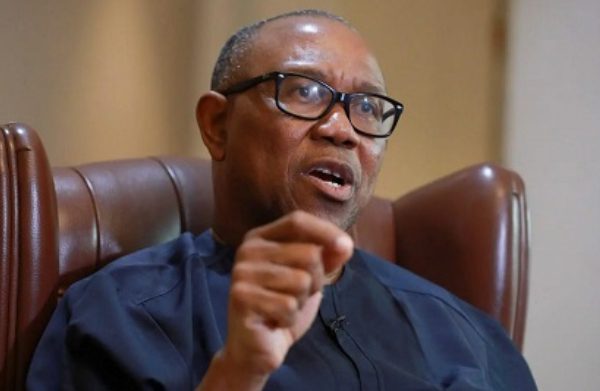
Peter Obi, the 2023 presidential candidate of the Labour Party (LP), has raised fresh concerns over the future of Nigeria’s democracy, declaring that the country is currently being governed by individuals with criminal backgrounds, forged educational certificates, and questionable moral standing.
Speaking during a live interview on Arise Television, Obi argued that Nigeria cannot be described as a democratic nation when those at the helm of affairs are unqualified and when institutions that should protect democracy remain weak and compromised.
Obi’s Strong Words on Nigeria’s Democracy
Obi did not mince words in his criticism, stating that Nigeria’s leadership is dominated by people who lack the integrity required to lead. According to him:
On the Judiciary: Nigeria’s judiciary has failed to act as an independent arbiter, instead bending to political pressure and failing to protect the rights of ordinary citizens.
On the Legislature: The country’s lawmakers are not fulfilling their constitutional role of checks and balances, leaving the executive arm unchecked.
On Leadership Standards: Many leaders in Nigeria do not meet the basic requirements of democratic governance because they present forged certificates, have pending criminal allegations, or are involved in corruption scandals.
On Freedom of Expression: Obi lamented that even people of his social and political standing are harassed for speaking out, which shows the limited space for free speech in Nigeria.
> “Nigeria today is not a democracy. It is not for the people. You cannot call it democracy when people with forged certificates, unverified qualifications, and criminal records are in charge,” Obi said.
Why Obi’s Criticism Matters
Peter Obi’s remarks are significant for several reasons:
1. Voice of Opposition – As a prominent opposition figure, Obi represents a large section of Nigerians, especially youths, who are frustrated with corruption and weak governance.
2. Global Implications – Nigeria, being Africa’s largest democracy and economy, is closely watched by international partners. Allegations of forged certificates and corrupt governance damage the country’s credibility on the global stage.
3. Historical Relevance – His comments revive an old debate: is Nigeria truly a democracy, or merely a country operating under civil rule where elections are held but institutions remain weak?
Historical Context: Nigeria’s Certificate and Integrity Scandals
Allegations of forged certificates and questionable qualifications are not new in Nigeria’s politics. Over the past decades, several high-profile cases have dominated headlines:
1999–2007 Era: Some governors faced petitions at election tribunals for submitting fake certificates.
Presidential Elections: Past presidential aspirants have also been accused of presenting questionable qualifications, sparking legal battles.
State Level Politics: At least three governors in the Fourth Republic have faced court cases over alleged certificate forgery, though most were dismissed or prolonged until their tenure ended.
This recurring trend suggests a systemic problem where verification processes are weak and institutions either look away or deliberately delay justice.
Democracy vs Civil Rule – What Nigeria Really Has
Political analysts often debate whether Nigeria’s system should be described as a democracy at all. According to democratic theory, true democracy requires:
Free and fair elections – without manipulation or rigging.
Rule of law – where no one is above the law.
Separation of powers – between the executive, legislature, and judiciary.
Fundamental freedoms – such as free speech and press independence.
Obi argues that Nigeria falls short on nearly all of these. The Rivers State political crisis, where conflicting court rulings and political maneuvering destabilized governance, illustrates the fragility of Nigeria’s democratic institutions.
Comparative Global Insight
Countries with strong democracies—such as South Africa, Ghana, and even smaller African nations like Botswana—have robust systems where electoral bodies and courts enforce strict rules on qualifications.
In South Africa, candidates have been disqualified for minor irregularities.
In Kenya, electoral reforms introduced after 2007 have made it harder for unqualified candidates to contest elections.
In Nigeria, however, politicians facing allegations of certificate forgery often remain in office, shielded by political immunity or prolonged judicial delays.
This comparison shows why Nigeria’s democratic system is often criticized as elite-driven rather than people-driven.
The Impact on Nigeria’s Development
The consequences of allowing leaders with forged certificates or questionable integrity into positions of power are far-reaching:
1. Policy Failure: Leaders without proper qualifications or experience often implement poorly thought-out policies that hurt the economy and governance.
2. Corruption: A lack of accountability at the top trickles down, normalizing corruption across society.
3. Youth Disillusionment: Young Nigerians, who make up over 60% of the population, lose faith in democracy when they see that merit and qualifications do not matter in leadership.
4. Global Reputation: International investors are wary of countries where leadership integrity is constantly questioned, affecting foreign direct investment.
The Way Forward – How Nigeria Can Fix the System
Experts and civil society leaders suggest that Nigeria can strengthen its democracy by taking the following steps:
1. Enforce Stronger Electoral Laws: INEC must strictly verify educational and professional qualifications before clearing candidates.
2. Judicial Reform: Judges must be insulated from political interference and corruption, with faster trial processes for electoral and corruption cases.
3. Strengthening the Legislature: Lawmakers must be held accountable through recall mechanisms and stronger civil society monitoring.
4. Whistleblower Protection: Citizens who expose certificate forgery or corruption must be shielded from intimidation.
5. Political Education: Voters must demand accountability by rejecting leaders with questionable backgrounds at the ballot box.
Why Citizens Must Pay Attention
For democracy to thrive, Nigerians must go beyond complaining about corruption. They must actively participate in holding leaders accountable by:
Demanding transparency in elections
Using legal tools to challenge unqualified candidates
Supporting independent media and civil society watchdogs
Exercising their voting power wisely
As Obi pointed out, democracy is not just about holding elections but ensuring that only competent and credible leaders emerge through those elections.
Conclusion
Peter Obi’s warning is not just about today’s Nigeria but about the future. If unqualified and corrupt leaders continue to dominate political offices, Nigeria risks deeper democratic backsliding.
Nigeria must decide whether it wants to remain in the cycle of corruption, weak institutions, and forged certificates—or whether it will embrace genuine democratic reforms that ensure integrity, accountability, and progress.
As things stand, Obi’s statement is a wake-up call that Nigeria is still struggling to live up to the name of democracy.
Author Bio
Smart Chuks is a Nigerian journalist and political analyst with over 10 years of experience covering governance, democracy, and social issues in West Africa.