By Smart Chuks | SaharaNews247 | March 31, 2025
Introduction
Rivers State has once again found itself in the eye of a political storm.
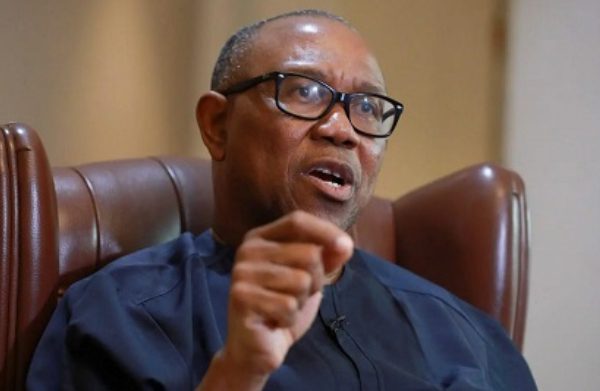
Suspended Governor Siminalayi Fubara has reassured residents that despite the ongoing crisis, the people of Rivers will emerge stronger, more united, and better prepared for the future.
Fubara delivered this message during the Eid-el-Fitr celebrations, where he hosted Muslim leaders representing more than 20 Islamic organizations. His words of hope, faith, and patience reflected both the weight of the political situation and his determination to keep Rivers stable.
Understanding the Rivers Crisis
The current political tension in Rivers did not emerge overnight.
It is the product of:
Deep rivalries within the Peoples Democratic Party (PDP).
A breakdown in the relationship between the governor and some lawmakers.
Disputes over state resources and governance direction.
The controversial suspension of the governor under emergency powers.
For many observers, the crisis raises questions about Nigeria’s democracy, the balance of power between states and the federal government, and whether institutions can withstand political pressure.
Fubara’s Message of Faith and Reassurance
While addressing Muslim leaders, Governor Fubara urged Rivers people to hold firmly to patience and trust in God.
He stated:
>“This season represents love, sharing, and sacrifice.
You have come to share in our pain and have made great sacrifices through your prayers.
As Christians, we believe everything happens for a purpose, and I strongly believe this situation is guiding us toward a greater one.”
The governor made three strong points in his message:
1. Faith in God’s plan – likening the crisis to biblical patience.
2. Peace over violence – urging supporters not to fall for provocations.
3. Commitment to justice – promising fairness, equality, and inclusivity when stability returns.
The Role of Religion in Politics
Religion remains a central feature of Nigeria’s politics.
Rivers, though predominantly Christian, has a growing Muslim community.
Unlike the past administration that declared Rivers a “100% Christian state,” Fubara has embraced religious inclusivity. Muslim leaders at the meeting praised him for this recognition.
By building trust across religious lines, Fubara is not only strengthening his political base but also reducing the risk of religious polarization in a tense environment.
Voices of Support
Muslim Leaders
Alhaji Nasir Awhelebe Uhor, speaking on behalf of the Muslim community, pledged their solidarity. He praised Fubara’s style of governance and urged President Bola Tinubu to revisit the emergency rule in Rivers and restore the governor’s full authority.
Civil Society
Civic groups have consistently called for dialogue instead of confrontation. They warn that prolonged instability could harm development and peace in the state.
Political Opponents
Opposition voices see the crisis as evidence of weakness in leadership. However, supporters of Fubara view his calmness as a test of true democratic resilience.
Governance Amid Turbulence
Despite political distractions, Fubara emphasized that governance must not stop.
He promised Muslim leaders that their pending requests would be addressed after the storm settles.
Key areas under his watch include:
Infrastructure renewal in Port Harcourt and rural communities.
Healthcare investments for ordinary citizens.
Education and youth empowerment programs.
Security collaboration to maintain peace.
These promises highlight his commitment to keeping Rivers functional even in uncertain times
Broader Political Implications
The crisis in Rivers goes far beyond state borders.
It carries implications for:
Nigeria’s democracy – How far can the federal government intervene in state matters without undermining voters’ choices?
Federalism – Should states retain more autonomy?
The PDP’s future – Internal rifts in Rivers could affect the party nationally.
The 2027 elections – Rivers State, a strategic oil-rich state, could play a decisive role in shaping alliances.
Lessons from History
Nigeria has witnessed similar crises in other states.
For example:
Anambra (2003) – The governor was abducted in a political power play.
Ekiti (2014) – Tensions between the governor and lawmakers led to disruptions in governance.
Plateau (2006) – A state of emergency was declared after political instability.
In many of these cases, leaders who survived came out stronger, with a more loyal base and deeper legitimacy. Rivers may follow the same path if Fubara withstands the pressure.
Social and Economic Impact
Political crises are not just about power struggles.
They affect ordinary people in profound ways:
Business climate – Investors hesitate in unstable environments.
Community relations – Rivalries can spill into ethnic or religious tensions.
Livelihoods – Public services slow down, and jobs are threatened.
Fubara’s call for patience and non-violence is therefore more than politics—it is about protecting the economy and lives of Rivers residents.
A Turning Point for Rivers State
The Rivers crisis can either become a breaking point or a turning point.
If managed well, it could strengthen institutions, foster inclusivity, and redefine governance in the state.
If mismanaged, it could deepen divisions, derail development, and weaken democratic trust.
Fubara’s strategy of calmness, inclusivity, and reassurance suggests he is positioning himself as a unifying leader who can withstand storms without succumbing to reckless provocation.
What Lies Ahead
The future of Rivers rests on three possibilities:
1. Reconciliation – Stakeholders may reach a political settlement through negotiation.
2. Judicial Intervention – Courts may resolve disputes around the suspension and constitutional powers.
3. Political Realignment – The crisis could reshape alliances ahead of 2027, with Rivers emerging as a key battleground.
Whatever the outcome, the crisis is already shaping Nigeria’s broader democratic conversation.
Conclusion
Governor Siminalayi Fubara’s Eid-el-Fitr message was more than symbolic—it was strategic. By urging patience, rejecting violence, and reaffirming faith, he has framed the crisis not as an end but as a stepping stone toward growth.
Rivers residents are watching closely. Nigeria is watching too.
The way this crisis ends will influence not just the state’s stability but also Nigeria’s democratic future.
As Fubara assured: “We will surely come out of all these crisis stronger and better.”
Author Bio
Smart Chuks is a Nigerian journalist, political analyst, and columnist with SaharaNews247. He specializes in governance, security, and socio-political developments in Nigeria and West Africa. His works provide critical insights into democracy, leadership, and nation-building.