
By Aisha Bello
A Shocking Tragedy in Kwara State
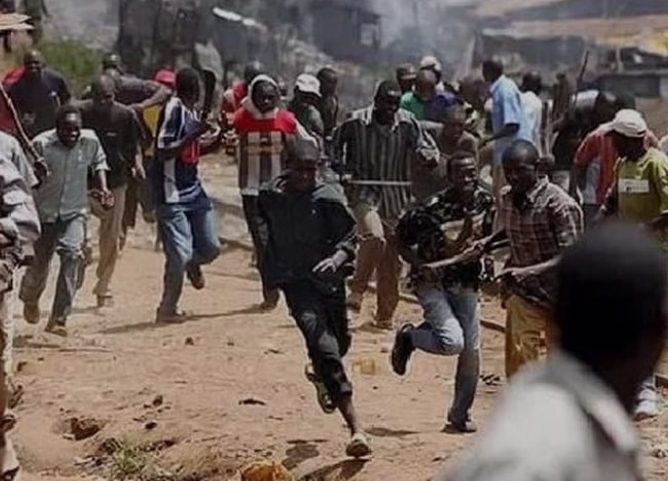
A quiet community in Sokupkpan, Edu Local Government Area of Kwara State, was thrown into mourning after residents allegedly beat their Chief Imam, Abdulahi Audu, to death.
According to an exclusive report published by SaharaReporters on November 5, 2025, the killing followed claims that the Imam was responsible for a resident’s illness and death through spiritual means.
Three suspects — Mohammed Shaba, Mamudu Gana, and Ndakpotun Issa — were reportedly arrested in connection with the incident.
However, the Kwara State Police Command has not yet issued an official statement, leaving portions of the story still unconfirmed.
This in-depth SaharaNews247 report looks beyond the headlines, examining what is known, what remains unclear, and why mob justice continues to plague communities across Nigeria.
What We Know So Far
1. The Reported Incident
SaharaReporters’ investigation revealed that Chief Imam Abdulahi Audu was allegedly attacked by angry residents after being accused of witchcraft-related involvement in the sickness of one Ibrahim Gana, who later died.
2. The Arrests
Three individuals — Mohammed Shaba, Mamudu Gana, and Ndakpotun Issa — were said to have been taken into custody by officers from the Tsaragi Police Division.
3. The Burial
The Imam’s body was reportedly buried the same evening according to Islamic rites, as tension spread through Sokupkpan.
4. Police Response
At the time of the original report, no formal statement had been issued by the Kwara State Police Command, leaving the incident partly unverified.
Details Still Unverified
While the story is widely circulated, the following points remain uncertain:
Lack of Multiple Confirmations:
Only SaharaReporters has published the account; no other mainstream media or official police sources have independently confirmed it.
Unclear Motive and Sequence:
The alleged dream-based accusation that sparked the attack has not been independently verified.
Absence of Forensic Evidence:
No public medical report or autopsy has yet confirmed the Imam’s exact cause of death.
Until authorities issue a public confirmation, the case remains alleged — though the social implications are already serious.
Understanding the Bigger Picture: Why Mob Justice Persists
The Sokupkpan tragedy echoes a disturbing national trend. Across Nigeria, communities continue to take justice into their own hands.
Several deep-rooted factors sustain this cycle:
1. Fading Trust in Law Enforcement
Years of delayed investigations and perceived corruption have eroded faith in formal justice, prompting communities to act outside the law.
2. Enduring Superstitions
In many areas, spiritual beliefs still shape perceptions of illness and misfortune. When tragedy strikes, suspicion often turns toward local religious or traditional figures.
3. The Speed of Rumour
Unverified information now spreads instantly through WhatsApp groups and social media, often faster than official clarifications can arrive.
4. Weak Conflict-Resolution Systems
Traditional dispute-settling structures are declining, and young, emotional community members frequently act without guidance from elders.
5. Culture of Impunity
Past mob killings rarely result in prosecution, emboldening future vigilante groups to commit similar acts.
The Sokupkpan case embodies all these challenges — a dangerous blend of fear, misinformation, and weakened institutions.
The Legal and Human-Rights Dimension
If officially verified, this incident raises serious legal questions:
Criminal Liability:
The attackers could face charges ranging from homicide to conspiracy under Nigeria’s Penal Code.
State Responsibility:
Failure by security agencies to prevent or promptly address mob actions could signal institutional negligence.
Human-Rights Violations:
Extra-judicial killings directly violate the right to life enshrined in Section 33 of the Nigerian Constitution and international human-rights treaties.
Risk of Retaliation:
The killing of a religious leader may spark retaliatory violence if not handled transparently and sensitively.
Justice, therefore, demands a transparent and impartial investigation followed by due legal process.
The Path Forward — What Must Be Done
For the Kwara State Police Command
Issue an official public statement to clarify facts and calm tensions.
Conduct a transparent investigation with oversight from higher authorities.
Release verified forensic and medical reports to establish the cause of death.
Ensure protection for witnesses and relatives of the deceased Imam.
For Religious and Community Leaders
Preach calm and tolerance during gatherings and prayers.
Strengthen local mediation councils to resolve disputes before they escalate.
Condemn violence publicly and promote respect for lawful procedures.
For Media and Civil Society
Verify every claim before publication to prevent misinformation.
Launch awareness campaigns on the dangers of mob justice.
Support survivors and families through counseling and legal aid.
For Citizens
Report suspicions to authorities instead of taking the law into their own hands.
Resist the urge to spread unverified news or inflammatory content online.
Alleged Timeline of Events
A local resident, Ibrahim Gana, allegedly accused Chief Imam Abdulahi Audu of spiritually attacking him in dreams.
After Gana’s death, residents reportedly concluded that the Imam was responsible.
A mob allegedly attacked the Imam, beating him until he died.
Police from Tsaragi Division reportedly arrested three suspects.
The Imam’s burial was said to have taken place the same evening.
The Kwara State Police Command has yet to make an official comment.
These remain allegations pending formal verification.
Why Transparency Matters Now
When official silence follows such violent incidents, rumours flourish and emotions intensify.
Swift communication from law enforcement can prevent revenge attacks, rebuild trust, and preserve social order.
Transparency is not just a public-relations tool — it is a peace-building necessity.
SaharaNews247’s Continuing Investigation
SaharaNews247 will continue to:
Seek an official statement from the Kwara State Police Command.
Verify medical and forensic details surrounding the Imam’s death.
Interview community leaders, family members, and eyewitnesses.
Monitor the Sokupkpan area for signs of reprisal or unrest.
We remain committed to responsible, evidence-based reporting that prioritizes truth and accountability.
Conclusion
If proven true, the killing of Chief Imam Abdulahi Audu is more than a local tragedy — it is a national warning.
It exposes how superstition, misinformation, and frustration with the justice system can converge into deadly outcomes.
To prevent the next Sokupkpan, Nigeria must renew its fight against mob justice.
Law enforcement must act decisively, the media must report responsibly, and communities must replace fear with facts and faith with fairness.
Justice must not be delayed — and certainly not replaced by violence.
Author Bio
Aisha Bello is an investigative correspondent with SaharaNews247, specializing in human-rights and security issues across Nigeria.
She has reported on conflict resolution, justice reform, and governance in multiple states.
Contact Aisha at aisha.bello@saharanews247.ng or follow her on X (formerly Twitter) @AishaReportsNG.