
By Chinedu Okafor – SaharaNews247
April 1, 2025
The Edo State governor, Monday Okpebholo, has pledged full compensation to the families of the 16 hunters killed in Uromi, Edo State, in what he described as a “senseless and brutal attack.” The governor made this assurance during a condolence visit to Torankawa in Bunkure Local Government Area, where he was accompanied by Kano State Governor Abba Kabir Yusuf and other dignitaries.
A Visit Marked by Grief and Assurance
Governor Okpebholo, visibly emotional and angered by the killings, spoke firmly to community leaders and grieving families.
> “We will ensure that justice is served on those responsible for this heinous act,” the governor declared. “These families will not be abandoned. Compensation in both financial support and food relief will be provided, and security agencies will bring the perpetrators to book.”
His words brought some relief to relatives of the slain hunters, many of whom had gathered in mourning since the news broke.
The Killings That Shocked Edo
The tragic incident occurred in Uromi, Edo State, when 16 hunters—men regarded as community protectors—were ambushed and killed. The attack has sent shockwaves across Edo and beyond, raising questions about security and the persistent vulnerability of rural communities.
Hunters, traditionally tasked with protecting villages from wild animals and providing bush meat for families, have increasingly found themselves on the frontlines of violent clashes with armed groups. Many locals believe that the hunters were deliberately targeted, though investigations are still ongoing.
Protest and Public Outcry
In the aftermath of the killings, hundreds of family members, hunters, and community supporters staged a peaceful protest, demanding swift justice.
Placards carried messages such as:
“We demand justice for the killings of our people.”
“Hunters are not criminals.”
“Justice must prevail.”
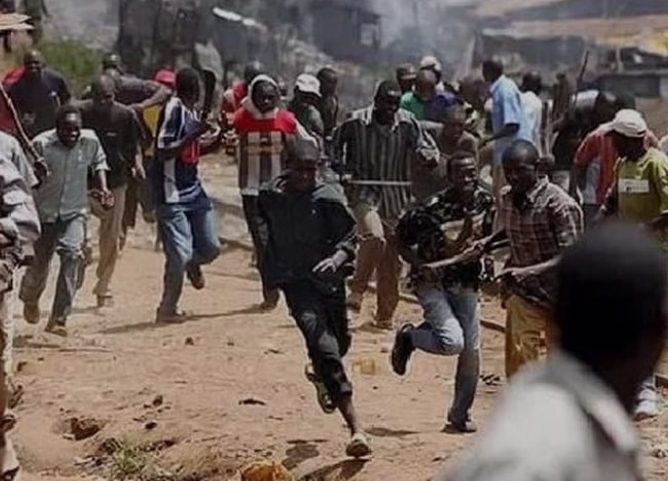
The protesters thronged the road leading into Torankawa village, chanting and singing, while some hunters—armed with traditional weapons—stood in solidarity. Though visibly agitated, the demonstration remained under control, with local residents ensuring peace as the governor’s convoy passed.
The Bigger Picture: Rising Insecurity in Nigeria
The killings highlight the growing insecurity across Nigeria, where farmers, hunters, and rural dwellers are often caught in the crossfire between armed bandits, kidnappers, and vigilante groups. Edo State, once considered relatively stable compared to the North-West, has witnessed increasing incidents of violent attacks in recent years.
Analysts warn that the unchecked rise of rural violence threatens not only lives but also food security, as fear drives many away from farming and hunting.
According to a security analyst, Dr. Akinola Fadeyi:
> “The killings of hunters in Edo reflect a dangerous trend of escalating rural violence. Community-based security actors are increasingly vulnerable. Without stronger coordination between local vigilantes and formal security agencies, such tragedies will likely continue.”
Governor Okpebholo’s Response
Governor Okpebholo, who has been in office for less than a year, is under pressure to demonstrate decisive leadership. His pledge to compensate families is being viewed as a short-term relief measure, while communities demand long-term solutions such as:
Deployment of more security personnel to rural areas.
Better intelligence-gathering to preempt attacks.
Integration of local hunters into a community policing framework.
Stronger collaboration with neighboring states to curb cross-border banditry.
During his visit, Okpebholo assured that Edo would not only support victims’ families financially but also push for justice through the courts, promising that “no one involved in the killings will escape accountability.”
Voices from the Families
Some of the grieving families expressed both gratitude and frustration.
Mrs. Grace Osamwonyi, the widow of one of the slain hunters, said:
“We thank the governor for coming to see us. But what we want most is not just money—it is security. Our husbands should not have died in vain. We need protection so that our children will not suffer the same fate.”
Another protester, a young hunter named Musa Ibrahim, echoed similar sentiments:
“Hunters are defenders of the land. We are not criminals. We need the government to recognize our role and support us with proper security backing.”
Nationwide Reactions
Beyond Edo, human rights organizations and regional groups have condemned the killings. Several civil society organizations are calling for an independent investigation, noting that the killings of hunters could be part of a larger pattern of targeted violence against community defenders.
The Hunters’ Association of Nigeria also released a statement, urging the federal government to recognize hunters as essential partners in national security.
What Lies Ahead
The Edo State government has begun coordinating with security agencies to launch investigations, but questions remain about how swiftly justice will be served. Residents of Uromi and neighboring communities remain anxious, fearing reprisals or further attacks.
For now, Governor Okpebholo’s visit and promises of compensation have calmed tempers, but unless concrete steps are taken to strengthen security, the cycle of violence may persist.
Conclusion
The killings of 16 hunters in Edo stand as a grim reminder of Nigeria’s fragile security landscape. While Governor Okpebholo’s assurance of compensation provides temporary relief, lasting peace will depend on systemic reforms in community security, intelligence gathering, and collaboration between government and local defenders.
For the grieving families, true justice will only be seen when perpetrators are held accountable and when the rural heartlands of Edo become safe once again.