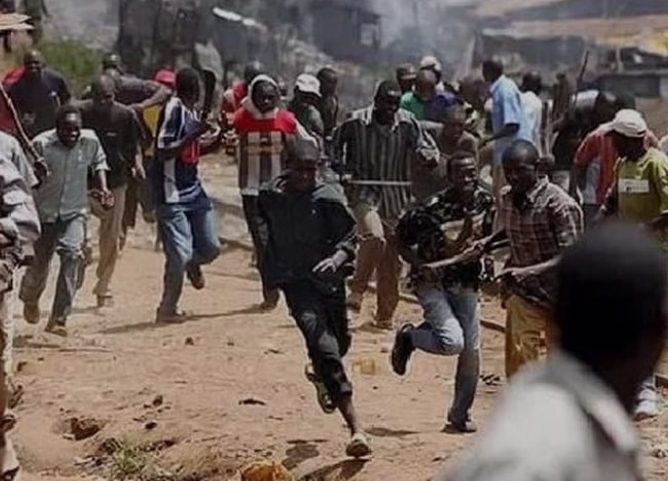
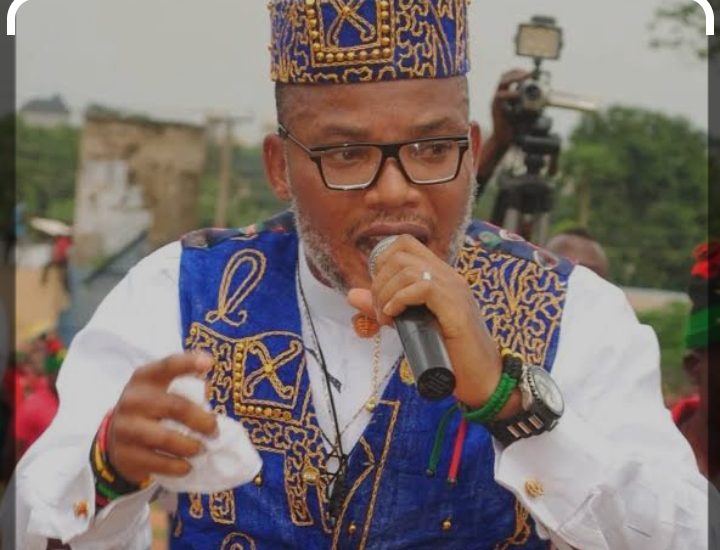
The Foundation for Environmental Rights, Advocacy and Development (FENRAD) has called for the immediate and unconditional release of Omoyele Sowore and several other protesters arrested during the recent “Free Nnamdi Kanu Now” demonstrations across Nigeria.
The civic group described the arrests as unlawful, undemocratic, and an assault on constitutional rights, urging security agencies to respect the rule of law and court rulings concerning both Nnamdi Kanu and citizens exercising their freedom of assembly.
The development has sparked renewed national debate on Nigeria’s human rights record, the shrinking civic space, and the government’s approach to handling peaceful protests.
Background: A Renewed Push for Nnamdi Kanu’s Freedom
The “Free Nnamdi Kanu Now” protest was organized by activists, supporters, and civil society groups demanding the release of the detained leader of the Indigenous People of Biafra (IPOB), Nnamdi Kanu.
Kanu, who has been in the custody of the Department of State Services (DSS) since 2021, is facing charges related to treason and unlawful association. Despite several court rulings and appeals from international bodies calling for his release, he remains detained — a situation many observers describe as a violation of his fundamental rights.
Omoyele Sowore, human rights activist, journalist, and former presidential candidate, joined the movement to show solidarity, describing it as a “defense of democracy and justice.” However, the protest ended in chaos as security operatives dispersed the crowd and arrested Sowore alongside several others.
Who Is FENRAD and Why Its Statement Matters
The Foundation for Environmental Rights, Advocacy and Development (FENRAD) is a human rights and governance-focused organization based in Abia State, Nigeria. Originally established to promote environmental justice, FENRAD has evolved into a strong voice for civil rights, accountability, and democratic governance.
Led by Comrade Nelson Nnanna Nwafor, the group has consistently condemned acts of repression and abuse of power. During the 2020 #EndSARS protests, FENRAD was among the first organizations to call for police reforms and respect for peaceful protesters.
In its recent statement, FENRAD declared that the arrest of Sowore and others “violates the spirit of the Nigerian Constitution and international conventions that guarantee freedom of expression and assembly.”
According to the organization, such arrests only serve to erode public trust in democratic institutions and undermine the rule of law.
Legal and Constitutional Context
Nigeria’s Constitution explicitly guarantees citizens’ rights to freedom of speech and peaceful assembly. Section 39 and Section 40 of the 1999 Constitution provide for these liberties, emphasizing that no person should be penalized for expressing their opinion or participating in lawful protest.
Beyond national law, Nigeria is also bound by international instruments such as:
The African Charter on Human and Peoples’ Rights, and
The International Covenant on Civil and Political Rights, both of which protect the right to peaceful protest.
FENRAD’s argument is grounded in these laws, insisting that the arrest of protesters contradicts Nigeria’s legal commitments and portrays the country as hostile to dissent.
The Broader Implications of Sowore’s Arrest
The detention of Sowore and other demonstrators highlights a recurring pattern in Nigeria’s democratic journey — the criminalization of dissent.
Sowore has faced multiple arrests in recent years for leading or supporting movements demanding transparency and reform. His 2019 arrest during the “#RevolutionNow” campaign drew global attention, sparking widespread condemnation from local and international rights organizations.
Analysts argue that such actions send a chilling message to activists and journalists who speak truth to power. When citizens fear persecution for demanding justice, democracy loses its essence.
FENRAD’s Demands and the Questions They Raise
FENRAD’s statement called on the Nigerian government to:
1. Release all detained protesters immediately and unconditionally.
2. Respect court orders relating to Nnamdi Kanu’s detention.
3. Uphold democratic values by protecting freedom of speech and assembly.
4. Engage in dialogue rather than using force to silence critics.
The group also warned that continued suppression of civil voices could deepen public distrust and push citizens toward political apathy — a dangerous outcome for a nation striving to sustain democratic governance.
Reactions from Stakeholders
Civil society groups such as SERAP, Amnesty International Nigeria, and Enough is Enough (EiE) have echoed FENRAD’s concerns, describing the arrests as an attack on democracy.
Prominent human rights lawyer Femi Falana (SAN) also condemned the detention of protesters, reminding authorities that “freedom of assembly is not a privilege granted by government but a right guaranteed by law.”
On the other hand, security agencies have defended their actions, claiming that the protests were likely to “degenerate into public disorder.” However, critics argue that this justification has been repeatedly used to stifle peaceful dissent and restrict civic participation.
The Struggle Between State Power and Civic Freedom
Nigeria’s democracy has often been tested by how it handles opposition and activism. While successive administrations have promised to uphold human rights, actions on the ground frequently tell a different story.
Observers note that many state institutions still operate under a security-first mentality, a legacy of Nigeria’s military past. This approach tends to view protesters as threats rather than citizens exercising legitimate rights.
FENRAD’s intervention, therefore, is not merely about Sowore’s release but a call for institutional reform and respect for the rule of law — essential ingredients for a healthy democracy.
Expert Opinions and Legal Insight
Legal scholars argue that the recurring arrests of activists like Sowore and the prolonged detention of Nnamdi Kanu are symptoms of a larger governance problem — the failure of institutions to operate independently of political influence.
Constitutional lawyer Dr. Anthony Akachukwu noted that “a government that fears protest is one that fears accountability. Democracies thrive on dissent because it keeps leaders in check.”
Similarly, human rights advocate Barr. Ifeoma Okafor explained that citizens have a duty to challenge injustice: “The right to protest is not just a legal right — it is a moral duty to society.”
A Reflection on Nigeria’s Democratic Maturity
As Nigeria marks over two decades of uninterrupted civilian rule, incidents like these raise fundamental questions about the country’s democratic progress.
Has the nation truly embraced the values of freedom, justice, and equality? Or are these ideals still subject to political convenience?
The answer may well depend on how the government responds to calls like FENRAD’s. Releasing peaceful protesters and respecting court judgments will not weaken the state; it will strengthen its legitimacy.
The Way Forward
For the Government:
Respect and enforce court rulings regarding Nnamdi Kanu.
Release all detained protesters without conditions.
Train security personnel on rights-based crowd management.
Encourage open dialogue and public participation.
For Civil Society and Media:
Continue to document and report rights violations.
Educate citizens about their constitutional freedoms.
Strengthen advocacy for accountability and transparency.
For the Judiciary:
Assert independence in human rights cases.
Ensure speedy hearings on unlawful detentions.
Conclusion: Justice and Dialogue, Not Repression
FENRAD’s demand for the release of Sowore and other detained protesters should not be ignored. The right to peaceful protest remains one of the most vital pillars of democracy.
No government can claim to be democratic while violating the very freedoms it is sworn to protect. The Nigerian state must, therefore, choose dialogue over repression, justice over intimidation, and inclusion over silencing dissent.
The way forward lies in rebuilding public trust through fairness, accountability, and genuine respect for human rights. Only then can Nigeria sustain its place as a true democracy where the law reigns supreme.
Author Bio
Written by Smart Chuks
Senior Political Correspondent, SaharaNews247
Smart Chuks is an investigative journalist and public affairs analyst based in Abuja. He specializes in governance, human rights, and civic activism reporting. His works emphasize fact-based journalism, critical analysis, and human-centered storytelling.