By Echendu Adeola – SaharaNews247
Introduction
In a landmark development that has once again thrust Nigeria’s judiciary into the global spotlight, the Federal High Court in Abuja has ordered separatist leader Nnamdi Kanu to open his defence within 24 hours in the terrorism case filed against him by the Federal Government.
The order, delivered on October 23, 2025, marks one of the most dramatic twists yet in a trial that has spanned nearly a decade — a trial defined by political tension, legal controversy, and deep regional divisions over the future of Nigeria’s unity.
This article delves into the background, facts, and implications of the court’s latest directive, offering in-depth legal and political analysis of what could become a watershed moment in Nigeria’s struggle to balance national security with civil rights.
Who Is Nnamdi Kanu?
Nnamdi Kanu, a British-Nigerian citizen, is the founder and leader of the Indigenous People of Biafra (IPOB) — a separatist movement advocating for the independence of the southeastern region of Nigeria, historically known as Biafra.
Born in 1967, the same year Nigeria’s civil war began, Kanu’s rhetoric has long drawn from the scars of that conflict. Through his now-banned Radio Biafra, he galvanized a generation of southeastern youths with fiery speeches calling for self-determination, decrying what he terms “systemic marginalization of the Igbo nation.”
In 2015, Kanu was arrested on multiple charges including treason and terrorism. He was granted bail in 2017 but fled Nigeria after his home was allegedly raided by security forces. Four years later, in 2021, he was captured in Kenya under controversial circumstances and extradited to Nigeria — a move his lawyers described as “extraordinary rendition.”
Since then, Kanu has remained in custody under the Department of State Services (DSS), facing an ongoing legal battle that continues to attract international attention.
The Charges Against Him
Kanu faces seven counts of terrorism-related offences, including:
Inciting violence through broadcasts and online platforms
Membership of a proscribed organisation (IPOB was declared a terrorist group in 2017)
Conduct intended to destabilize Nigeria’s sovereignty
He has consistently denied all charges, claiming his struggle is peaceful and democratic, rooted in the right of peoples to self-determination as recognised by international law
A Trial Defined by Delays and Drama
Since his 2021 re-arrest, the case has moved slowly through the courts — hindered by frequent adjournments, change of judges, health concerns, and disputes over jurisdiction.
Kanu’s legal team filed multiple motions challenging the competence of the court, arguing that his forced rendition from Kenya rendered any trial unlawful. These motions stalled proceedings for months.
In October 2025, the Federal High Court rejected his no-case submission, ruling that the prosecution had established a prima facie case requiring Kanu to open his defence. This ruling paved the way for the latest judicial order: a strict 24-hour deadline to commence his defence.
The 24-Hour Defence Order
On October 23, Justice James Omotosho of the Federal High Court in Abuja directed that Nnamdi Kanu must begin his defence within 24 hours, effectively setting October 24 as the start date.
The decision came after Kanu informed the court that he had dismissed his legal team, opting to represent himself. His lead counsel, Kanu Agabi (SAN), had earlier announced his withdrawal following what he described as “irreconcilable differences” with his client.
Justice Omotosho, while acknowledging the complexities of the case, stated that the matter had dragged on too long and that “justice delayed is justice denied.” He emphasized that the order does not presume guilt but ensures the trial progresses within reasonable time.
Kanu had requested 90 days to prepare, citing plans to call 23 defence witnesses, including prominent political figures such as former ministers, state governors, and military officials. However, the court dismissed the request, insisting that the defence could begin while other procedural issues are managed simultaneously.
Legal Implications: Speed vs. Fairness
The 24-hour order raises profound questions about the balance between judicial efficiency and fair trial rights.
Under Section 36 of the Nigerian Constitution, every accused person has the right to adequate time and facilities to prepare a defence. Critics argue that a 24-hour notice may infringe upon this right, especially in a complex terrorism case involving dozens of witnesses and extensive evidence.
Supporters of the ruling, however, contend that Kanu’s case has dragged on for far too long, undermining public confidence in the justice system. They say the defendant has had years to prepare and should not be allowed to further delay proceedings.
The court’s decision thus highlights the perennial dilemma in criminal justice: how to ensure speed without sacrificing fairness.
The Self-Representation Gamble
Kanu’s choice to defend himself could have significant consequences.
Representing oneself in a terrorism trial — especially one involving high-level witnesses, forensic evidence, and technical legal arguments — is an immense challenge. It exposes the defendant to procedural missteps that skilled counsel might avoid.
Nonetheless, Kanu’s supporters see his move as a show of defiance — a symbolic assertion of control over a process they view as politically orchestrated. His detractors, however, see it as a strategic blunder that could weaken his defence.
If Kanu proceeds without reinstating counsel, the court will likely appoint standby lawyers to ensure compliance with due process and prevent a mistrial claim on procedural grounds.
Political Undercurrents and National Implications
The implications of this trial go far beyond Nnamdi Kanu himself.
Regional Tensions and the Southeast Question
The Southeast has long felt politically and economically marginalized since the end of the civil war in 1970. The Biafran agitation taps into a deep-seated sense of exclusion, made worse by perceived underrepresentation in federal appointments and resource distribution.
Many in the region view Kanu not as a criminal but as a symbol of resistance. His prolonged detention has become a rallying point for separatist sympathizers who see his trial as persecution rather than prosecution.
Security Challenges
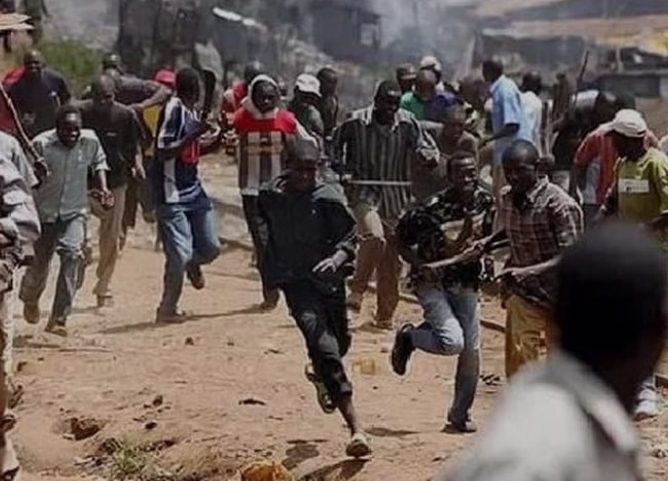
The IPOB-led “sit-at-home” protests, which have crippled economic activities across the Southeast, show how deeply the movement resonates. Each court hearing often coincides with unrest, protests, or security lockdowns.
The government’s handling of this case could either ease or inflame tensions. A perception of injustice might deepen alienation, while a transparent and fair process could help restore confidence in Nigeria’s legal system.
International Reactions and Human Rights Concerns
Kanu’s dual citizenship ensures the trial remains under global scrutiny.
Human rights groups, including Amnesty International and Human Rights Watch, have repeatedly urged Nigeria to guarantee his right to a fair and open trial. The British government, too, has occasionally raised consular concerns over his health and access to legal representation.
Any procedural lapse could spark international criticism, especially if it appears that the court’s urgency compromises due process. Nigeria’s handling of the trial will therefore shape its global image as a constitutional democracy.
Possible Scenarios Going Forward
As the 24-hour deadline expires, several outcomes are possible:
1. Kanu Opens His Defence
He may proceed to defend himself or appoint new counsel, beginning cross-examination of prosecution witnesses and calling his own.
2. Adjournment on Technical Grounds
The court could grant a short extension if logistical or security issues prevent immediate commencement.
3. Further Withdrawal or Boycott
Kanu could refuse to appear or insist on preconditions, potentially leading to contempt proceedings or a continuation in absentia.
4. Appeal or Constitutional Challenge
His legal team (if reconstituted) might file an urgent appeal, arguing that the 24-hour order violates his right to adequate defence preparation.
Each scenario carries heavy political and judicial weight, potentially influencing Nigeria’s stability in the weeks ahead.
Expert Opinions
Legal analysts remain divided.
Professor Nnamdi Odo, a constitutional lawyer at the University of Nigeria, Nsukka, argued that “while courts must prevent endless adjournments, a 24-hour order in a terrorism trial is unprecedented and could raise appeal grounds.”
Conversely, Barrister Jane Olatunji, a security law expert, said the court acted within its powers. “The defendant has been in custody since 2021. His legal team has filed numerous motions. The court must draw the line somewhere.”
Both perspectives underscore the delicate balance the judiciary must strike in politically charged cases.
Why This Case Matters
The Kanu trial is about more than one man’s fate. It is about the credibility of Nigeria’s democracy, the strength of its judiciary, and the state’s ability to manage dissent without oppression.
It will determine whether the rule of law can stand firm in the face of populism, separatism, and political pressure. Above all, it will test Nigeria’s commitment to justice — not only being done, but seen to be done.
Conclusion
The Federal High Court’s decision to give Nnamdi Kanu 24 hours to open his defence has become a lightning rod for debate — between those who see it as a move to end judicial delay and those who view it as an assault on fair trial principles.
Whatever the outcome, this moment will be remembered as a turning point in Nigeria’s democratic evolution. It is a test of judicial independence, of how a nation navigates dissent, and of whether justice can be both swift and fair in a deeply divided society.
As the world watches, the Kanu trial continues to mirror Nigeria itself — complex, defiant, and searching for balance between power and principle.
Author Bio
Echendu Adeola is a Senior Political Correspondent with SaharaNews247, specializing in judicial and national security reporting. A graduate of Political Science from the University of Port Harcourt, he has covered Nigeria’s most high-profile legal and political cases for over five years. His work focuses on the intersection of justice, governance, and national cohesion.