
Published: September 16, 2025
For: SaharaNews247
By: Amina Chukwuma – Senior Community & Politics Correspondent
Introduction
Owukpa, a peaceful agrarian community in Ogbadibo Local Government Area of Benue State, is now the centre of a fierce leadership dispute. Traditional rulers, elders, and youth leaders have openly rejected what they call an “imposed” Ward Head.
This article provides a fact-checked, critical analysis of the crisis: what sparked it, the legal and cultural complexities behind Benue’s chieftaincy system, historical precedents, and the political implications for the state.
The Spark: What Really Happened
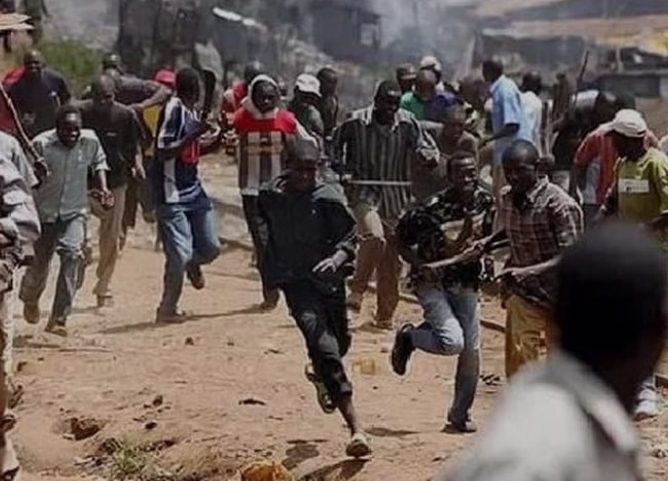
On September 15, 2025, stakeholders of Itabono Ward 2 in Owukpa gathered to select a new Ward Head—an event that should have been ceremonial and unifying. Instead, it ignited tension.
Key Personalities:
High Chief Emmanuel Odeh (Adah Ogbadibo) allegedly championed his preferred candidate.
Chief Oliver Onche Obekpa, a respected elder from the Och’Idu lineage, reportedly sought the stool but was disqualified on grounds that his clan was “not gazetted.”
Controversy: Eyewitness videos and signed communiqués from the Itabono Development Union show several chiefs walking out, insisting the process was manipulated and demanding a fresh selection.
The Benue State Bureau for Local Government and Chieftaincy Affairs has not yet released an official statement confirming or denying the disputed appointment.
Understanding the Role of a Ward Head
To grasp the stakes, it helps to understand why the Ward Head (Och’Ward) position is so important:
1. Custodian of Custom: The Ward Head presides over festivals, land allocation, and conflict mediation.
2. Security Liaison: In a state plagued by farmer–herder conflicts, Ward Heads are critical links between villagers, vigilante groups, and security agencies.
3. Development Catalyst: They attract government attention to roads, schools, and clinics.
A dispute over who occupies this stool threatens not only cultural identity but also governance and safety.
Legal Framework: Benue’s Chieftaincy Laws
Benue’s Traditional Council Law (2015) guides the appointment of district and ward leaders. Key provisions include:
Community Nomination: Qualified clans nominate candidates.
Screening & Ratification: The Local Government Traditional Council vets and forwards a name to the state Bureau.
Gazettement: Eligible clans are documented in an official gazette to prevent overlapping claims.
The law is meant to combine custom and state oversight. But if the gazette itself is outdated or disputed, conflicts like Owukpa’s become inevitable.
Historical Roots of the Dispute
Leadership disagreements in Owukpa have a long lineage:
Period Key Event Impact
Pre-colonial Rotational leadership among Itabono, Ai-Ngwu, Ai-Ede clans Established clan pride
1930s–1960s British indirect rule formalised chieftaincy Introduced written succession rules
1980s–1990s Transition to government-recognised wards Created overlap of tradition and statutory authority
2019 Onomo stool dispute Settled after Ochi’Idoma palace mediation
2024 “Peace meeting” promised new eligibility gazette Allegedly incomplete, leaving grey areas
The absence of a widely accepted, updated gazette remains the powder keg under today’s crisis.
Community Voices
During SaharaNews247’s phone interviews, several residents shared their perspectives:
Elder Daniel Ugwu, 72, farmer:
“We are not against progress. We only want fairness. If the government has a list of clans, let them publish it. Why hide it?”
Mrs. Felicia Oche, women’s leader:
“This quarrel is making our youth restless. Development projects will stop if there is no recognised Ward Head.”
Okpani John Oyi, youth activist:
“We don’t want violence. We only ask for transparency so everyone feels represented.”
These sentiments underline a community eager for peace but firm on justice.
Analysing the Core Claims
1. “Imposition” by a High Chief
Evidence: Video clips of chiefs rejecting the outcome and eyewitness reports of candidate exclusion.
Assessment: Strong indication of flawed consultation; however, no written directive proving illegal appointment has surfaced.
2. “Clan Not Gazetted”
Evidence: Verbal claim that the Och’Idu lineage lacks official recognition.
Assessment: No publicly available gazette confirms this. Without documentation, the argument remains weak and contestable in court.
Political & Security Implications
1. Governance Vacuum: Development plans—from boreholes to farm-to-market roads—may stall.
2. Ethnic Friction: Perceived exclusion of a lineage can harden clan identities and provoke protests.
3. Political Manipulation: With state elections approaching in 2026, politicians could exploit divisions to secure votes.
4. Security Concerns: Benue already faces farmer–herder conflicts. A leadership vacuum weakens early-warning systems.
Expert Insights
Dr. Matthew Okibe, Political Scientist, Benue State University:
“Transparent gazettement is crucial. Without it, every chieftaincy selection risks becoming a political football.”
Barrister Joy Oguche, Customary Law Specialist:
“If the gazette does not expressly exclude a clan, any attempt to bar them can be nullified in court. Community mediation should precede litigation, but legal remedies exist.”
Chief (Retired) Simon Adakole, former Ochi’Ward elsewhere in Benue:
“Benue’s future stability depends on respecting both tradition and law. Government must step in early before tempers harden.”
Recommendations
For the Benue State Government
Publish Current Gazette: Release or update the list of recognised clans for Itabono Ward 2.
Neutral Mediation: Appoint a respected panel to oversee a fresh selection if necessary.
For the Community
Dialogue First: Town-hall meetings and youth forums can diffuse tension.
Respect Due Process: Avoid vigilante justice or unilateral installation of a leader.
For Civil Society
Legal Aid & Monitoring: Provide legal counsel to marginalised clans and monitor government response for fairness.
Broader Lessons for Nigeria
Owukpa’s crisis reflects a wider Nigerian challenge: balancing customary authority with modern governance. Across the country, from the Yoruba obaship disputes to Igbo town-union rivalries, unclear succession rules continue to trigger conflicts.
Transparent gazettes, community education, and timely government arbitration could prevent many of these flashpoints.
Scenario Forecast
Timeframe Optimistic Path Pessimistic Path
0–2 months Mediation succeeds; fresh election with all clans represented Protests escalate; parallel leadership emerges
3–6 months Gazette updated; new Ward Head widely accepted Legal battles drag; state elections heighten tension
6+ months Community healing, resumed development Sporadic violence, stalled projects
Verification Status
Confirmed: September 15 meeting and chiefs’ rejection.
Pending: State government’s official position and gazette details.
Final Analysis
The Owukpa Ward Head crisis is real and consequential. It underscores the fragility of Nigeria’s chieftaincy institutions when legal documentation lags behind living traditions.
Resolution demands speed, transparency, and inclusion. Without these, a local dispute could ripple into broader political and security instability across Ogbadibo LGA and Benue State.
Author Bio
Amina Chukwuma is Senior Community & Politics Correspondent at SaharaNews247. She holds an M.A. in Peace & Conflict Studies and has over a decade of experience reporting on traditional governance and conflict resolution across Nigeria’s North-Central region.