By Smart Chuks
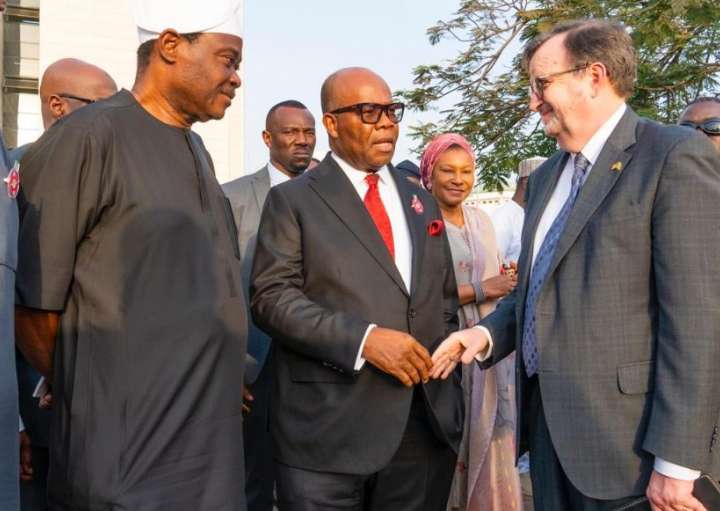
When Nigeria’s Senate President, Godswill Akpabio, received the United States Ambassador to Nigeria, Richard Mills Jr., in Abuja, the meeting may have appeared routine on the surface. Diplomatic courtesy visits are common, photographs are taken, and carefully worded statements are released. Yet, beneath the polite exchanges and diplomatic smiles lies a conversation that speaks to deeper questions about Nigeria’s global standing, its internal challenges, and the future direction of one of Africa’s most important bilateral relationships.
At a time when Nigeria is grappling with economic reforms, worsening insecurity, migration pressures and renewed international scrutiny, the engagement between the country’s highest-ranking lawmaker and America’s top diplomat carries weight far beyond symbolism. It reflects a mutual recognition that Nigeria–US relations are at a crossroads and that sustained dialogue is essential if both nations are to protect their interests and redefine cooperation for a changing global order.
This report examines the context of the meeting, the underlying motivations on both sides, the broader implications for Nigeria’s foreign policy, and what citizens should realistically expect in the months ahead.
A relationship shaped by history and necessity
Nigeria and the United States share a relationship built on decades of strategic, economic and cultural ties. As Africa’s most populous country and one of its largest economies, Nigeria occupies a central place in US engagement with the continent. Washington views Abuja as a critical partner on regional security, democratic governance, energy supply and economic growth.
For Nigeria, the United States remains an influential global power with significant leverage in international finance, security cooperation, education, technology and diplomacy. From military training and counterterrorism support to investment flows and student exchange programmes, American engagement continues to shape important aspects of Nigeria’s national life.
However, this relationship has not been without friction. Disagreements over human rights, electoral credibility, religious freedom and migration policies have periodically strained ties. Recent US policy decisions affecting travel and visa access for Nigerians have heightened public sensitivity and fuelled debate within political and civil society circles.
It is against this backdrop that the meeting between Akpabio and Ambassador Mills took place.
Why the timing matters
The timing of the engagement is particularly significant. Nigeria is navigating a difficult economic transition marked by subsidy reforms, currency pressures and rising living costs. Insecurity remains a major concern, with communities affected by banditry, insurgency and communal violence. At the same time, large numbers of Nigerians continue to seek opportunities abroad, intensifying conversations around migration and international mobility.
On the American side, policy priorities are increasingly shaped by domestic political considerations, border security concerns and global competition for influence. Nigeria’s internal challenges and migration trends naturally factor into Washington’s assessment of bilateral engagement.
In this environment, silence or diplomatic distance could easily be misinterpreted as indifference or hostility. Direct engagement between senior figures helps to prevent misunderstandings and signals a willingness to address difficult issues through dialogue rather than confrontation.
What was discussed behind closed doors
While official statements from the meeting were cautious and diplomatic, they pointed to familiar but important themes. Both parties reportedly reaffirmed their commitment to strengthening bilateral relations, with discussions touching on democratic governance, legislative cooperation, security collaboration and economic engagement.
The presence of the Senate President rather than an executive official is noteworthy. It highlights the growing role of parliamentary diplomacy in Nigeria’s foreign relations. As the head of the National Assembly, Akpabio plays a central role in shaping laws, approving treaties and providing oversight on international agreements. His engagement with the US ambassador sends a signal that Nigeria’s legislature is willing to play an active role in managing external partnerships.
For the United States, engaging the leadership of the National Assembly broadens diplomatic reach beyond the executive arm of government. It ensures continuity of dialogue and creates channels for influence that can survive changes in political leadership.
Reading between the lines
Beyond the official language, the meeting reveals deeper motivations on both sides.
From Nigeria’s perspective, there is a clear need to manage international perceptions at a time when external policies are having real consequences for citizens. Travel restrictions, visa scrutiny and international advisories affect ordinary Nigerians, students, businesspeople and families. Engaging the US directly provides an opportunity to seek clarity, advocate for fairness and demonstrate responsiveness to public concerns.
There is also an economic dimension. Nigeria is eager to attract foreign investment, particularly from American firms in technology, energy, agriculture and manufacturing. Legislative stability and policy consistency are key factors for investors, and direct communication between lawmakers and foreign partners can help build confidence.
For the United States, maintaining strong ties with Nigeria is a strategic imperative. Instability in Nigeria has regional implications for West Africa and beyond. Cooperation on security, intelligence sharing and counterterrorism remains vital. At the same time, Washington continues to emphasise governance standards, accountability and respect for human rights as part of its foreign policy framework.
The meeting can therefore be seen as an effort to balance cooperation with candid conversation, preserving partnership while addressing areas of concern.
Security, sovereignty and cooperation
Security cooperation remains one of the most sensitive aspects of Nigeria–US relations. Nigeria faces complex threats that require resources, intelligence and technical capacity. The United States has long provided training and support, but such assistance often attracts domestic criticism over sovereignty and external influence.
Engagement at the legislative level provides an opportunity to improve transparency and oversight. By involving lawmakers more directly, security partnerships can be subjected to democratic scrutiny, helping to reassure the public that cooperation serves national interests rather than undermining them.
If properly managed, this approach can strengthen trust both domestically and internationally.
Human rights and democratic values
Human rights concerns have historically been a source of tension between Abuja and Washington. Allegations of abuses, questions around accountability and concerns over religious and ethnic violence regularly feature in US policy assessments.
Addressing these issues requires more than diplomatic assurances. It demands credible institutions, transparent investigations and a willingness to confront uncomfortable truths. Legislative engagement can play a constructive role by strengthening oversight mechanisms, supporting legal reforms and ensuring that security operations respect constitutional limits.
For Nigeria, progress in this area is not only about satisfying external partners. It is about rebuilding public trust and strengthening the rule of law at home.
Economic cooperation beyond rhetoric
Trade and investment are often highlighted in diplomatic meetings, but progress has been uneven. Nigeria’s vast market and youthful population present enormous opportunities, yet investors remain cautious due to regulatory uncertainty, infrastructure gaps and policy reversals.
Lawmakers have a direct role to play in addressing these challenges through clear legislation, stable regulatory frameworks and effective oversight. Dialogue with international partners can provide technical insights and best practices, but implementation ultimately rests with Nigerian institutions.
The Akpabio–Mills meeting underscores the need to move beyond declarations and focus on practical steps that improve the investment climate and create jobs.
Managing expectations
It is important to be realistic about what such meetings can achieve. One conversation, however cordial, cannot resolve deep-seated structural issues or reverse complex policy decisions overnight. Nigerians should be cautious about expecting immediate changes to visa policies or dramatic shifts in international relations.
What matters more is follow-through. Will this engagement lead to sustained dialogue, working-level cooperation and measurable outcomes? Will lawmakers translate diplomatic goodwill into effective legislation and oversight? These questions will determine whether the meeting becomes a footnote or a turning point.
What comes next
For Nigeria, the next phase should focus on consistency and transparency. Clear communication with the public about the goals and outcomes of international engagements is essential to prevent misinformation and cynicism. Citizens deserve to know how diplomacy affects their daily lives and future prospects.
For the United States, maintaining open channels while respecting Nigeria’s sovereignty and internal dynamics will be key to sustaining trust. Partnerships built on mutual respect are more durable than those driven by pressure alone.
A moment of cautious optimism
The talks between Senate President Godswill Akpabio and US Ambassador Richard Mills Jr. represent a moment of cautious optimism in Nigeria–US relations. They reflect an understanding on both sides that engagement, even amid disagreement, is preferable to silence.
As global politics become more uncertain and domestic pressures intensify, Nigeria’s ability to navigate its relationships with major powers will shape its economic resilience, security and international standing. Whether this meeting marks the beginning of a more strategic and balanced partnership will depend on actions taken long after the cameras have gone.
For now, it stands as a reminder that diplomacy is not merely about meetings and statements, but about sustained effort, accountability and a clear vision of national interest.
About the Author
Smart Chuks is an investigative journalist and political analyst with SaharaNews247. He reports on governance, diplomacy and public accountability, with a focus on how international relations intersect with Nigeria’s domestic challenges. His work is aimed at helping readers understand not just what happens in the corridors of power, but why it matters to everyday life in Nigeria and beyond.