By: Chinedu Okafor — Senior Transportation & Infrastructure Correspondent, SaharaNews247
Published: August 26, 2025
Introduction
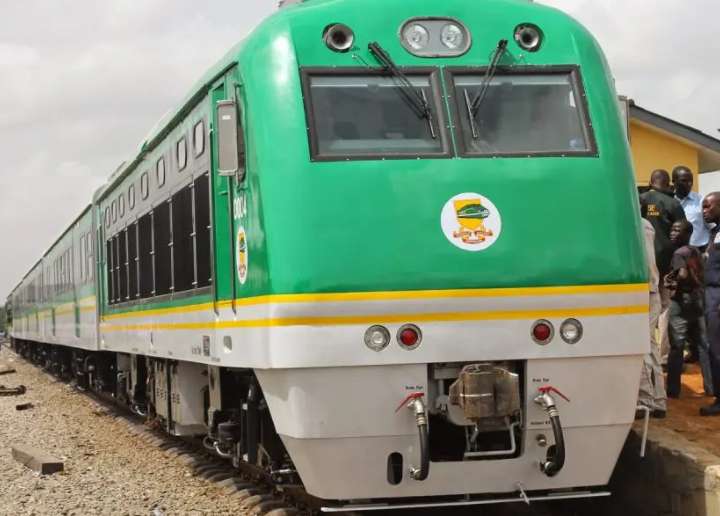
The Nigerian Railway Corporation (NRC) has announced the suspension of the Abuja–Kaduna train service following a derailment on Tuesday, August 26, 2025. The incident occurred at KM 49 between Kubwa and Asham stations around 11:09 a.m..
Although no fatalities were recorded, six passengers sustained minor injuries and were promptly treated by medical teams on site. The Nigeria Safety Investigation Bureau (NSIB) has launched a full-scale investigation, while the NRC confirmed that refunds will be issued to affected passengers.
This development has raised new concerns about the safety and reliability of Nigeria’s busiest modern rail corridor.
What Happened?
According to the NRC, the derailment took place as a Kaduna-bound passenger train approached KM 49. Videos shared on social media showed tilted carriages and stranded passengers waiting for assistance. Emergency responders, medical personnel, and security forces were quickly deployed to the scene.
The NRC’s Managing Director, Kayode Opeifa, confirmed the incident and emphasized that all Abuja–Kaduna services have been suspended until safety can be fully guaranteed. He further stated that refunds are being processed for passengers whose journeys were disrupted.
The NSIB, which is legally mandated to investigate transportation accidents, has already begun an independent inquiry to determine the cause of the derailment.
Impact on Passengers and Businesses
The Abuja–Kaduna railway line is one of Nigeria’s most important transport corridors, connecting the Federal Capital Territory with Kaduna State and serving as a lifeline for commuters and businesses.
Passengers: Thousands of daily commuters will be affected. With train services suspended, many will have to rely on buses, cars, or flights—often at higher cost and risk.
Businesses: Though primarily a passenger line, the disruption is likely to affect logistics schedules and businesses that depend on reliable movement between Abuja and northern cities.
Public Confidence: Nigerians who rely on the line for safety—especially given security concerns on the Abuja–Kaduna road—are left uncertain about when train services will resume.
Investigations: What Authorities Are Looking Into
The NSIB and NRC technical teams are examining multiple possible causes of the derailment. These may include:
Track integrity issues such as defects, washouts, or misalignment.
Mechanical problems with the train’s rolling stock, wheels, or axles.
Operational factors, including speed compliance, signalling, or communication failures.
External interference, such as vandalism or sabotage—though there is currently no confirmed evidence of this.
Maintenance records, especially inspection schedules and repair history.
At this stage, no official cause has been established. The investigation is expected to provide safety recommendations and preventive measures in the coming weeks.
Why This Matters
The Abuja–Kaduna railway has become a symbol of Nigeria’s efforts to modernize its transportation sector. It is also one of the most heavily used rail lines in the country, especially after years of insecurity on the Abuja–Kaduna highway.
This derailment, though not fatal, highlights critical questions:
Are Nigeria’s railway lines being adequately maintained?
Is funding for safety inspections sufficient?
How transparent will the NRC and NSIB be in sharing findings with the public?
The answers to these questions will determine whether public confidence in rail transport is strengthened or weakened in the months ahead.
Official Responses
NRC: Confirmed the derailment, suspended the Abuja–Kaduna service, promised passenger refunds, and mobilized technical teams.
NSIB: Launched an independent investigation into the incident, with a mandate to establish the root cause and make safety recommendations.
Kaduna State Officials: Called for calm, assuring residents that emergency responders were on ground and that no lives were lost.
Next Steps
SaharaNews247 will be closely monitoring this story. The key developments to watch in the coming weeks include:
NSIB’s interim investigation report.
NRC’s technical findings on the affected section of the rail.
Timeline for service restoration and safety assurances.
Compensation and refund mechanisms for affected passengers.
Conclusion
The Abuja–Kaduna train derailment is a serious reminder that rail safety cannot be taken for granted. While no lives were lost, the incident disrupted hundreds of passengers and raised critical concerns about maintenance, safety protocols, and transparency.
As Nigeria continues to expand its rail infrastructure, the lessons learned from this derailment must lead to stricter oversight, better funding for maintenance, and a culture of accountability.
Until then, passengers are advised to stay updated through official NRC channels and seek verified information only.
Author Bio
Chinedu Okafor is SaharaNews247’s Senior Transportation & Infrastructure Correspondent. With over a decade of experience reporting on Nigeria’s transport sector, he specializes in rail safety, infrastructure funding, and regulatory policy. He holds an M.A. in Development Studies and has written extensively on railway reforms across West Africa.