The sun had barely begun to dip behind the hills of eastern Adamawa when terror returned to a quiet Christian farming settlement that had long believed it was beyond the frontline of Nigeria’s insurgency. Armed men linked to the Islamic State West Africa Province, ISWAP, swept into the village with frightening speed, forcing residents from their homes and delivering a chilling ultimatum that has since echoed across the state and beyond Nigeria’s borders.
They were told to abandon their Christian faith and convert to Islam or face death.
Minutes later, homes were burning. Churches collapsed into flames. Food stores, farm tools and personal belongings that had taken decades to build were reduced to ashes. Families scattered into the bush, clutching crying children, some running barefoot over thorns and rocks as gunshots rang out behind them.
By the time darkness fell, an entire community had been erased.
A Community Shattered
For years, the village had survived on subsistence farming, its people cultivating maize, millet and groundnuts while raising goats and poultry. It was not wealthy, but it was peaceful. Muslims and Christians traded together in nearby markets and attended each other’s ceremonies. That fragile harmony is now a memory.
Survivors describe how the militants arrived in small groups, surrounding the village from different directions. They separated men from women, shouting threats in Hausa and Kanuri. Those who hesitated were beaten. Others were ordered to kneel as their houses were set ablaze behind them.
Many residents escaped only because young men from neighbouring communities mobilised quickly, escorting women and children into the forest paths that snake toward safer towns. Several people were reportedly killed during the raid, though exact numbers remain uncertain as families continue searching for missing relatives.
Today, the once-vibrant village stands deserted, its blackened ruins a silent testimony to how fragile life has become in northeastern Nigeria.
Adamawa’s Growing Vulnerability
Adamawa is no stranger to violence, but for many years the state managed to avoid the worst of the Boko Haram conflict that devastated neighbouring Borno. That buffer is now gone.
In the past year alone, Adamawa has witnessed a series of deadly raids, ambushes on highways and attacks on remote settlements. The terrain is a militant’s dream. Hills and forests provide cover, while the porous border with Cameroon offers escape routes that frustrate security forces.
For residents, this has changed daily life in profound ways. Farmers no longer go far from their homes. Markets close early. Night travel is avoided completely. Parents listen for unfamiliar engine sounds long after midnight, knowing that the next attack could come without warning.
The state government admits that insurgents are now operating in smaller, more mobile units, making them harder to detect and intercept. What this means in practical terms is that villages like the one just destroyed remain dangerously exposed.
From Boko Haram to ISWAP
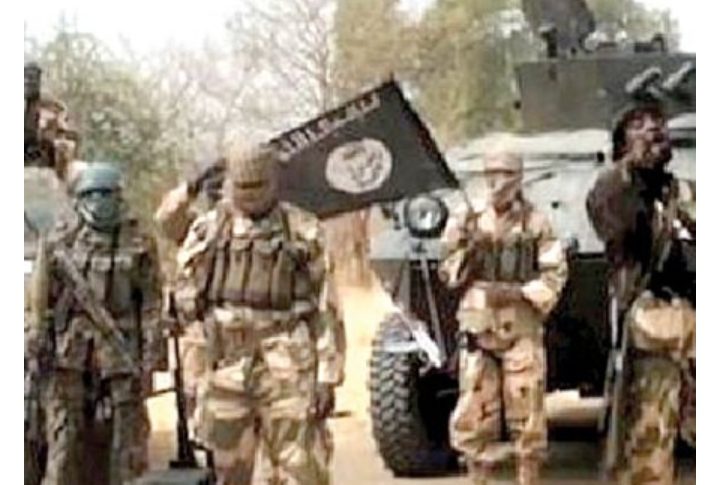
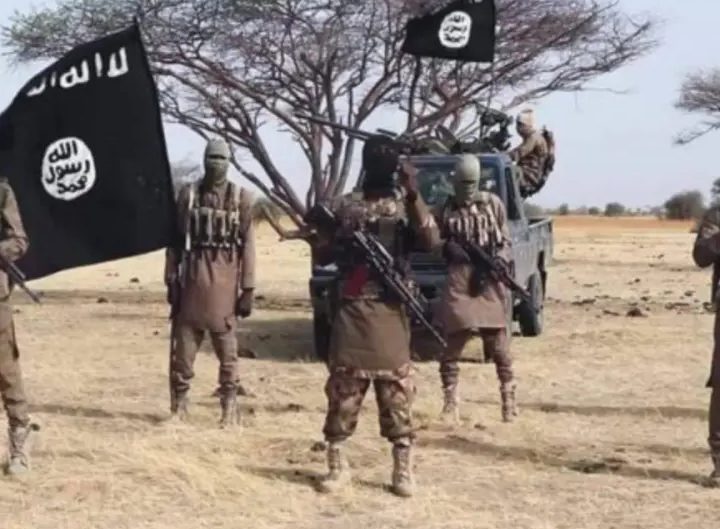
The men who torched the Adamawa community are believed to be members of ISWAP, a group that split from Boko Haram in 2015 after pledging allegiance to the Islamic State.
When ISWAP first emerged, it claimed to be less brutal than the faction led by the late Abubakar Shekau. It said it would focus on military targets and avoid unnecessary harm to civilians. That promise has long been broken.
ISWAP now routinely attacks villages, kidnaps civilians for ransom and executes local leaders accused of cooperating with the government. Its fighters are better equipped, better organised and more ideologically driven than many of the groups Nigeria has confronted in the past.
Their strategy has evolved. Instead of holding large territories that are easy to target from the air, they now embed themselves in rural communities, strike quickly and melt back into difficult terrain before troops arrive.
Faith Used as a Weapon
What distinguishes the Adamawa attack is not just its brutality but the language used. The ultimatum to convert or die is a stark reminder of how religion is being weaponised in Nigeria’s insurgency.
For the victims, the threat was deeply personal. Faith is not an abstract concept in rural Nigeria. It shapes family life, festivals, marriages and funerals. Being forced to abandon it under threat of death is not simply coercion; it is the erasure of identity.
Yet analysts caution that while the rhetoric is religious, the motives are broader. ISWAP’s leadership seeks control of land, movement corridors and local economies. Religious ideology provides a powerful justification for terror, but the underlying objectives are territorial and political.
By driving out communities that do not submit, militants create empty spaces they can occupy or exploit, turning villages into buffer zones or supply routes.
Life in Displacement
The families who fled Adamawa’s burnt village now live in crowded shelters in nearby towns. Some sleep on classroom floors. Others have found temporary refuge in church halls or with relatives who themselves struggle to survive.
Displacement strips people of dignity as much as of possessions. Farmers who once fed their families now rely on handouts. Children who were preparing for end-of-term exams have not opened a book in weeks. Women worry about how to keep their daughters safe in overcrowded camps.
Aid workers describe the situation as a slow-burn humanitarian crisis. Food stocks are running low. Clean water is scarce. Illness spreads quickly in cramped conditions, and trauma goes largely untreated.
The psychological scars are perhaps the deepest. Children wake up screaming at night, reliving the sounds of gunfire. Parents struggle with guilt for not being able to protect their families or save their homes.
Government Promises and Public Frustration
Nigeria’s federal authorities have condemned the Adamawa attack, promising that those responsible will be brought to justice. Military officials point to recent airstrikes and ground operations as evidence that the war against insurgency is being won.
Yet on the ground, confidence is low.
Residents complain that security forces often arrive hours after attacks have ended. Checkpoints are rare in rural areas. Intelligence gathering is weak, and many villagers say they have no direct channel to report suspicious movements before it is too late.
Security experts argue that the military has made tactical gains but lacks the manpower and community trust needed to secure vast rural territories. Insurgents exploit these gaps, striking where they know the state is absent.
Interfaith Relations Under Pressure
The Adamawa incident has also strained relations between religious communities that have lived side by side for generations.
Christian leaders see the attack as part of a growing pattern of religious persecution. Muslim clerics, on the other hand, are eager to distance Islam from the actions of extremists, warning that their own communities have also suffered at the hands of ISWAP.
Both sides fear that if the narrative of religious war takes root, the social fabric of the region could unravel. They have called for joint peace initiatives, interfaith dialogue and community-based early warning systems to prevent reprisals and rumours.
Beyond Nigeria’s Borders
The crisis in Adamawa is part of a much larger regional conflict stretching across the Lake Chad Basin. ISWAP operates freely across borders, taking advantage of weak coordination between Nigeria, Niger, Chad and Cameroon.
Multinational military efforts have scored some victories, but funding shortages and political instability continue to hamper progress. Meanwhile, climate change and shrinking farmlands are intensifying competition over resources, pushing more young men toward extremist groups that promise income and purpose.
Courage Amid the Ashes
In the midst of despair, there are stories of extraordinary courage.
Local youths who have nothing but hunting rifles patrol village outskirts at night. Women organise food drives for displaced families. Clerics preach peace even after their own places of worship have been destroyed.
These acts of solidarity remind Nigeria, and the world, that the victims of terrorism are not just statistics. They are people who refuse to surrender their humanity even when everything else has been taken from them.
A Nation Confronts Itself
The burning of a Christian village in Adamawa is not an isolated tragedy. It is a mirror reflecting the deep vulnerabilities of the Nigerian state.
Every attack chips away at public trust. Every displaced family weakens the social and economic foundations of the country. And every child forced out of school represents a future placed in jeopardy.
Yet Nigeria also stands at a moment of choice. It can allow extremist violence to define the nation, or it can confront the roots of the crisis with honesty, compassion and resolve.
Conclusion
The ultimatum issued in Adamawa, convert or die, is an affront to the very idea of humanity. No citizen should ever be forced to choose between life and conscience.
What happened in that small village is a warning to the entire country. The fight against insurgency is not just a military campaign; it is a struggle for the soul of Nigeria.
Until communities are protected, until displaced families can return home with dignity, and until faith is no longer a weapon in the hands of extremists, peace will remain fragile.
For now, the ashes of Adamawa speak louder than any official statement. They tell a story of loss, resilience and an urgent plea for a nation to protect its people.
About the Author
Smart Chuks is an investigative journalist with SaharaNews247. He has spent years covering conflict, security and humanitarian crises across northern Nigeria, with a focus on the human stories behind the headlines. His work seeks to bridge the gap between remote tragedies and global understanding.